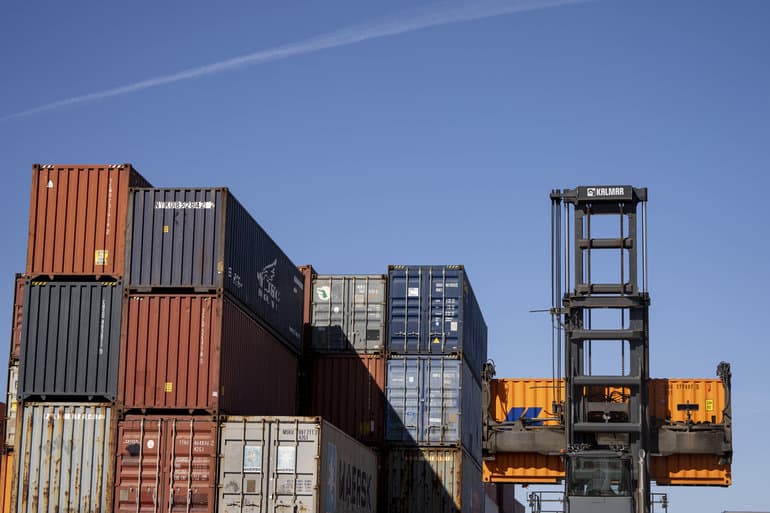
Danish exports of goods and services to the US increased significantly in April. Goods and services worth 36.7 billion kroner were exported to the US, which is 21 percent more than the previous month. This is shown by figures from Statistics Denmark.
In fact, total Danish exports to the US in April were at the second highest level ever, surpassed only by December last year. Services and goods worth almost 42 billion kroner were exported here.
In light of the fact that US President Donald Trump announced increased tariffs for a large number of countries at the beginning of April, the development is "particularly surprising". This is the opinion of Kristian Skriver, a senior economist at Dansk Erhverv.
- We had in no way expected that exports to the US would increase so sharply, he writes in a comment.
But when you look more closely at the figures, you can see that it is primarily the export of goods that do not cross the Danish border that is driving up exports to the US in April.
Conversely, exports of both services and goods that cross the Danish border fell. Exported services can be, for example, maritime transport.
Danish exports to the US that do not cross the Danish border can, for example, come from Danish companies that produce their goods in the US or other countries.
Goods that are produced in the US and sold in the US are not affected by the US tariff of ten percent, which currently applies to most countries.
Chief economist: Effect may change
According to Las Olsen, who is chief economist at Danske Bank, the figures show that the US tariff has not had a major effect on Danish exports so far. But that can change quickly, he believes.
- It is clear that there is a great risk that it will be something completely different in the future, because even though the Americans have mostly withdrawn right now, the threat of much higher tariffs has not been taken off the table, he writes in a comment.
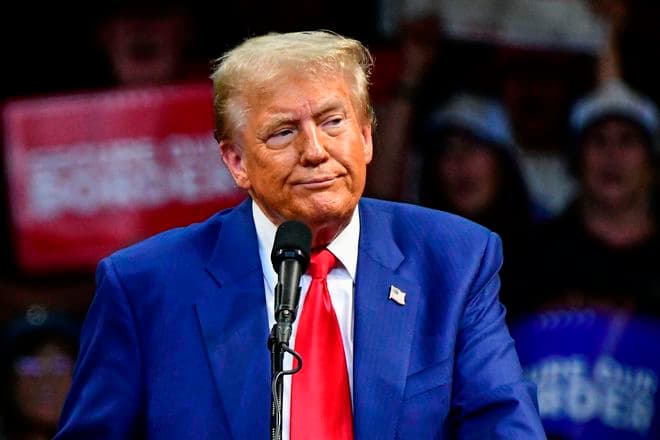
On April 2, Donald Trump announced a list of varying tariffs - so-called reciprocal tariffs - aimed at goods from abroad. He subsequently paused the tariffs for 90 days, after which a lower base tariff of ten percent became applicable to most countries.
In May, he said that negotiations with the EU on a trade agreement had reached a deadlock, and that he recommended a 50 percent tariff on EU goods from June 1.
A few days later, the US president announced that he had agreed to extend a pause in the high tariffs against the EU until July 9, so that the parties could negotiate a solution together.
/ritzau/
Text, graphics, images, sound, and other content on this website are protected under copyright law. DK Medier reserves all rights to the content, including the right to exploit the content for the purpose of text and data mining, cf. Section 11b of the Copyright Act and Article 4 of the DSM Directive.
Customers with IP agreements/major customer agreements may only share Danish Offshore Industry articles internally for the purpose of handling specific cases. Sharing in connection with specific cases refers to journaling, archiving, or similar uses.
Customers with a personal subscription/login may not share Danish Offshore Industry articles with individuals who do not themselves have a personal subscription to Danish Offshore Industry.
Any deviation from the above requires written consent from DK Medier.