In order to focus fully on renewable energy, the Danish energy group Ørsted has divested parts of its business. This has given a significant boost to profits in the third quarter. This is shown in Ørsted's latest quarterly financial statements, which were published on Wednesday morning.
In August, Ørsted completed the divestment of its Danish electricity distribution, residential customer and outdoor lighting business Radius. That transaction alone yielded a gain of DKK 11.1 billion.
The gain from the divestment has boosted profits, so that for the third quarter it ended up at DKK 12 billion after tax. This is more than eight times as large as in the third quarter of last year.
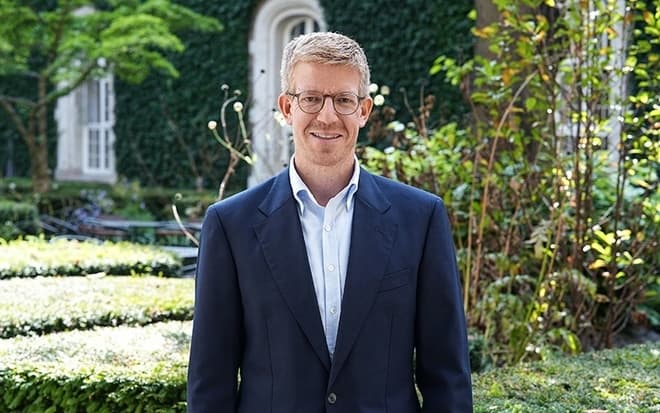
In the financial statements, the divestment is called an "important strategic milestone for Ørsted" by the company's CEO, Henrik Poulsen. With the divestment, the company has now completed transforming its portfolio of activities, so that it is now an energy company "focused on renewable energy".
In October, Ørsted entered into an agreement for the resale of its share of natural gas from the North Sea to Polish PGNiG Supply & Trading (PST) for 2023-2028.
Focusing on renewable energy
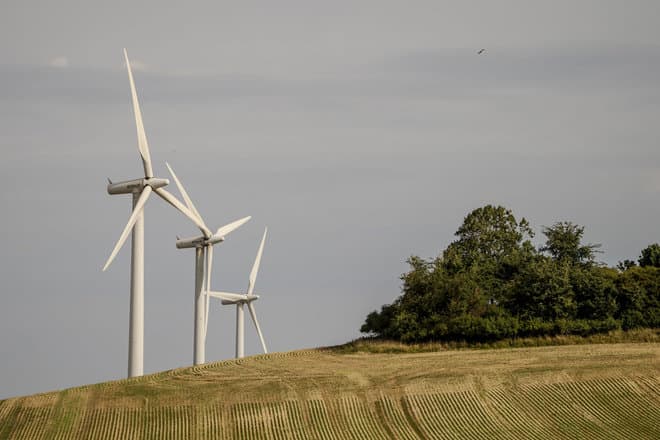
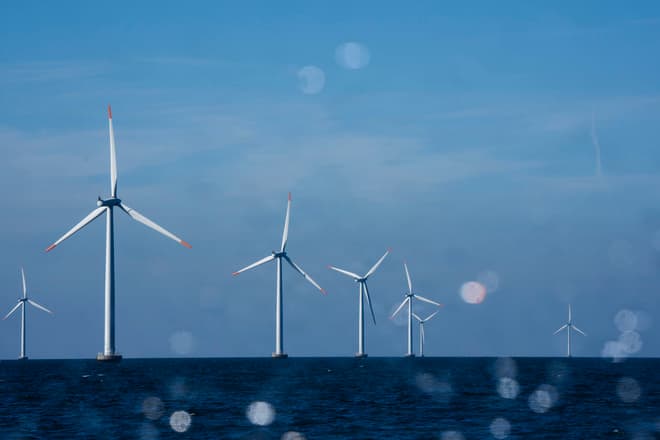
This means that Ørsted is now only focusing on the development of offshore wind, onshore wind and solar energy assets.
In the third quarter, Ørsted inaugurated Borssele 1 & 2, Ørsted's first offshore wind farm in the Netherlands, and completed the installation of Willow Creek Wind in the USA.
In addition, Ørsted gave the green light in the third quarter for the construction of Western Trail Wind in the USA with a capacity of 367 MW, while it has also submitted a bid in New York's second tender round for offshore wind, where it wants to build Sunrise Wind 2 in collaboration with Eversource.
Ørsted has In addition, in the eventful quarter, Ørsted reached an agreement with the world's leading fertilizer producer Yara on a 100 MW electrolysis plant for the production of green hydrogen from offshore wind, which will be included in the production of ammonia at Yara's plant in Sluiskil, located near Borssele 1 & 2.
Stable operation
If we look at Ørsted's operating profit - earnings before interest and tax, among other things - it has fallen from the third quarter of last year to the same quarter this year. More precisely, it has fallen by 17 percent to 3.4 billion. kr.
According to Ørsted, the decline was expected, as earnings in the third quarter of last year were helped by high construction activity for the Hornsea 1 offshore wind farm.
- Despite the ongoing Covid-19 crisis, our operations and financial results in the third quarter have remained stable and fully in line with our expectations from the beginning of the year, says Henrik Poulsen in a comment.
Earlier this year, Henrik Poulsen announced that he would be leaving his position as CEO of Ørsted. He will be replaced by Mads Nipper, who comes from Grundfos.
Henrik Poulsen will leave Ørsted on January 31st as planned.
Ritzau, esl
Text, graphics, images, sound, and other content on this website are protected under copyright law. DK Medier reserves all rights to the content, including the right to exploit the content for the purpose of text and data mining, cf. Section 11b of the Copyright Act and Article 4 of the DSM Directive.
Customers with IP agreements/major customer agreements may only share Danish Offshore Industry articles internally for the purpose of handling specific cases. Sharing in connection with specific cases refers to journaling, archiving, or similar uses.
Customers with a personal subscription/login may not share Danish Offshore Industry articles with individuals who do not themselves have a personal subscription to Danish Offshore Industry.
Any deviation from the above requires written consent from DK Medier.