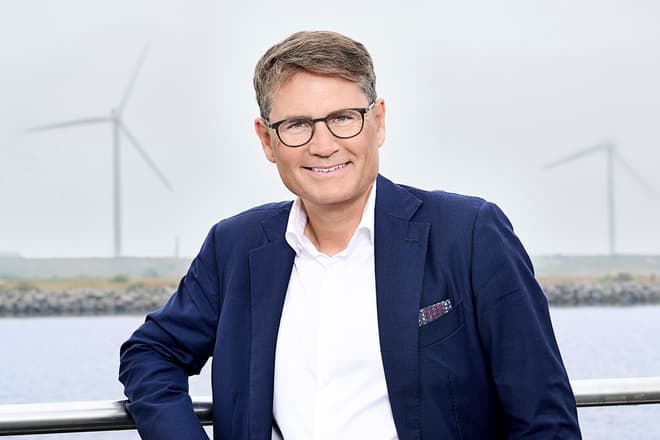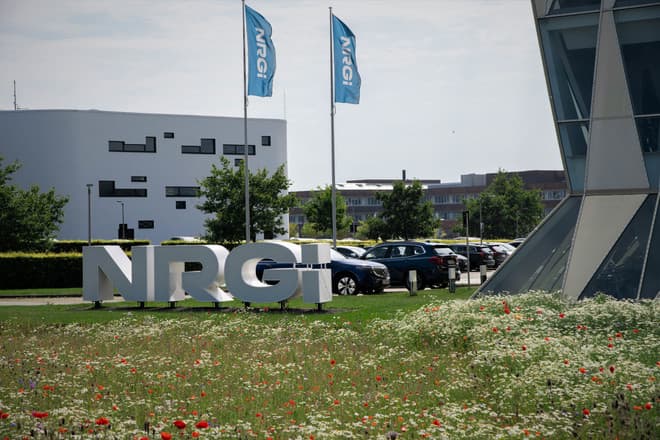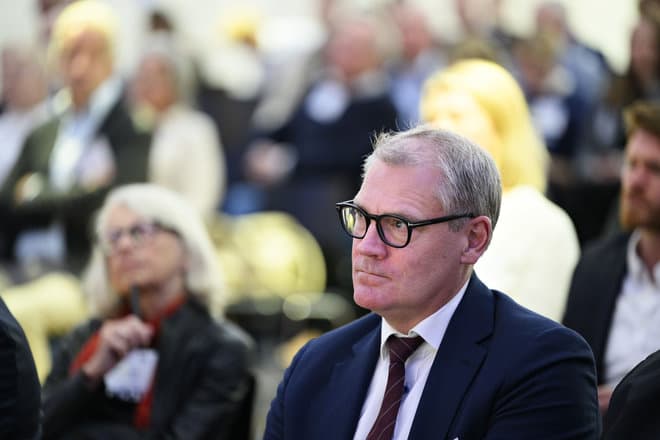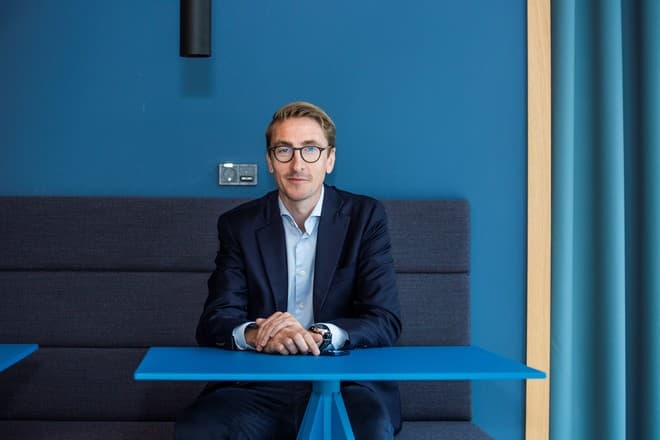
- You will learn more about the green port of the future and also hear about how we do it, said Grenaa Mayor Kasper Bjerregaard (V) in Grenaa Port's harbour centre. Grenaa has a special place in the mayor's heart, as he has previously told DOI.dk.
- We are super proud of our port, you should know that, and we are looking forward to the development of offshore wind, says Kasper Bjerregaard and adds another point:
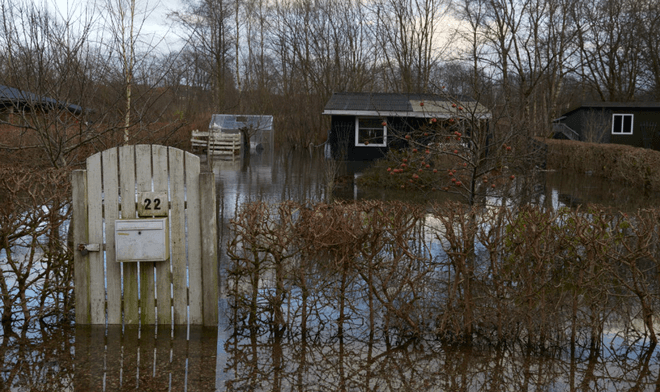
- We are particularly interested in the green transition, also because we can see the consequences of climate change. A COWI report from last year showed that our municipality will be the second most affected municipality in Denmark. That is why we must work together with the port when the electricity from Kattegat 2 comes ashore here, so that it is used here.
The opportunities within wind
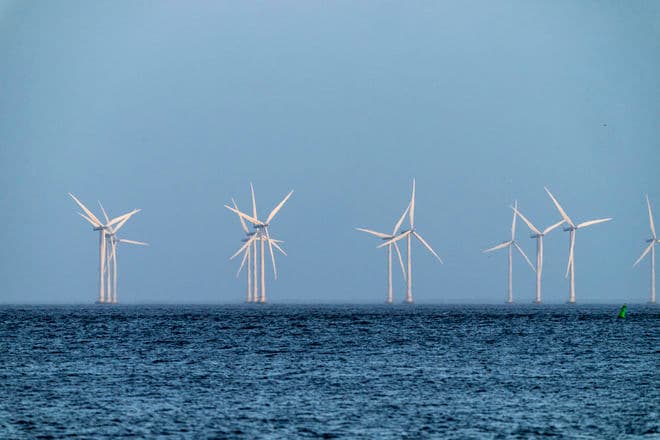
The Port of Grenaa is already working purposefully within wind, and the port shipped the turbines to Anholt Offshore Wind Farm back in 2012. The port has since also been home to Ørsted's O&M center, from which the park is serviced. Most recently, the Stiesdal Tetra Spar Demonstrator was shipped from the Port of Grenaa. And work is being done to bring more wind projects to the port.
- There is a huge opportunity within wind, but few ports have the opportunity. When I say wind, I think of installation ports. And that is the area from Kattegat down to the Great Belt, says CCO Theis Gisselbæk at Grenaa Port and elaborates on general considerations regarding an expansion of the ports, for example to the wind area:
- Investing too early is expensive, but for those who come too late, it is even more expensive.
The ports have moved closer to the energy area
At the trade organization Danish Ports, you can also see a trend that has developed in recent years.
- The energy area has become more important in the last two years out of the six years that I have been involved, says Director of Danish Ports Tine Kirk and confirms the will to be part of the green transition:
- We see ourselves as the foundation and part of the infrastructure for the green transition. But the access roads to the ports are not large enough. For example, if you want to have a blade factory at a port, no one will invest if they have to pay for an access road themselves.
CIP report confirms need for port capacity for wind
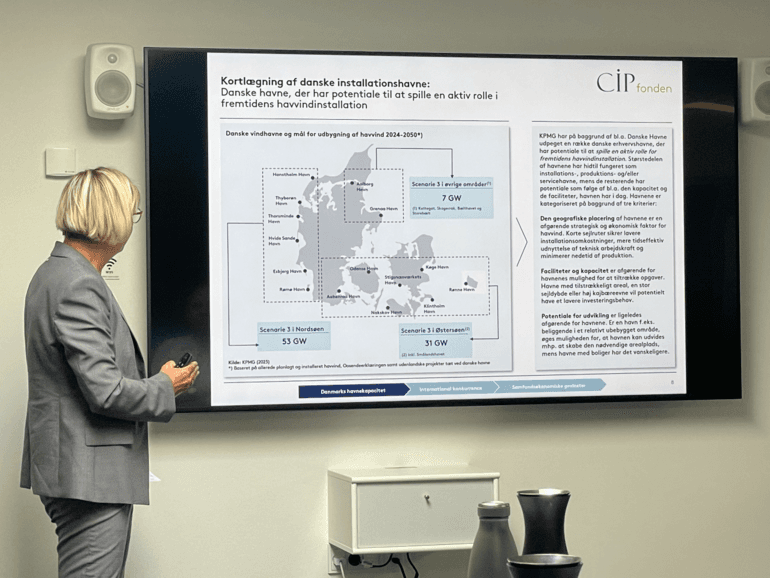
At the same time, everything indicates that the expansion of offshore wind will mean that there will be a shortage of port capacity, including for shipping. The CIP Foundation has published the report “Ports & Offshore Wind”, which confirms this.
- Investment must be made in expanding the ports. And you need to be sure whether the open door projects will come to fruition or not, says managing partner of the CIP Foundation Charlotte B. Jepsen.
If there is no investment in that expansion, there is even another risk.
- The Danish offshore wind projects can all be shipped from at least one other foreign port that is just as close, adds Charlotte B. Jepsen, who presents a proposal where even small ports such as Rømø, Hvide Sande and Thorsminde in addition to Hanstholm come into play as shipping ports, despite the fact that both the depth of the shipping channel and the lack of hinterland area speak against such a role for those ports.
The last speaker of the day had an unconventional introduction.
- Maybe there is an alternative, because maybe we need to use a different installation method. We propose a feeder solution where the jack-up installation ship is anchored at the installation site. A feeder solution also allows smaller ports to come into play as shipping ports, because there is no need for such a deep shipping channel. This is already being done in the USA today, says Gry Rostrup, lead commercial manager for Offshore Wind, Europe at Maersk Supply Service.
And the company is about to bring that vision to life.
- Our first ship is being built in Singapore now, and it will be in the USA next year.
What the “Green Ports of the Future” will look like still seems to be unknown – but Energy Cluster Denmark and the Port of Grenaa have given a clue as to the direction.
Text, graphics, images, sound, and other content on this website are protected under copyright law. DK Medier reserves all rights to the content, including the right to exploit the content for the purpose of text and data mining, cf. Section 11b of the Copyright Act and Article 4 of the DSM Directive.
Customers with IP agreements/major customer agreements may only share Danish Offshore Industry articles internally for the purpose of handling specific cases. Sharing in connection with specific cases refers to journaling, archiving, or similar uses.
Customers with a personal subscription/login may not share Danish Offshore Industry articles with individuals who do not themselves have a personal subscription to Danish Offshore Industry.
Any deviation from the above requires written consent from DK Medier.