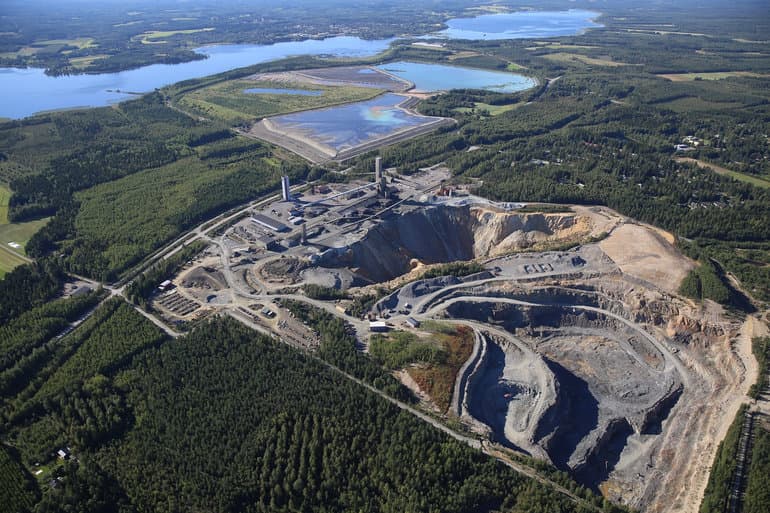
In the small community of Pyhäjärvi in northern Finland is one of the deepest mines in Europe. The 1444-meter-deep Pyhäsalmi mine opened in 1962. For many years, it was the focal point of industry in the area with its large quantities of zinc and copper.
But as the reserves of the sought-after resources have been depleted, activity in the mine 450 km north of the capital, Helsinki, has slowed down. It has been out of operation since August 2022. But now the mine is getting a new lease of life. Not as a climate-damaging industry like before. Quite the opposite.
The mine will be used to store energy from renewable energy sources such as the sun and wind. The Scottish company Gravitricity will use the mine as a prototype to demonstrate a new form of energy storage.
There is great potential in being able to store excess renewable energy so that it does not go to waste, for example when the wind is so strong that more energy is produced than is used.
Gravity battery
The technology works by equipping the mine with a so-called gravity battery, which uses excess energy to hoist heavy weights up the deep shafts with cables. When there are periods of low energy production, the weight is released, which in just seconds causes a turbine to generate electricity.
Gravitricity sees good opportunities to spread the technology, which is "operationally reliable and long-lasting".
- It is a potential future for mines that are approaching the end of their lifespan, says Martin Wright, chairman of the company, in a press release.
Energy storage has become an area that is being invested in more as greener energy sources gain ground at the expense of fossil fuels. With fossil fuels such as coal and oil, the use can be adjusted according to the need. They can be burned when the energy is needed.
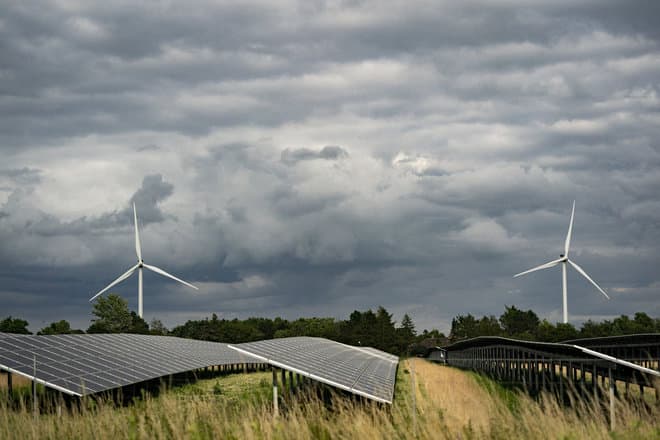
It does not work that way with energy sources such as solar and wind, which produce energy depending on the weather. Therefore, it is necessary to find ways to store the energy so that it can be used when the weather is cloudy and windless.
No energy loss
Energy is already stored in a number of other ways, but especially in batteries.
Other types of batteries gradually lose the stored energy over longer periods, but this is not the case with gravity batteries. They do not discharge because the weights are already raised and are just waiting to fall. This means that they can store energy for years without loss, if necessary.
A research institute estimated in an analysis last year that gravity batteries in abandoned underground mines could potentially store enough energy to handle what corresponds to a whole day's global electricity consumption.
The mines already have the infrastructure for the technology in the form of installations and large differences in altitude, while many are already connected to the electricity grid. This will also make it a relatively cheap solution, the analysis states.
The greatest potential is in China, India, Russia and the USA, where there are many and deep mines. The conversion of abandoned mines can provide economic benefits to communities that have previously been dependent on the mines for the local economy.
This is also the case for the project in northern Finland. It is expected to breathe new life into the small mining village with 5,000 inhabitants, which was hit hard by the end of traditional mining in the area.
For now, however, energy storage in mines is a niche technology. But with abandoned and closed mines, which are believed to number in the millions globally, the technology can be spread and the depleted mines can be given new life.
The deeper and wider the mine shafts, the better, because then the weights can be heavier and fall deeper, thus storing more energy for the cloudy and windless days.
/ritzau/
Text, graphics, images, sound, and other content on this website are protected under copyright law. DK Medier reserves all rights to the content, including the right to exploit the content for the purpose of text and data mining, cf. Section 11b of the Copyright Act and Article 4 of the DSM Directive.
Customers with IP agreements/major customer agreements may only share Danish Offshore Industry articles internally for the purpose of handling specific cases. Sharing in connection with specific cases refers to journaling, archiving, or similar uses.
Customers with a personal subscription/login may not share Danish Offshore Industry articles with individuals who do not themselves have a personal subscription to Danish Offshore Industry.
Any deviation from the above requires written consent from DK Medier.