


Analyst neither impressed by Vestas' financial statements nor new giant wind turbine

Vestas today presented a profit of 5.73 billion kroons (771 million euros) after tax. A profit that does not impress Sydbank's head of equity research Jacob Pedersen, who has followed the Vestas share for over twenty years.
- If we look at the figures that Vestas publishes for 2020, they are weaker than expected. Corona has cost Vestas more than I expected, he says and continues:
- There are again more provisions for product and design defects on the wind turbines. It has been a bit of a bad story in 2020 that the products have not been as reliable as they have been for a long number of years, and that is not free. So that is one of the things that spoils the accounts.
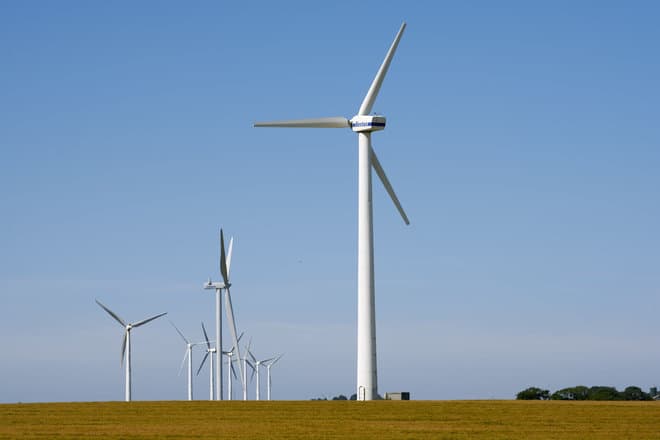
Among the bad stories that Jacob Pedersen refers to is, among other things, that Vestas recently had to put approximately 150 units V-150 turbines out of service after discovering a fault on the turbine blades.
The fault was discovered after a wind turbine collapsed at the Aldermyrberget wind farm in Sweden in November.
Still market leader
Looking at the fourth quarter in isolation, the equity analyst does see bright spots for the wind turbine manufacturer. He is, however, concerned about Vestas's falling EBIT margin, which once again fell to 4.7 percent against 8.3 percent last year and is also far from previous profit margins, which were, for example, 13.9 percent in 2016.
- If we look at Vestas in relation to all its competitors, Vestas' accounts for the fourth quarter are actually somewhat better than we had expected. Among other things, there was a very high unannounced order intake, and this helps to tell the story that Vestas is still really strong in the market. But we would like to see the company start to earn a little more than they have shown in 2020, says Jacob Pedersen.
In 2021, Vestas expects an EBIT margin before special items of 6-8 percent. A target that is also on the low end according to Jacob Pedersen. However, he points out that even though Vestas' presented expectations are not what he and other analysts had expected, Vestas is still a powerful factor in the industry.
- We can see from the order intake at the end of 2020 that Vestas is far ahead of its competitors in onshore wind. We can also see from the total earnings that Vestas delivers this year that they are far ahead of their competitors, says Jacob Pedersen.
New flagship turbine fails to impress
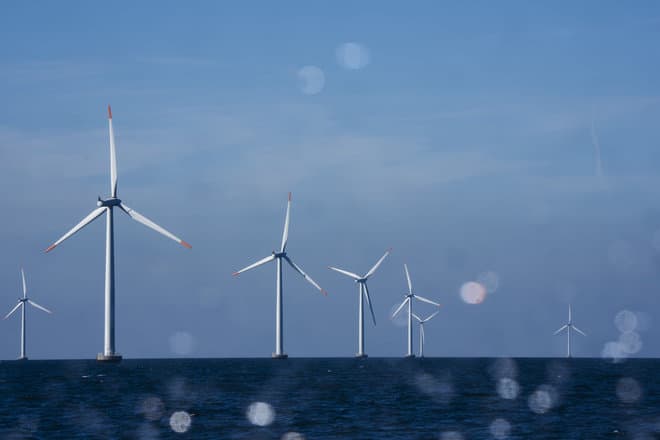
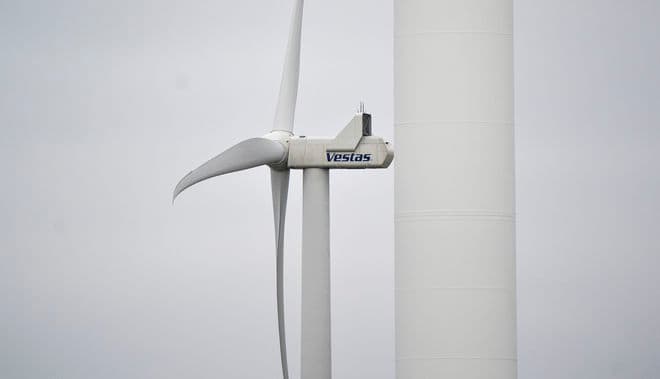
Shortly before the presentation of the annual accounts, Vestas also revealed its plans to launch the V236-15.0 MW wind turbine, which is the offshore wind turbine with which Vestas will challenge competitors GE and Siemens Gamesa.
As the name suggests, the Vestas turbine has an output of 15 MW and is thus currently the most powerful on the market. However, it is not a turbine that will make its competitors shiver, Jacob Pedersen estimates.
- It should not have been smaller in any case. It is a turbine that is a leap forward for Vestas Offshore in terms of product, but still only marginally larger than the competitors' wind turbines, he says and continues:
- If any of the competitors have been a little sneaky in terms of seeing what they are coming up with from Vestas, then they may have been waiting for an upgrade of their turbine until Vestas thinks they have the biggest one before they show Vestas where the cupboard should be. This turbine is not that big, but it is clearly a leap forward and absolutely necessary in terms of fulfilling the ambitions. It is still the largest wind turbine, but the competitors do not need to do much tweaking before they can quickly deliver something better.
However, the turbine will play an important role, as there will be many large offshore orders to be awarded in the coming year.
- The important thing is that this turbine is included in the considerations for all the offshore wind projects that will be awarded to producers next year, because there is a huge pile of projects that need to be named, and Vestas must be included, says Jacob Pedersen.
Text, graphics, images, sound, and other content on this website are protected under copyright law. DK Medier reserves all rights to the content, including the right to exploit the content for the purpose of text and data mining, cf. Section 11b of the Copyright Act and Article 4 of the DSM Directive.
Customers with IP agreements/major customer agreements may only share Danish Offshore Industry articles internally for the purpose of handling specific cases. Sharing in connection with specific cases refers to journaling, archiving, or similar uses.
Customers with a personal subscription/login may not share Danish Offshore Industry articles with individuals who do not themselves have a personal subscription to Danish Offshore Industry.
Any deviation from the above requires written consent from DK Medier.