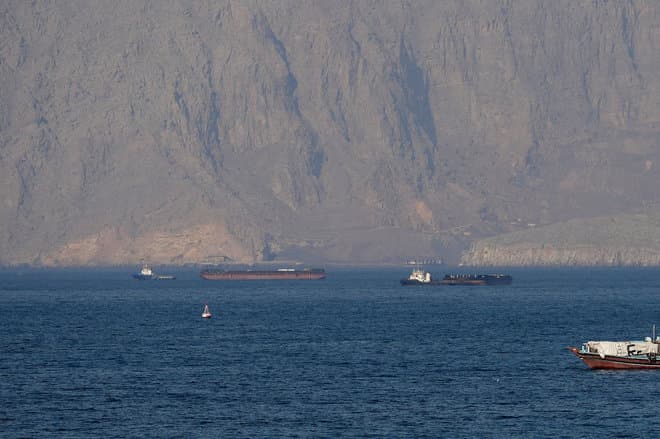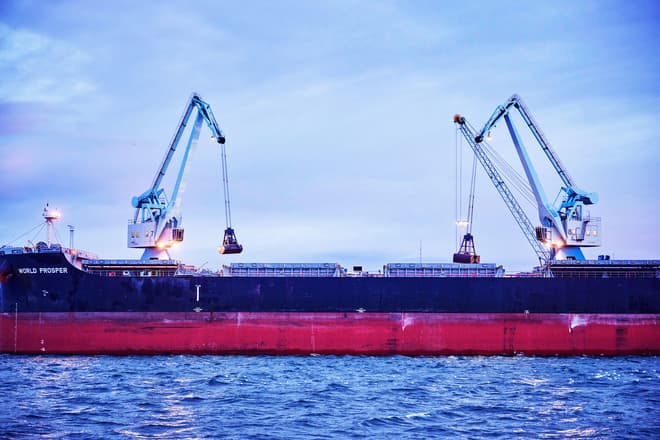


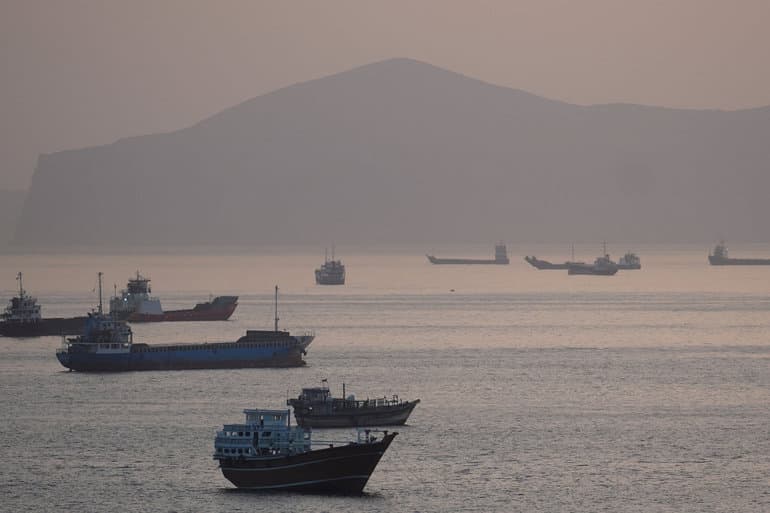
The threat level for maritime security in the Strait of Hormuz remains critical due to ongoing military operations in the region. The British Maritime Safety Agency UKMTO wrote in a post on the social media X.
- Mariners should expect increased naval presence, heightened security measures, risk of VHF calls and congestion near anchorage areas.
VHF stands for "Very High Frequency" and is a term for the type of radio waves used for communication at sea. Unlike mobile phones, VHF radios are designed to operate at sea, where signals travel in a straight line between antennas.
According to the UKMTO, mariners should coordinate their traffic with the authorities in Oman via VHF channel 16. The UKMTO writes that the United States has established a zone of heightened security in which to support vessels sailing through the Strait of Hormuz.
The zone is located south of a traffic separation scheme that acts as a highway for ships in the Strait of Hormuz. Ships should sail down into the security zone so that they can avoid the traffic separation, it says.
- Passage through or in the immediate vicinity of the traffic separation scheme should be considered extremely dangerous due to the presence of mines that have not yet been fully mapped or cleared. Operators are urged to carefully review risk assessments and route planning prior to passage, writes UKMTO.
Oman is one of the countries located in the Strait of Hormuz to the south. The purpose of a traffic separation scheme is to minimize the risk of collisions in densely trafficked areas of the sea.
The Strait of Hormuz has been de facto closed since the US and Israel launched a large-scale attack on Iran on February 28. This led to Iran responding and, among other things, closing the Strait of Hormuz to the US and its allies.
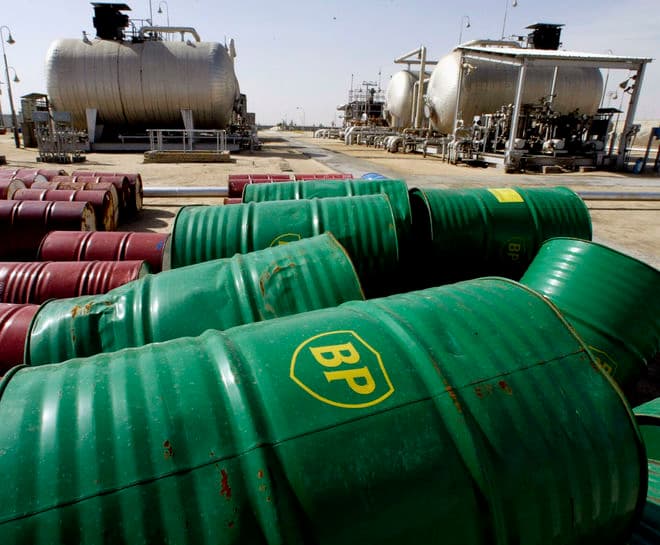
This has created major problems for the oil and gas producing countries in the Persian Gulf and has caused oil prices to skyrocket. A fifth of the world's oil and gas is transported through the narrow strait.
/ritzau/
Text, graphics, images, sound, and other content on this website are protected under copyright law. DK Medier reserves all rights to the content, including the right to exploit the content for the purpose of text and data mining, cf. Section 11b of the Copyright Act and Article 4 of the DSM Directive.
Customers with IP agreements/major customer agreements may only share Danish Offshore Industry articles internally for the purpose of handling specific cases. Sharing in connection with specific cases refers to journaling, archiving, or similar uses.
Customers with a personal subscription/login may not share Danish Offshore Industry articles with individuals who do not themselves have a personal subscription to Danish Offshore Industry.
Any deviation from the above requires written consent from DK Medier.