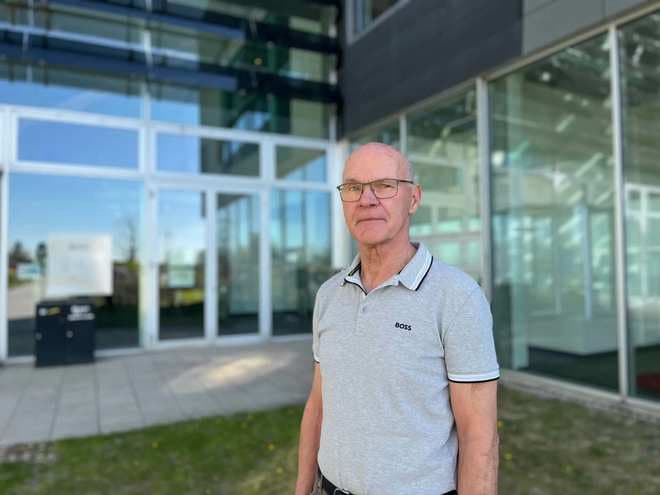




If the sharply rising oil price becomes more permanent, it could become more expensive to be a Dane. This is the assessment of Tore Stramer, chief economist at Dansk Erhverv.
- We are potentially in a situation where a new, sustained oil price shock could cut a significant chunk of growth in Denmark and raise inflation again, he writes in a comment.
- And it should be noted here that it is not only the price of energy that will increase. The prices of a wide range of other products, including food, will unfortunately also be affected.
The price of a barrel of crude oil has recently skyrocketed in the wake of conflict in the Middle East. On February 28, Israel, in cooperation with the United States, launched a comprehensive airstrike on Iran. The attack has since been retaliated for.
With an increase of around 40 percent in one week, the price has reached its highest level in almost four years. It was mid-2022, when Russia's invasion of Ukraine had been going on for a few months.
Conflicts in the Middle East often have an impact on the price of oil, because it is the region with the largest production. Currently, several oil-producing countries have limited oil production as a result of a closure of the Strait of Hormuz.
The location of the strait between the Persian Gulf and the Gulf of Oman makes it an important trade hub. Around 20 percent of the world's oil passes through the Strait of Hormuz.
The price of oil affects almost all prices in society - including the Danish one - because energy is used to produce everything from shoelaces to milk. In addition, goods must be transported around, and it can become more expensive if the price of gasoline and diesel increases.
According to Tore Stramer, a rising oil price has the fastest impact on gasoline and diesel. The effect can be seen almost on an hourly basis.
With a certain delay, it may also affect food prices at some point. This could take a few months, says the chief economist.
/ritzau/
Text, graphics, images, sound, and other content on this website are protected under copyright law. DK Medier reserves all rights to the content, including the right to exploit the content for the purpose of text and data mining, cf. Section 11b of the Copyright Act and Article 4 of the DSM Directive.
Customers with IP agreements/major customer agreements may only share Danish Offshore Industry articles internally for the purpose of handling specific cases. Sharing in connection with specific cases refers to journaling, archiving, or similar uses.
Customers with a personal subscription/login may not share Danish Offshore Industry articles with individuals who do not themselves have a personal subscription to Danish Offshore Industry.
Any deviation from the above requires written consent from DK Medier.