Denmark can compete with neighboring countries Sweden and Finland when it comes to disposing of radioactive waste from nuclear power. That's what Kirsten Hjerrild Nielsen thinks. She is technical director of the state-owned company Dansk Dekommisionering, which has been responsible for dismantling six nuclear plants on Risø.
- It makes sense to lean on foreign countries. There is little Danish research in the area, she says.
Since 1985, there has been legislation against using the technology in Denmark's energy planning, and it is not permitted to connect energy from nuclear power to the Danish electricity grid. On Wednesday, it emerged that the Danish government will investigate the possibilities of establishing nuclear power on Danish soil. This has led many to ask questions about where the dangerous radioactive waste should be placed.
- If you say "yes" to nuclear power, you also say "yes" to depositing the waste, says Kirsten Hjerrild Nielsen.
It is important to deal with the dangerous residual product that comes out of the process at the other end, she says.
- Radioactive materials emit radiation that can cause damage to the body. Both short-term damage at high doses and long-term damage such as cancer. They take a long time to develop.
Sweden and Finland want to bury radioactive waste
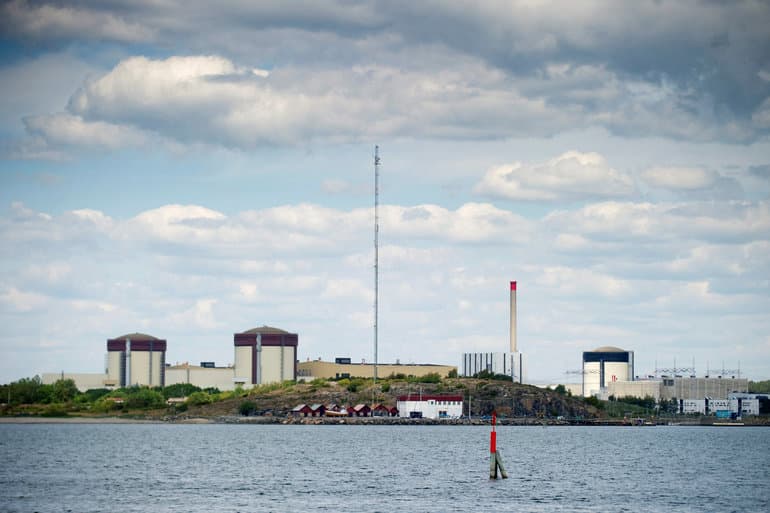
Earlier this year, Sweden broke ground on a large underground project - a trash can that will store radioactive waste for up to 100,000 years. The Swedish depots - the trash can - are being built 500 meters below the surface of the earth in billion-year-old bedrock. The waste is packed in copper containers surrounded by clay, after which they are buried in the mountain.
- There may be something to the fact that you should not place them where you drill for drinking water, but you can in principle put a kindergarten on top. When the plant is closed, there are no problems in terms of radiation, says Kirsten Hjerrild.
Finland is also close to being completely finished with a similar project. It will allegedly be the world's first of its kind, writes the technology media Wired. The difference is that there are different types of subsoil in Sweden and Finland compared to Denmark.
- Sweden and Finland are making underground final repositories in rock. It will also be possible in Denmark, but the deposits are limited. In Denmark we have a clayier subsoil.
Immediately it wouldn't make much difference, adds Kirsten Hjerrild Nielsen.
- The rock is very dense where it is not cracked, but the clay will close itself because it is plastic. The exercise is to contain the waste. And there is nothing that can keep everything inside forever. At some point it will come out. It's about delaying it so that it comes out as late as possible, says Kirsten Hjerrild Nielsen.
The facility will accommodate the waste from Sweden's current six nuclear reactors, wrote Illustreret Videnskab in January.
There are a total of 66 kilometers of underground tunnels where the waste will be placed. The first waste is expected to be delivered in the late 2030s. The completed facility is expected to be completed in 2080, writes Illustreret Videnskab. Until the trash cans are ready, the nuclear waste will be stored in temporary storage systems, writes the technology media Wired.
- It is in more or less ordinary warehouses, says Kirsten Hjerrild Nielsen.
/ritzau/
Text, graphics, images, sound, and other content on this website are protected under copyright law. DK Medier reserves all rights to the content, including the right to exploit the content for the purpose of text and data mining, cf. Section 11b of the Copyright Act and Article 4 of the DSM Directive.
Customers with IP agreements/major customer agreements may only share Danish Offshore Industry articles internally for the purpose of handling specific cases. Sharing in connection with specific cases refers to journaling, archiving, or similar uses.
Customers with a personal subscription/login may not share Danish Offshore Industry articles with individuals who do not themselves have a personal subscription to Danish Offshore Industry.
Any deviation from the above requires written consent from DK Medier.