
Both Ørsted and Copenhagen Infrastructure Partners (CIP) will be involved in building new offshore wind farms in Scotland. The two companies have won licenses as part of their respective consortiums in the recently concluded license tender. This is according to a press release issued by The Crown Estate Scotland.
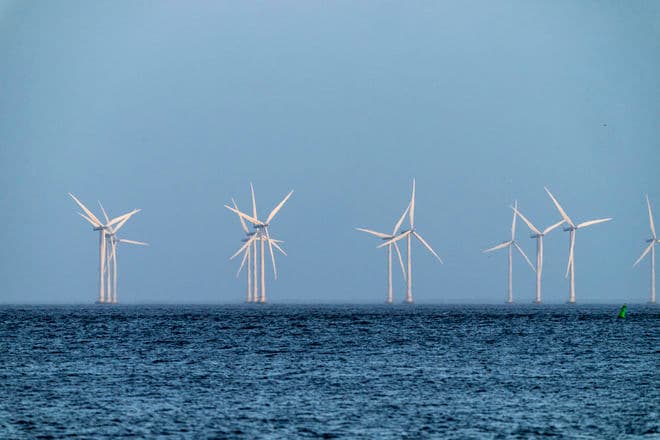
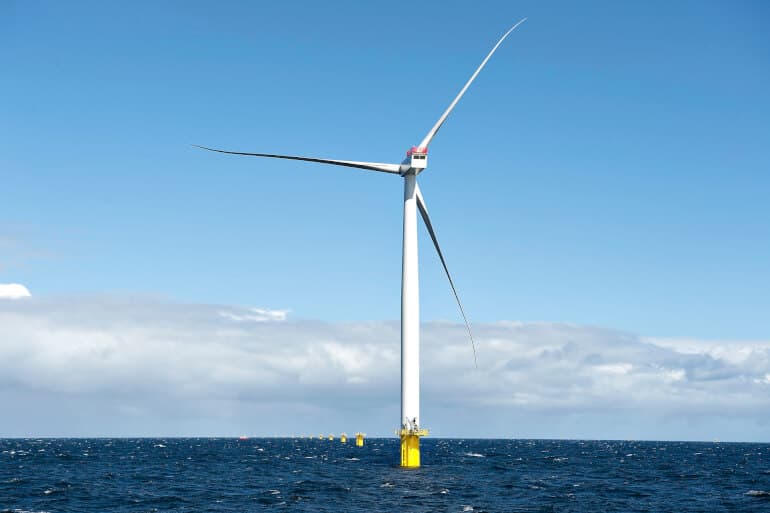
In both cases, these are floating wind projects. Ørsted, together with Falck Renewables and BlueFloat Energy, has won the right to enter into an option agreement for one GW of offshore wind. The project, which will be located off Caithness about 50 km east of Wick in northern Scotland, is Ørsted's first large-scale floating wind project in the world.
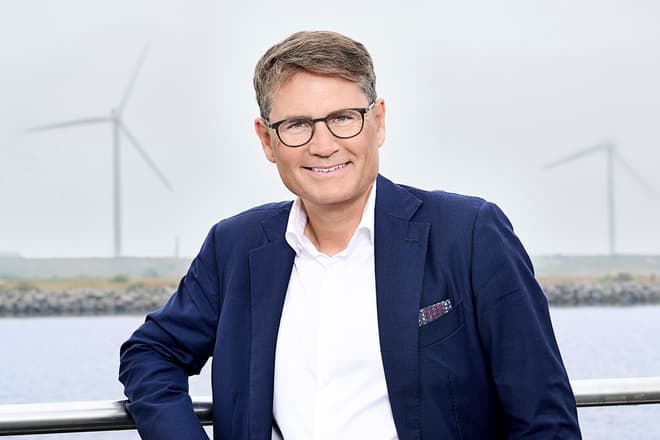
- I would like to commend Crown Estate Scotland for awarding areas on a large scale and focusing on commitments in the development phase, which is what is needed to ensure financial sustainability and make floating wind competitive. By securing this seabed area, we confirm our ambitions in floating offshore wind, while expanding our development pipeline and our long-term commitment to the UK, says Martin Neubert, Chief Commercial Officer and Deputy CEO of Ørsted.
CIP's winning project is also a floating one of its kind. The investment fund, together with SSE Renewables and Marubeni Corporation, has won the right to build a total of 2.61 GW of floating offshore wind off the east coast of Scotland.
Billions for the Treasury
In general, the demand for the Scottish licenses has been high. There have been a total of 74 applications, of which 17 have been selected. In total, licenses have been awarded for 24.826 GW. Of the almost 25 GW, the majority of the licenses have been awarded for floating offshore wind. Thus, licenses have been awarded for a total of 14.576 GW of floating wind, 9.755 GW of fixed foundation, and a single project of 495 MW will use both types of foundations.
The licenses provide revenue to the Scottish Exchequer for a total of GBP 699,200,000, equivalent to 6.2 billion DKK.
- In addition to the environmental benefits, this also represents a major investment in the Scottish economy, with around GBP 700 million delivered directly to the public purse. In addition, there are supply chain obligations worth billions of pounds. The variety and scale of the projects that will move on to the next phases shows both the remarkable progress in the offshore wind sector and a clear sign that Scotland is becoming an important hub for the further development of this technology in the coming years, says Simon Hodge, CEO of Crown Estate Scotland.
However, it was not the Danish installers who took home the most offshore wind licenses. The greatest success was experienced by the Spanish Iberdrola. In the form of its subsidiary Scottishpower Renewables, the Spaniards could see themselves as winners of a total of seven GW. Two GW were won by the company on their own, while the remaining five were won in collaboration with Shell.
Several other companies were also able to withdraw from the licensing with the right to build significant offshore wind projects. Among others, DEME won licenses for approximately two GW, BP for 2.9, BayWa for 960 MW and Vattenfall 798 MW.
All license winners can be viewed by clicking here.
Text, graphics, images, sound, and other content on this website are protected under copyright law. DK Medier reserves all rights to the content, including the right to exploit the content for the purpose of text and data mining, cf. Section 11b of the Copyright Act and Article 4 of the DSM Directive.
Customers with IP agreements/major customer agreements may only share Danish Offshore Industry articles internally for the purpose of handling specific cases. Sharing in connection with specific cases refers to journaling, archiving, or similar uses.
Customers with a personal subscription/login may not share Danish Offshore Industry articles with individuals who do not themselves have a personal subscription to Danish Offshore Industry.
Any deviation from the above requires written consent from DK Medier.