
Ørsted has reached a local agreement with American dock workers. The agreement thus ends a labor dispute that has been going on for more than three quarters of a year. The conflict, which became international, was well on its way to stopping the shipment of wind turbines to the United States from both Germany and Denmark.
The conflict began when Ørsted in the United States entered into a collective agreement with the NABTU construction union. However, the dock workers in the port city of New London in the state of Connecticut are organized in the International Longshoremen's Association (ILA) – and they started a labor dispute that involved both their international main organization, the International Transport Workers' Federation (ITF).
From here things went fast, as both 3F Transport, Dansk Metal, German ver.di and the Australian Maritime Union of Australia (MOA) became involved. Before the agreement that was reached on Thursday, the conflict threatened to block the shipment of wind turbines from Europe to the USA.
- We had agreed together with ver.di that we would not ship wind turbines from Denmark and Germany to the USA, says the chairman of the dockworkers at the Port of Esbjerg Brian Reichle, who has been in the USA to support the labor struggle.
- I was at an ILA meeting, where I spoke for 500-600 members. Afterwards, half of them lined up to shake my hand, says Brian Reichle, who has been in contact with Ørsted since he returned home.
Previously, he only had contact with the stevedore companies as well as Siemens Gamesa and Vestas, but now he has direct dialogue with Ørsted in Denmark.
- I have spoken to Ørsted four or five times, where I was called. There was a good dialogue, says Brian Reichle, who is sure that the agreement reached was resolved due to Ørsted's interference from Denmark.
3F Transport's local chairman: Perhaps the best news of the year
At the dockworkers' union in Esbjerg, there is great satisfaction with the agreement in the US from the local 3F Transport chairman.
- It is unique that Ørsted signed the local agreement yesterday, and it is perhaps the best news of the year. It is good for us in the union and for Ørsted, says Jakob Lykke.
- It is a picture of international unity among the dockworkers in the unions through a long-term industrial struggle.
And there would have been consequences if an agreement had not been reached.
- If it had not been signed, no Siemens Gamesa turbines would have come from Esbjerg to the USA, he says.
- It is good style of Ørsted. Now we must have educated and retrained the dockworkers in the USA, as we have done in Esbjerg for the last 15 years.
Ørsted also happy about the agreement
DOI.dk has received the following written statement from Ørsted about the agreement that has been reached in the USA. And there is no doubt that it is a positive agreement for the energy company.
"We are pleased that the International Union of Operating Engineers and the International Longshoremen’s Association have reached an agreement on the work areas at State Pier."
It is something that provides good wages for dock workers, and it helps to secure the next American project, because it continues:
"The path we are on now will protect well-paying jobs for local unions, and it will create clarity about the professional roles that each union will have in the construction of our next project, Revolution Wind."
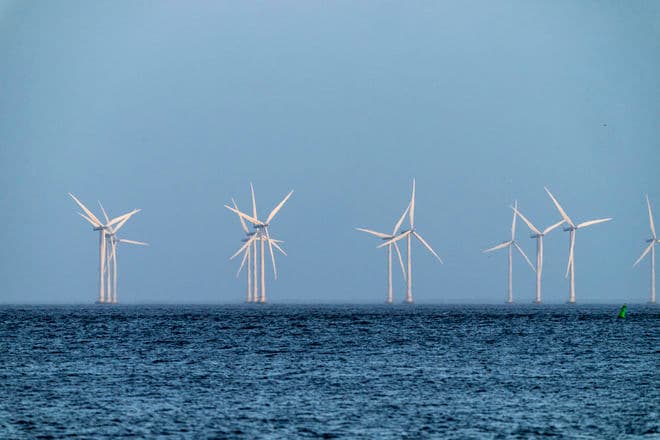
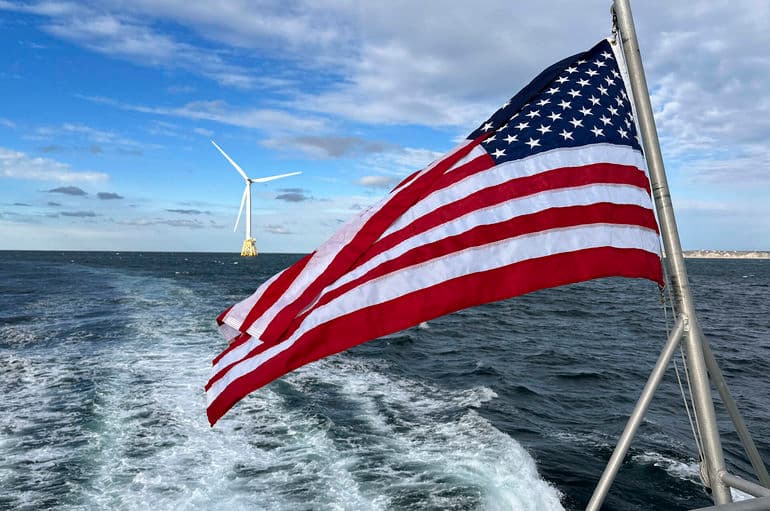
Revolution Wind is a 704 MW offshore wind farm that will supply the states of Connecticut and Rhode Island with green electricity from 2025. The farm is an equally owned joint project between Ørsted and Eversource.
Text, graphics, images, sound, and other content on this website are protected under copyright law. DK Medier reserves all rights to the content, including the right to exploit the content for the purpose of text and data mining, cf. Section 11b of the Copyright Act and Article 4 of the DSM Directive.
Customers with IP agreements/major customer agreements may only share Danish Offshore Industry articles internally for the purpose of handling specific cases. Sharing in connection with specific cases refers to journaling, archiving, or similar uses.
Customers with a personal subscription/login may not share Danish Offshore Industry articles with individuals who do not themselves have a personal subscription to Danish Offshore Industry.
Any deviation from the above requires written consent from DK Medier.