Denmark will not reach its climate targets in 2030 with the government's current efforts, according to the Climate Council, an independent and advisory body. Every year, the Climate Council reviews climate efforts, which once again appear to be lagging behind. New initiatives are needed if greenhouse gas emissions are to be reduced by 70 percent by 2030. And time is running out.
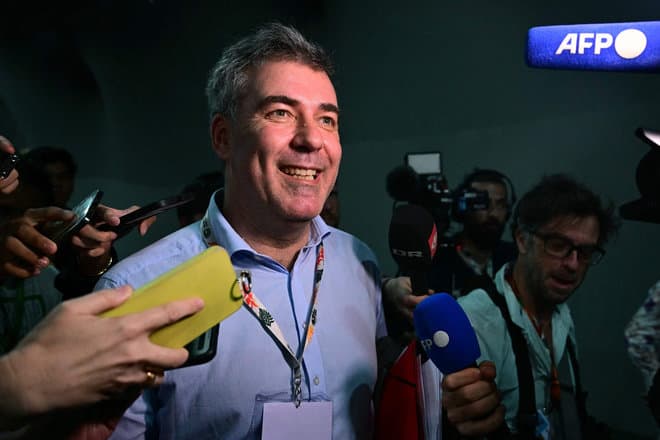
- It is not ruled out, but it is not yet clear that we can reach the target in 2030. Despite great progress in the last two years, the Climate Council assesses overall that the government's efforts do not yet make it clear that the 70 percent target in 2030 will be reached, says Professor Peter Møllgaard, chairman of the Climate Council.
According to the council, "significant progress" has been made in the past two years. Since the first status report from the Climate Council last year, the Folketing has, for example, adopted an agricultural agreement and reduction measures in the Finance Act. They contribute 2.4 million tons of reduced emissions.
Very much linked to unknown technology
However, the majority of the reductions are subject to a moderate to high risk of not being met. According to the Climate Council, this is because they are based on as yet unknown technology.
Denmark must reduce emissions by 20 million tons in 2030, and 10 million tons remain to be found. It is estimated that this will be more difficult because the low-hanging fruit has already been picked.
- We have assessed that some of the technologies we have looked at, especially within agriculture, have a high risk of not succeeding. Great progress has been made, but there are, for example, uncertainties within agriculture, where our assessment is that the government has not taken the risks seriously enough, says Peter Møllgaard.
It is the government's ambition that all the necessary decisions to achieve the 2030 target are made by 2025 at the latest. Approximately one million tonnes of CO2 must be reduced further in 2025 to reach the lower limit that the Folketing has committed to. The interim target is 50 to 54 percent and constitutes the 2025 target.
Lack of green electricity for PtX
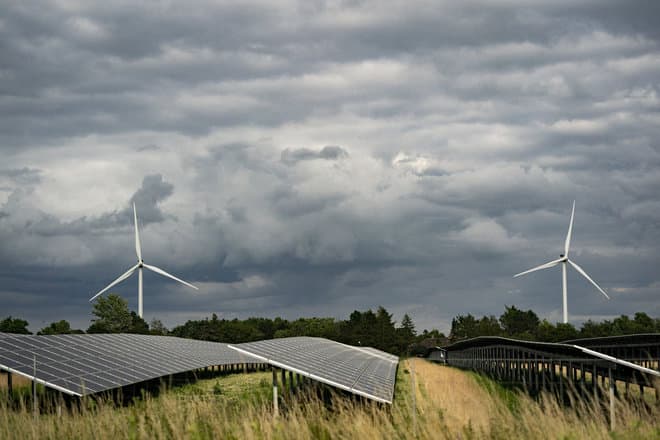
The Climate Council's analysis shows that there will be a lack of electricity from renewable energy in the years leading up to 2030 if Denmark is to avoid net imports of electricity.
Among other things, the government's new power-to-X strategy (PtX) requires large amounts of electricity. The planned expansion of electricity production can cover PtX equivalent to around one GW of electrolysis capacity in 2030.
However, the government has set a PtX target of 4-6 GW. If this investment is to be green, significantly more green electricity must be produced than is in the current plans, the Climate Council estimates.
The Climate Council concludes that from today until 2030 there will be a shortage of 5-8 TWh annually if Denmark is to cover its own electricity consumption to the 70 percent target. If the political PtX negotiations result in a target of 4-6 GW of electrolysis capacity in 2030, this will lead to an increased electricity consumption of 15-25 TWh, according to the Climate Council.
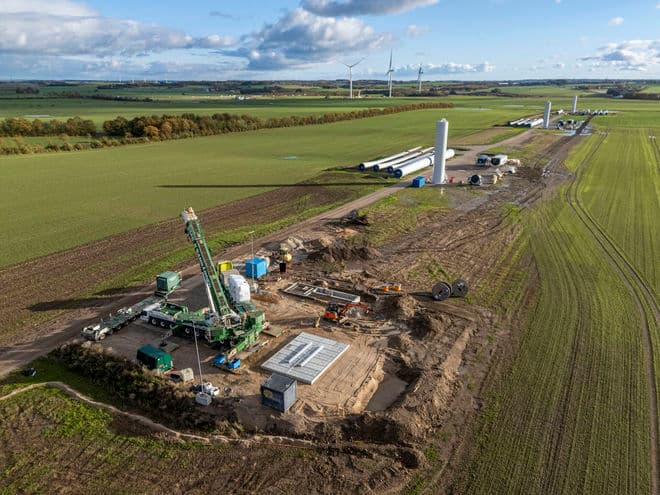
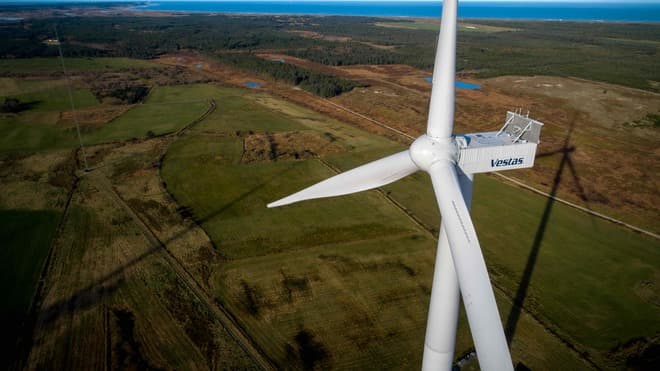
Therefore, the council points out, among other things, that one should try to bring forward the establishment of planned offshore wind, including the offshore wind farms agreed in connection with the 2022 Finance Act and the energy island of Bornholm.
Recommends DKK 1,500 per ton
A tax commission recently proposed three models for a tax on greenhouse gas emissions. The Climate Council recommends DKK 1,500 per ton. But the government has not yet come up with a proposal. But according to the Climate Council, it is urgent and should be introduced immediately.
- If this tool is to have an effect and drive the green transition, we need to get started on it immediately, says Peter Møllgaard.
A report on taxes for agriculture is expected later this year. But politicians should already be introducing a tax for other sectors such as transport and industry. The goal should be a uniform tax in 2030, he believes.
- It is very urgent to introduce a general greenhouse gas tax. We can start in the sectors where we know how to do it and then phase it in towards 2030, so that we reach a level of 1500 kroner per ton, says Peter Møllgaard.
The report can be read by clicking here.
amp / Ritzau
Text, graphics, images, sound, and other content on this website are protected under copyright law. DK Medier reserves all rights to the content, including the right to exploit the content for the purpose of text and data mining, cf. Section 11b of the Copyright Act and Article 4 of the DSM Directive.
Customers with IP agreements/major customer agreements may only share Danish Offshore Industry articles internally for the purpose of handling specific cases. Sharing in connection with specific cases refers to journaling, archiving, or similar uses.
Customers with a personal subscription/login may not share Danish Offshore Industry articles with individuals who do not themselves have a personal subscription to Danish Offshore Industry.
Any deviation from the above requires written consent from DK Medier.