A major step towards energy islands in the North and Baltic Seas has been taken today. Denmark, Germany and the Netherlands have today signed declarations to investigate and assess opportunities for the countries' cooperation on energy islands in the North Sea and the Baltic Sea.
The declaration with Germany specifically mentions the Danish political decision to establish an energy island in the North Sea and one in the Baltic Sea by 2030.
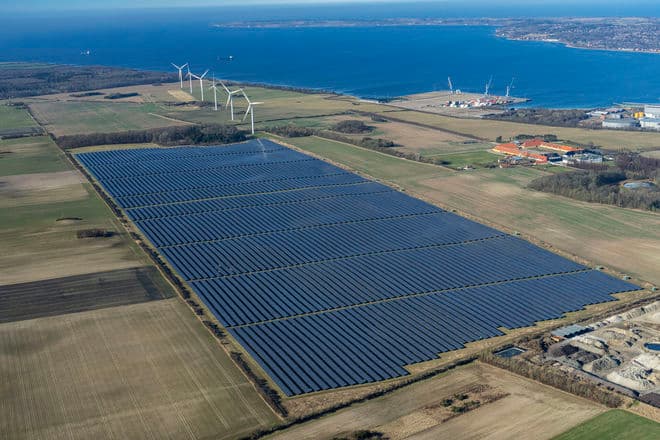
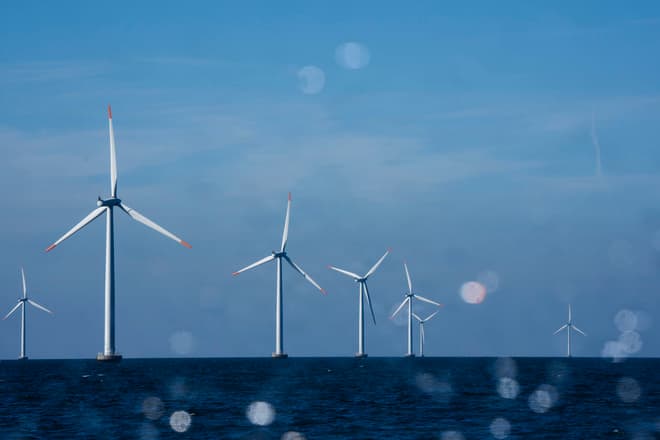
The energy island in the Baltic Sea is the wind turbines located about 20 kilometers south and southwest of Rønne in two clusters. A gross area of 60 km from Thorsminde has been designated for the energy island in the North Sea.
In the declaration with the Netherlands, the responsibility for analyses and studies is explicitly given to the Danish and Dutch TSOs, TenneT, Gasunie and Energinet.
The work will be anchored in the international consortium North Sea Wind Power Hub, where the three TSOs have collaborated since 2017 on the development of a realistic concept for artificial energy islands in the North Sea. Here, the analyses will be carried out with a view to the realization of a first joint project in 2030 or as soon as possible thereafter.
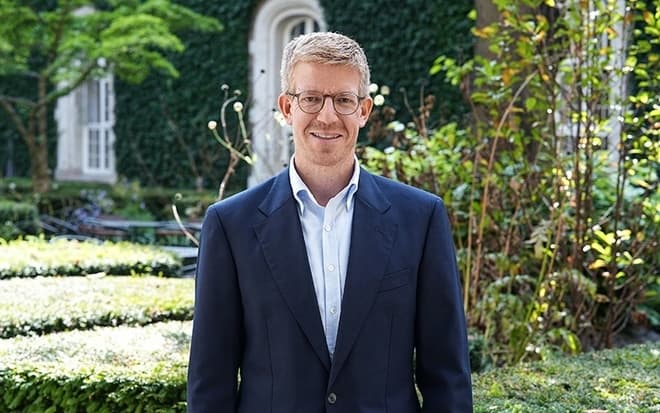
- The two energy islands in the North Sea and the Baltic Sea can only be realized through strong international cooperation, so the declarations are a very important step towards establishing energy islands, which are a vital next step for large-scale offshore wind and thus for green transition in Europe and the world, says Hanne Storm Edlefsen, Deputy Director of Energinet.
With the two declarations, the countries are dedicating themselves to jointly carrying out a number of complicated studies on how energy islands and offshore wind can be expanded and, not least, how electrical international connections from the islands can connect the countries' energy systems with each other. The use of electricity from offshore wind for hydrogen and green fuels is also a central element.
- Danish politicians have taken the lead in deciding to implement energy islands. But I think everyone agrees that energy islands that are only connected to Denmark are not enough compared to the massive upscaling of renewable energy that we need in Europe, says Hanne Storm Edlefsen.
At the end of November, Minister of Climate, Energy and Utilities Dan Jørgensen ordered Energinet to carry out feasibility studies for the two energy islands in the North Sea and the Baltic Sea, respectively.
amp
Text, graphics, images, sound, and other content on this website are protected under copyright law. DK Medier reserves all rights to the content, including the right to exploit the content for the purpose of text and data mining, cf. Section 11b of the Copyright Act and Article 4 of the DSM Directive.
Customers with IP agreements/major customer agreements may only share Danish Offshore Industry articles internally for the purpose of handling specific cases. Sharing in connection with specific cases refers to journaling, archiving, or similar uses.
Customers with a personal subscription/login may not share Danish Offshore Industry articles with individuals who do not themselves have a personal subscription to Danish Offshore Industry.
Any deviation from the above requires written consent from DK Medier.