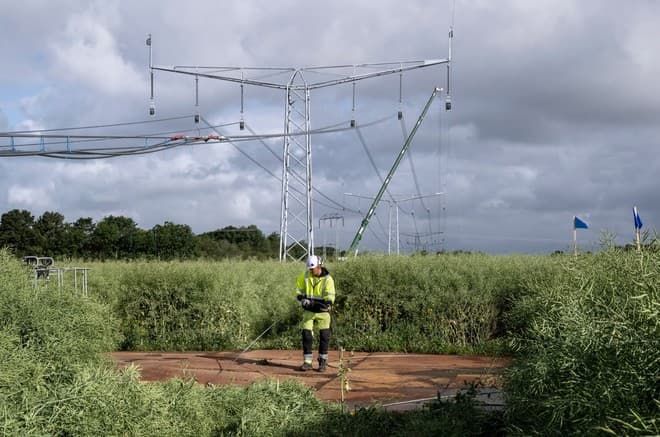
The construction industry entered 2025 optimistically, but only half of the planned projects have been realized. Energy projects in particular have been slowed down by economics, resistance and slow regulatory processes. This is shown by the 2025 edition of Bygherrebarometeret – an analysis that includes all construction and civil engineering projects in Denmark with a value of over 40 million DKK – which is supported by the Danish Construction Association and Byggefakta.
Of the year's 1,034 planned construction and civil engineering projects with a value of over 40 million DKK, only 567 have been started – a realization rate of 52 percent. The total construction cost for completed projects is DKK 79 billion. DKK against the expected DKK 151 billion. Behind the figures is a particularly significant decline in energy projects, where the postponements have been most extensive. This is stated by the Danish Association of Building Owners and Byggefakta in a press release.
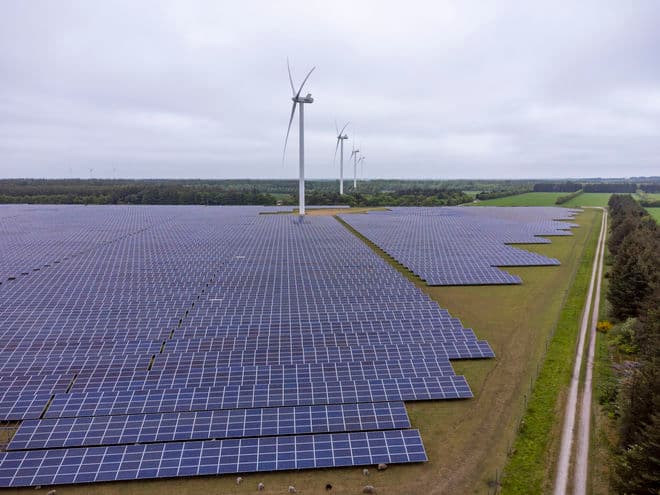
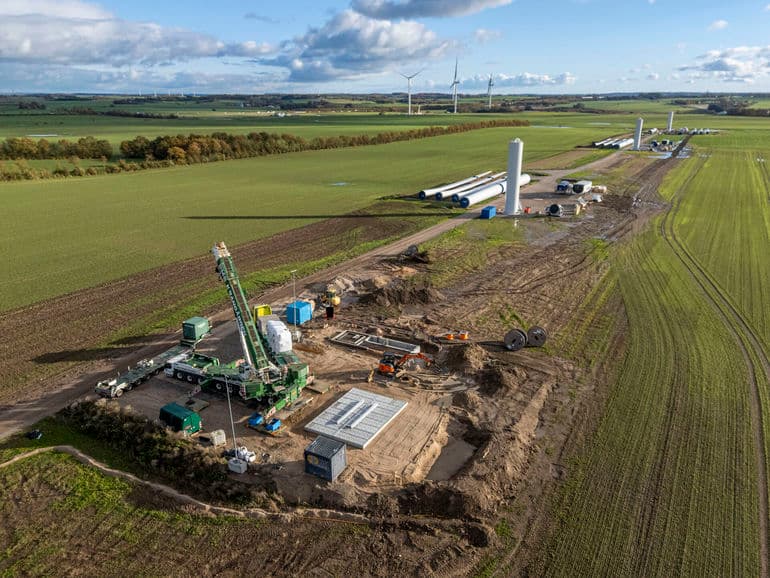
- The record low realization rate in 2025 is due to the fact that around two out of three large projects within energy and infrastructure are postponed or cancelled. Most solar cell plants and district heating projects have been postponed or completely dropped this year, says Rasmus Schulian, a senior analyst at Byggefakta.
Several of the postponed projects have been moved to 2026, where there are again record-high ambitions. The total pipeline for next year is DKK 161.5 billion, of which a full DKK 53 billion is within energy and infrastructure – 10 percent. more than the year before.
Postponements can block political goals
The Danish Builders' Association points out that the many postponements make it difficult to implement political goals of green transition and more housing.
- It is difficult for the country's professional builders to make ends meet. They encounter resistance when projects are to be implemented, especially within the energy sector, but also for developers of housing. This means that we are stalling with some of the changes we want in our society, including ensuring a green transition and creating more housing in the big cities, says Jesper Malm, political director of the Danish Builders' Association.
At the same time, there are significant geographical differences in construction activity. Growth continues to be concentrated east of the Great Belt, where the Capital Region and Zealand together account for 64 percent. of the total pipeline in 2026. In Central Denmark, the activity level is stable, but lower than in previous years, while Southern Denmark is experiencing a slight increase driven by the large data center project in Varde. Northern Denmark, on the other hand, is declining slightly, but has a high share of energy and defense construction.
Although many projects are being postponed, the analysis also points to new trends in construction. Several builders expect that renovation and transformation of existing buildings will take up more space in 2026, and at the same time there is growing attention to the conditions of apprentices on the country's construction sites - an area that is now considered the most prioritized within social sustainability.
amp
Text, graphics, images, sound, and other content on this website are protected under copyright law. DK Medier reserves all rights to the content, including the right to exploit the content for the purpose of text and data mining, cf. Section 11b of the Copyright Act and Article 4 of the DSM Directive.
Customers with IP agreements/major customer agreements may only share Danish Offshore Industry articles internally for the purpose of handling specific cases. Sharing in connection with specific cases refers to journaling, archiving, or similar uses.
Customers with a personal subscription/login may not share Danish Offshore Industry articles with individuals who do not themselves have a personal subscription to Danish Offshore Industry.
Any deviation from the above requires written consent from DK Medier.