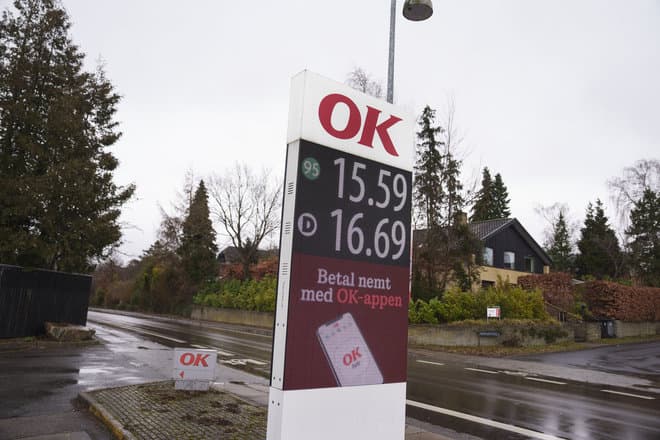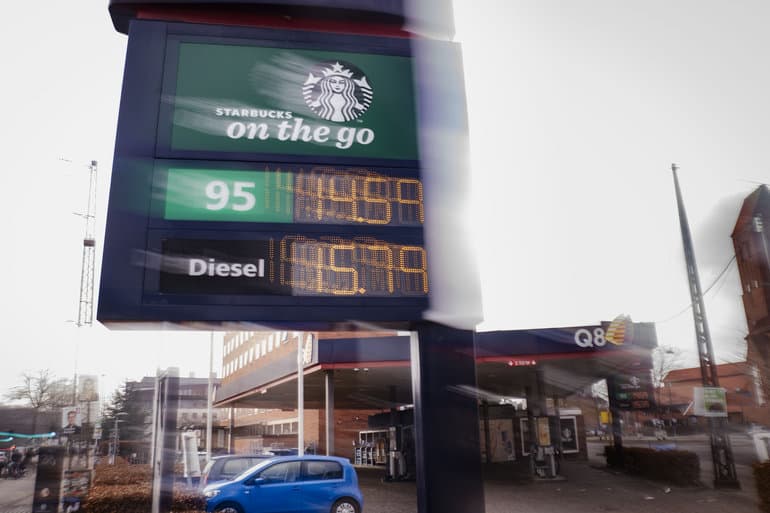
The question is no longer whether the rising price of oil will have negative consequences for the Danish economy, but how hard the blow will be. This is stated in an analysis from the Danish Chamber of Commerce.
In the business organization's main scenario, the price of a barrel of crude oil stabilizes at around 110 dollars. This is about 60 percent higher than a month ago. The price will then fall to $85-90 towards the end of the year, and at the same time, ship traffic through the Strait of Hormuz will normalize during April and May.
If this happens, Danish Business Council estimates that growth in the Danish economy will be reduced by up to 0.75 percentage points and end at 1.5 percent in 2026. In addition, inflation is expected to grow by one to two percent for the year.
- The development will largely be a consequence of market reactions that have already occurred, with uncertainty about the situation in the Middle East dragging on for some time yet, but not worsening further, the analysis states.
- The increased uncertainty will depress consumer and business confidence and have a dampening effect on corporate investments and household consumption.
Prepares three scenarios
Danish Business Council, which has has set out three scenarios for the Danish economy, emphasises that the estimates are associated with great uncertainty.
- In addition to uncertainty about the size and duration of the energy price shock, there is also uncertainty about how such a shock will materialise through the world economy, and thus the Danish economy. As things stand now, it is our assessment that the current development will not have major consequences for the Danish economy.
- But conversely, our calculations also show that a more protracted period of high - and perhaps even further increases in energy prices - will have economic consequences, it says.
Danish Business has also drawn up "a harsh scenario", as the organisation calls it. Here, the price of a barrel of crude oil will rise further from the current level of around 110 dollars to 160 dollars over the coming months.
In that case, the situation is assessed to lead to a reduction in GDP growth of two percentage points. In that case, the Danish economy - according to the Danish Chamber of Commerce's forecast - will almost come to a standstill, and inflation will end up at around 3.5 percent for the whole year.
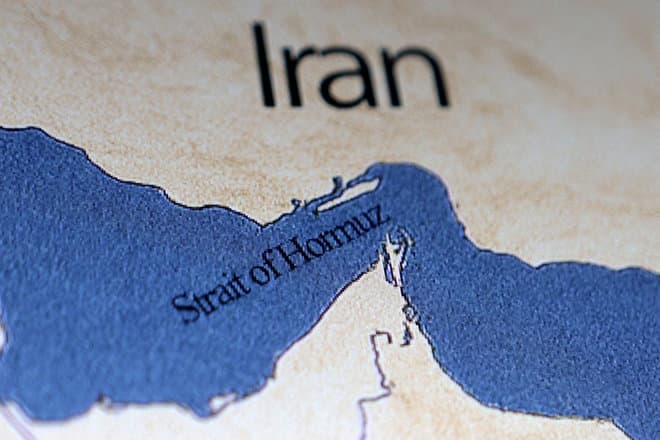
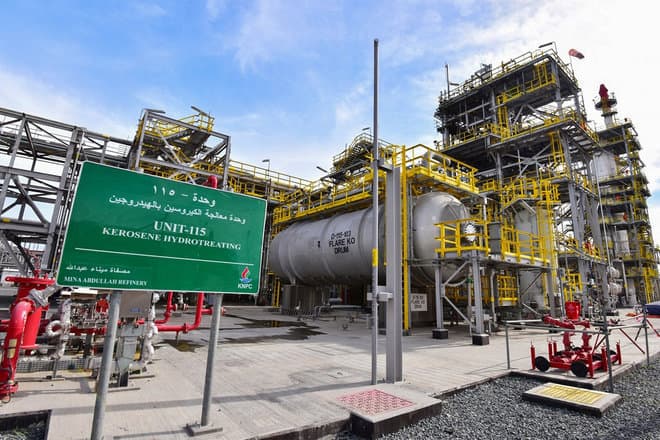
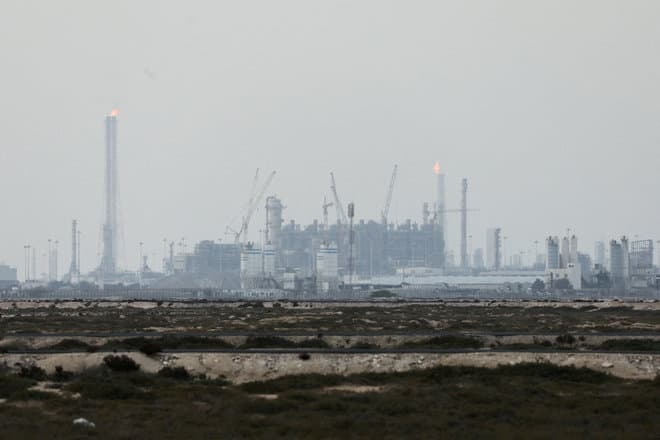
The price of oil has risen sharply after Israel and the United States attacked Iran about three weeks ago. Attacks from both parties have, among other things, targeted energy infrastructure, and the Strait of Hormuz has also been virtually closed to shipping.
Since a large part of the world's oil consumption passes through the strait, this has a major impact on the price of crude oil.
/ritzau/
Text, graphics, images, sound, and other content on this website are protected under copyright law. DK Medier reserves all rights to the content, including the right to exploit the content for the purpose of text and data mining, cf. Section 11b of the Copyright Act and Article 4 of the DSM Directive.
Customers with IP agreements/major customer agreements may only share Danish Offshore Industry articles internally for the purpose of handling specific cases. Sharing in connection with specific cases refers to journaling, archiving, or similar uses.
Customers with a personal subscription/login may not share Danish Offshore Industry articles with individuals who do not themselves have a personal subscription to Danish Offshore Industry.
Any deviation from the above requires written consent from DK Medier.