

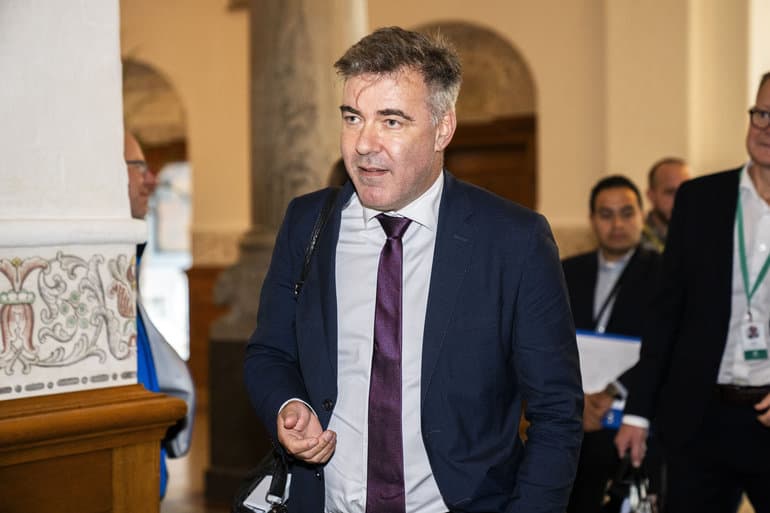
Although the International Energy Agency (IEA) has made a rare decision to open its oil reserves, Danes should not be worried that there is a risk of a definite oil shortage. This is what Minister of Climate, Energy and Utilities Lars Aagaard (M) says to Ritzau.
- We are not running out of oil. You should not be nervous like that, says Lars Aagaard, after the decision to open the oil reserves has been made.
- But if Danes want to help their wallets and ensure that this situation does not develop in a bad direction, then we must all return to some of the good energy habits we knew when the war in Ukraine began.
Denmark and a further 31 countries are members of the IEA. The agency's member countries decided unanimously earlier on Wednesday that the agency should provide access to a total of 400 million barrels of oil from the member countries' oil reserves. As minister in the area, Lars Aagaard voted on behalf of Denmark.
- It is necessary because the oil market is under pressure. In Europe, we do not have any supply challenges, but - as I have been informed - there are some Asian countries that are starting to see that they are lacking oil.
- And then we have all noticed that prices have gone up. So it is both to ensure that there is enough oil to cover consumption and to stabilize prices, says the minister.
Investigating the possibility of releasing Danish reserves
Lars Aagaard cannot yet answer whether oil from the Danish reserves will be opened up. But if the law allows it, it should happen, the minister believes.
- We also have oil stocks, and my ministry is checking whether we can also release something in Denmark. I don't know yet, but my basic position is that we should do it if it is legal, says Lars Aagaard.
He adds that according to Danish law, Denmark must release oil from its reserves if the country is in a critical shortage situation. But there is currently no critical shortage situation in the oil sector in Denmark.
This is the first time since Russia invaded Ukraine in 2022 that the IEA has opened up its oil reserves. At that time, 182 million barrels of oil were released.
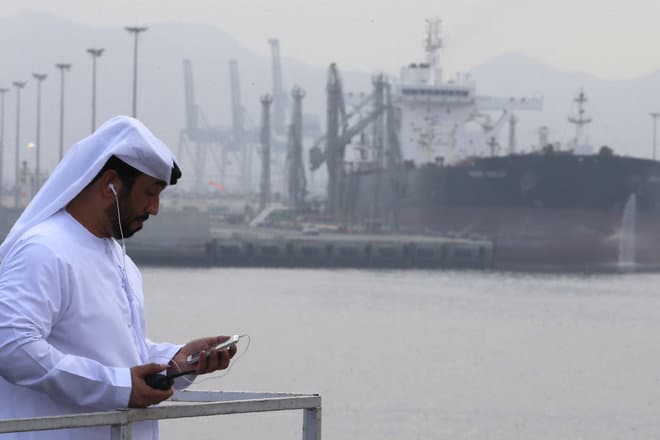
The current turmoil in the oil market is caused by the war in the Middle East, where the Strait of Hormuz, which lies between Iran and the Arabian Peninsula, has been practically closed, as ships cannot sail safely through the strait, and since the Revolutionary Guard in Iran has taken control of the waters.
The fact that tankers cannot pass through the strait has made it difficult to transport oil from the countries around the Persian Gulf. It is estimated that approximately one-fifth of all the world's oil and gas supplies pass through the Strait of Hormuz under normal circumstances.
/ritzau/
Text, graphics, images, sound, and other content on this website are protected under copyright law. DK Medier reserves all rights to the content, including the right to exploit the content for the purpose of text and data mining, cf. Section 11b of the Copyright Act and Article 4 of the DSM Directive.
Customers with IP agreements/major customer agreements may only share Danish Offshore Industry articles internally for the purpose of handling specific cases. Sharing in connection with specific cases refers to journaling, archiving, or similar uses.
Customers with a personal subscription/login may not share Danish Offshore Industry articles with individuals who do not themselves have a personal subscription to Danish Offshore Industry.
Any deviation from the above requires written consent from DK Medier.