From July 1st, it has become a little more expensive to turn on the electricity at home. Saturday marked the end of the six-month period in which a majority of the Danish Parliament had decided that the electricity tax should be reduced to the EU's minimum rate, which is 0.8 øre per kilowatt-hour.
According to the industry organization Green Power Denmark, this means that the average family will have to pay 1,723 kroner more for their electricity in the second half of 2023 compared to the first.
- This also means that if you have the high tax for a whole year, we are well over 3,000 kroner more for an ordinary family, says Kristian Jensen, CEO of Green Power Denmark.
Green Power Denmark believes that the lower tax should be made permanent.
Higher prices
Ida Moesby, a consumer economist at Nordea, says that, all else being equal, a higher tax will mean that the bill will be higher.
- But you have to remember that what What made it so exceptionally expensive to use electricity was that the raw material price for electricity rose a lot, she says.
She herself has not calculated how much more expensive the higher electricity tax will be in kroner and øre. But she estimates that it is households that use a lot of electricity and especially households with one income who will notice the higher tax.
- Now you can say that your electricity bill will increase again, but not as drastically as we saw last year, because the raw material price is not that high, she says.
Ida Moesby emphasizes that the electricity tax plays a role in the price on the electricity bill, but several other things do too. In addition to the electricity tax to the state, the electricity bill consists of tariffs to the electricity company and Energinet, VAT and the raw material price for electricity. Tariffs are fees for the transport of electricity, which cover the costs of operation and maintenance.
The Danes have changed their habits
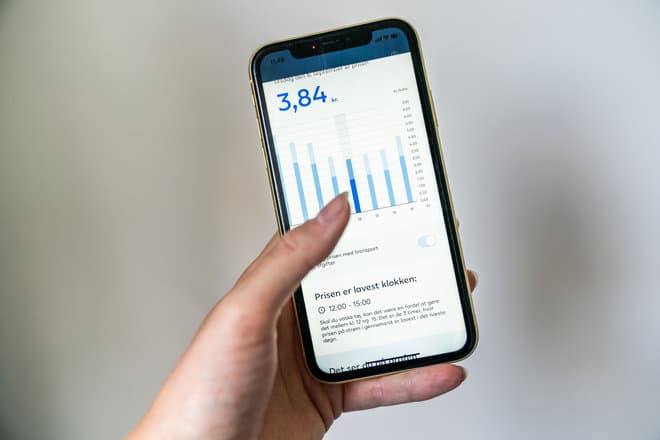
Ida Moesby also notes that there are signs that the Danes have changed their behavior in the past year, where we have shifted our electricity consumption away from the periods when it is most expensive.
At the beginning of May, the Danish Energy Agency published a study that indicated that electricity consumption in the first quarter of the year was 19 percent lower than expected. The Danish Energy Agency also noted that people had become good at using electricity when it was cheapest and at the same time using less electricity.
The Danish Parliament made the agreement on the lower electricity tax in September last year. The Ministry of Finance estimated that the savings for an average family with a consumption of 4000 kilowatt-hours per year would be 1700 kroner.
On the other hand, the six-month period would cost the state around 3.5 billion kroner. If you ask the chairman of the Danish People's Party, Morten Messerschmidt, the state could do without that income.
- Slotsholmen is overflowing with money. It is especially in light of the fact that it seems unsympathetic that people are now telling pensioners, early retirees and others with lower incomes that they have to pay more in tax, he says.
Even though prices have fallen, he believes that people with lower incomes can still feel the economic crisis. The Danish People's Party will therefore propose that the tax be permanently lower.
/ritzau/
Text, graphics, images, sound, and other content on this website are protected under copyright law. DK Medier reserves all rights to the content, including the right to exploit the content for the purpose of text and data mining, cf. Section 11b of the Copyright Act and Article 4 of the DSM Directive.
Customers with IP agreements/major customer agreements may only share Danish Offshore Industry articles internally for the purpose of handling specific cases. Sharing in connection with specific cases refers to journaling, archiving, or similar uses.
Customers with a personal subscription/login may not share Danish Offshore Industry articles with individuals who do not themselves have a personal subscription to Danish Offshore Industry.
Any deviation from the above requires written consent from DK Medier.