The government will make it possible to set up renewable energy plants in more places
The government presented 17 initiatives on Tuesday that will help speed up the green transition. These include greater compensation for neighbors, the possibility of cheap electricity for neighbors of the plants and more money for rural areas, which often provide land for production.
Among the 17 proposals, the government also proposes a more flexible approach to planning and setting up renewable energy plants. Here, the initiative to make it easier for municipalities to install solar cells on public buildings has received attention and was announced in connection with the government's presentation of the Finance Act.
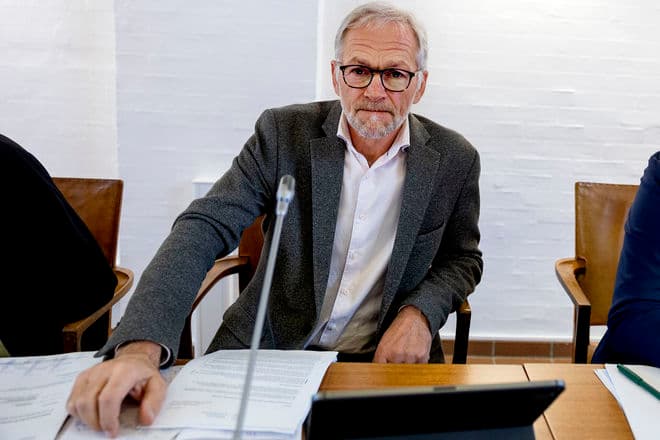
- The government is now coming up with a number of proposals that clear the way, and which we would like to discuss with the parties in the Folketing, says Minister for Climate, Energy and Utilities Lars Aagaard (M).
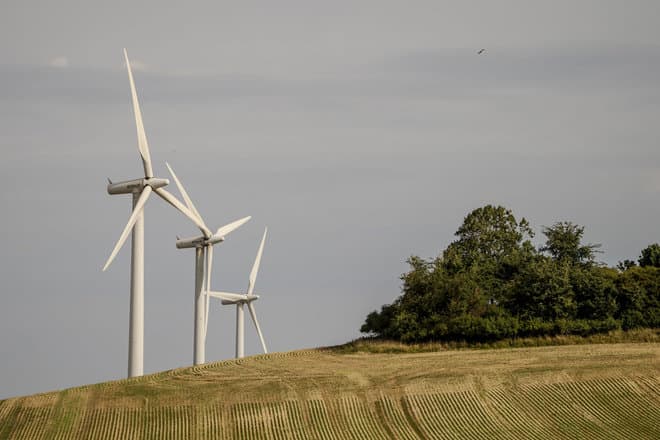
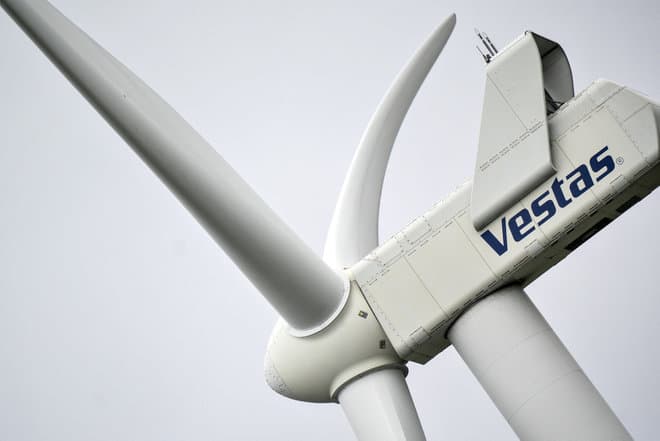
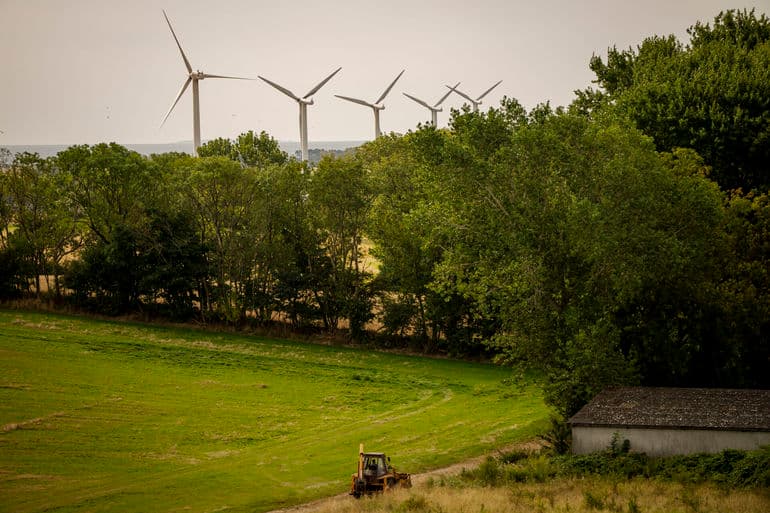
The government will further make it possible to set up wind turbines in new operational and climate forests, so that "more area can be set up for wind turbines."
To ensure this, the government will remove the total ban on renewable energy in protected forests, unless there are environmental considerations that stand in the way, the proposal states.
- I am pleased that it is now planned to be possible to establish wind turbines in new production forests. In this way, the areas can be used to create green energy without compromising the restoration of Danish nature, says Minister for the Green Tripartite Jeppe Bruus (S).
Areas must be used for more things
The government writes in its proposal that "areas with limited natural value must be made greater use of". Therefore, the government will work to ensure that there is an opportunity to establish renewable energy plants on designated low-lying areas in connection with the Green Tripartite.
- In the Green Tripartite, we want many things on our areas at once. We must have green land conversion that can protect our aquatic environment and give us more nature. We must develop agriculture and the food industry, and we must achieve our climate goals. Therefore, we must work wisely with the areas we have, says Jeppe Bruus (S).
In addition, the government will also work to make it easier and more manageable to plan and set up battery plants in connection with other renewable energy plants. Therefore, the government will help to provide municipalities with more clarity on how the batteries can be placed.
The measures are praised by the interest organization Green Power Denmark for providing more opportunities for setting up renewable energy.
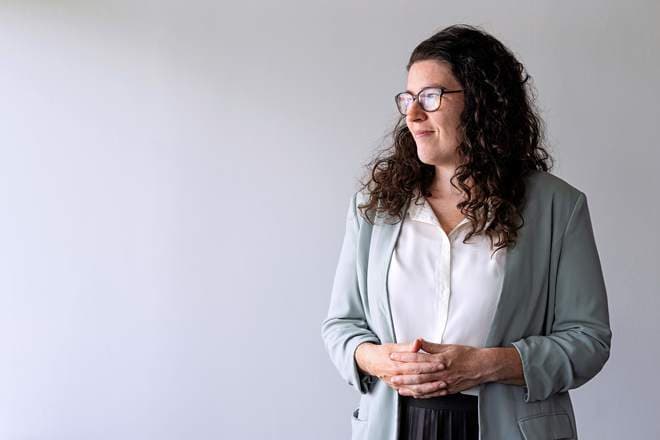
- We can use areas for multiple purposes at once. For example, it is possible to set up wind turbines in production forests. It is proposals like this that we have worked hard for, and that is why we are also extremely happy that the government has taken it on board, says Camilla Holbech, director of renewable energy production at Green Power Denmark.
Not focusing on the biggest challenges
However, the proposal does not address the underlying challenges that have contributed to only seven wind turbines coming up on land in Denmark this year, and solar cell projects being dropped in a row.
- The conditions for installing wind turbines and solar cells on land are now so bad that development is coming to a standstill, says Camilla Holbech, who points to rising costs for connecting to the electricity grid as the primary reason.
And the government does not address that problem in its proposal. On the contrary, the government will impose more costs on those installing solar cells by increasing compensation to neighbors. This is happening before the result of the evaluation of the doubling of costs that was introduced a short time ago is known, Green Power Denmark notes in a press release.
- The pain threshold has been reached for many projects, and it is not the right move to increase the developers' payments to neighbors. The government has not yet examined the effect of the current rules for compensation for neighbors, and opinion polls show that it is not popular resistance that is the real problem, says Camilla Holbech.
Government proposal for solar and wind on land
In a new proposal, the government brings together 17 initiatives that will create a better framework for setting up renewable energy on land.
Parts of the initiatives are already known, including that the government will lower the electricity tax for Danes in 2026 and 2027, and that it will be easier for municipalities and regions to have solar cells installed on public buildings.
As something new, the government will increase the compensation for neighbors for solar cell systems, while the same neighbors will have the opportunity to buy cheaper electricity from installers of either wind turbines or solar cells in the local community.
The government will also ensure that there must be a minimum distance of 750 meters if a solar cell system is installed on three or more sides of a residence.
Installers must currently offer neighbors who live within 200 meters of a 100-megawatt solar cell system to buy the property. In the new proposal, the government will increase the distance limit to 275 meters.
Source: Ministry of Climate, Energy and Utilities
/ritzau/
Editor: Fact box added Thursday at 6:00 a.m.
Text, graphics, images, sound, and other content on this website are protected under copyright law. DK Medier reserves all rights to the content, including the right to exploit the content for the purpose of text and data mining, cf. Section 11b of the Copyright Act and Article 4 of the DSM Directive.
Customers with IP agreements/major customer agreements may only share Danish Offshore Industry articles internally for the purpose of handling specific cases. Sharing in connection with specific cases refers to journaling, archiving, or similar uses.
Customers with a personal subscription/login may not share Danish Offshore Industry articles with individuals who do not themselves have a personal subscription to Danish Offshore Industry.
Any deviation from the above requires written consent from DK Medier.