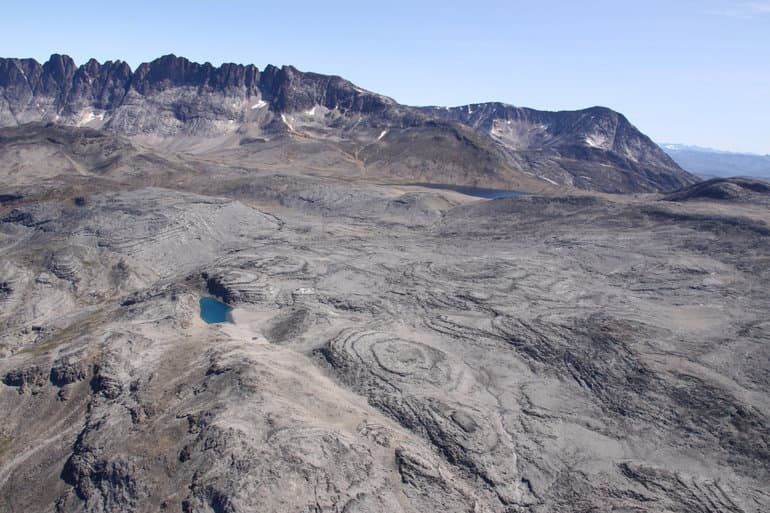
In Greenland's subsoil, there is a wide range of minerals and rare earths, which are mentioned as a piece in the grand political game between the USA, Denmark and Greenland. Greenland has an ambition that the raw materials will contribute to economic growth and thus come closer to its ambition of becoming an independent state. Read about Greenland's valuable subsoil:
* What is there to be found down there?
Greenland's subsoil hides everything from gold and rubies to iron, zinc, graphite and lead. There is great potential for extracting some of the critical metals that both the EU and the USA are in great demand for, and which are used to manufacture a wide range of products in industry.
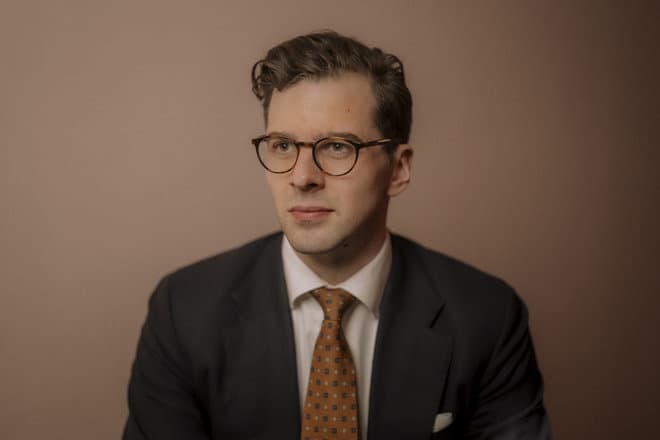
This is according to Kristoffer Szilas, associate professor of geology at the Natural History Museum of Denmark, University of Copenhagen.
- There is the whole spectrum and a huge area that is relatively unexplored, he says.
For example, so-called rare earth metals are something that is very abundant in South Greenland.
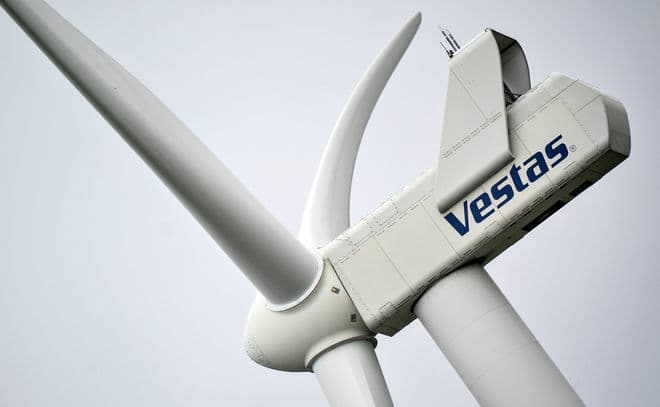
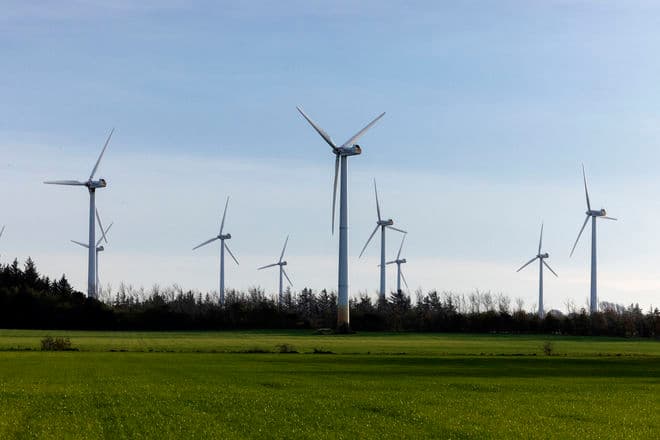
- Especially neodymium. It is used to produce very powerful magnets, which are used in virtually all technology - for example wind turbines, electric motors and hydroelectric power plants.
* Why is it attractive?
Access to minerals and raw materials is an important geopolitical issue, especially because China today largely dominates both extraction and processing.
- China has a strategy that they must have full control over important supply chains - including for rare earth metals, says Per Kalvig, a mineral geologist emeritus at Geus.
It is a problem for both the EU and the USA, says Kristoffer Szilas.
- China has access to the mines, for example, they have bought up a lot of licenses in Africa. They are also responsible for project planning, extraction of metals from the raw ore and technological production.
Licenses are regularly granted to companies that want to explore Greenland's subsoil. But there can be a long way from there to profitable mining.
* What are the challenges of mining in Greenland?
First of all, there are major logistical challenges, says Kristoffer Szilas.
- It's in an Arctic environment, and there is no infrastructure. So you simply have to start from scratch and invest a huge amount to establish ports, processing plants and road networks.
Extreme weather means that you can't work all year round.
- Especially in some of the remote areas in North Greenland, you can only work three months a year. And then of course there are the environmental consequences, he says.
Kuannersuit (Kvanefjeld) is the better known of two mountains in South Greenland that contain rare earth metals.
Here the Greenlandic government has shut down a controversial mining project with a law that prohibits uranium.
Uranium will be produced as a by-product of any possible extraction at this particular location.
* What are the interests of the USA?
There is speculation as to whether Donald Trump's desire to take over Greenland is also based on the possibility of obtaining access to the country's raw materials. Among other things, former national security advisor Mike Waltz has stated that this is one of several reasons for the interest. But mineral geologist Per Kalvig finds it difficult to see any logic in it.
- The USA has plenty of rare earths itself. Among other things, they have the West's largest mine for rare earth metals. What they lack are technological companies that convert the rare earth metals into something that can be used in magnets for everything from electric cars to wind turbines, he says.
At the same time, Per Kalvig is critical of the way raw materials are brought into play in the public debate.
- It is said as if raw materials are extracted by countries. But that is not the case. They are private, often listed companies that have mixed ownership. There are lots of large American companies that have Chinese co-ownership and vice versa, he states.
Kristoffer Szilas believes that the US interest in Greenland is mostly about the country's important geographical location "as a buffer zone between the US and Russia".
- It is first and foremost a land area that they would like to control in order to be able to protect themselves. And it would be a bonus if they thus gain access to raw materials, he says.
/ritzau/
Text, graphics, images, sound, and other content on this website are protected under copyright law. DK Medier reserves all rights to the content, including the right to exploit the content for the purpose of text and data mining, cf. Section 11b of the Copyright Act and Article 4 of the DSM Directive.
Customers with IP agreements/major customer agreements may only share Danish Offshore Industry articles internally for the purpose of handling specific cases. Sharing in connection with specific cases refers to journaling, archiving, or similar uses.
Customers with a personal subscription/login may not share Danish Offshore Industry articles with individuals who do not themselves have a personal subscription to Danish Offshore Industry.
Any deviation from the above requires written consent from DK Medier.