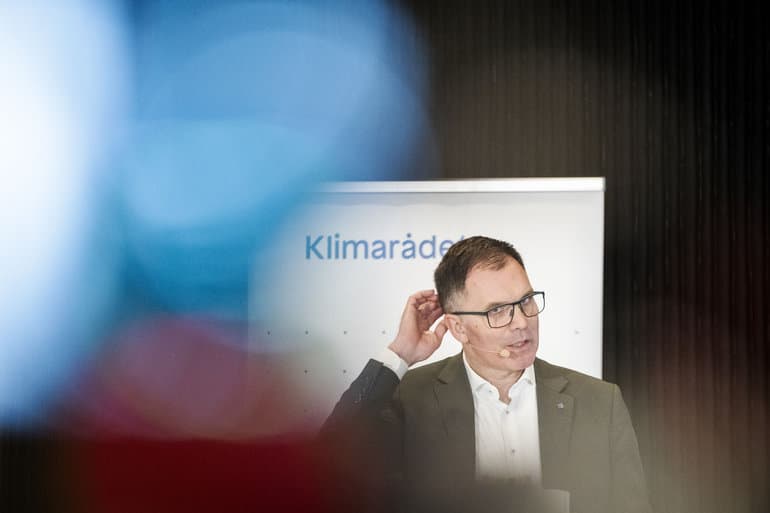
There are such great risks associated with the government's climate policy that the path to meeting the 2030 climate target is far from certain.
This is assessed by the government's independent expert body, the Climate Council, in this year's status report, which will be published on Thursday.
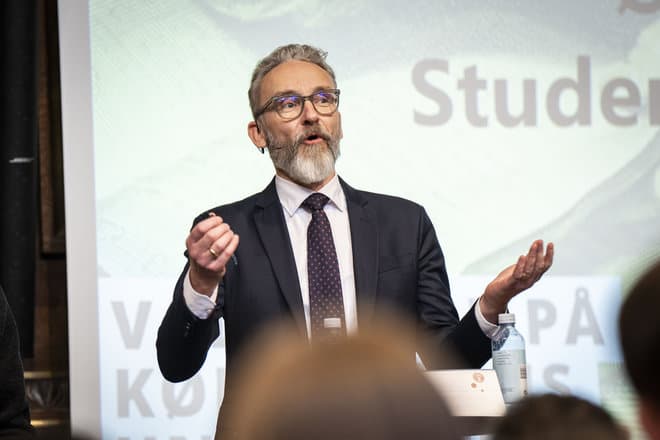
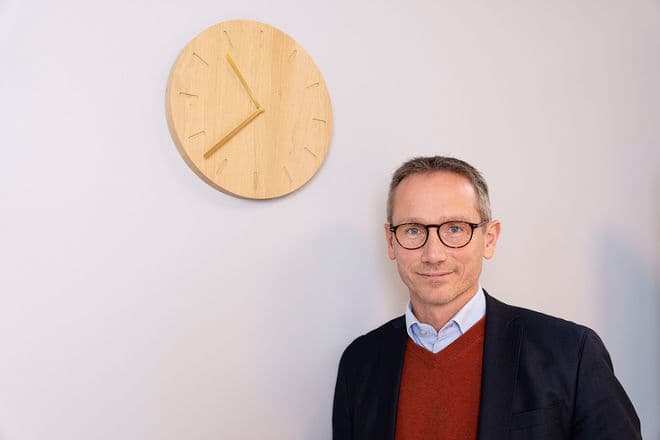
- Greenhouse gas emissions will most likely be higher than the government expects. At the same time, the government lacks a Plan B, says Peter Møllgaard, chairman of the Climate Council. Several of the government's climate policy initiatives are so uncertain that the Climate Council believes that there is an imminent danger that they will not deliver the promised CO2 reductions on time.
Although the Climate Council last year assessed that the government had demonstrated the achievement of the 2030 target, the council comes to a different conclusion this year.
This is due in particular to the fact that the transformation of agriculture is taking a long time and that the supply of CO2 capture and storage may deliver fewer CO2 reductions than expected. In addition, the timetable for CO2 capture is challenged. The Climate Council acknowledges that on paper there is a small surplus in the climate account in 2030. If all calculations hold true, the target will be overfulfilled by 400,000 tons of CO2.
However, with the series of delayed and uncertain measures, the Climate Council still believes that the uncertainty is so great that the path to the climate target cannot be considered clear. The Council points out that they expect that even more CO2 reductions will be missed than the 400,000 tons that are left.
- We believe that the government is too optimistic in relation to the overall projection, says Peter Møllgaard.
He and the Climate Council have identified six areas where the Climate Council is less optimistic than the government. For example, this concerns afforestation, which is being delayed. That refineries are burning more gas. That there is a leak of methane from biogas production and gas pipes, that the feed additive Bovaer is challenged, and that the removal of agricultural land is delayed.
- Individually, these optimistic assessments that the government has are not a problem. But collectively, it could become a problem, says Peter Møllgaard.
For Climate Minister Lars Aagaard (M), the report is not a red alert. He maintains the same approach as when the council had a more positive conclusion last year - namely that there is still a long way to go to achieve the goal.
- I agree with the Climate Council that the work is not finished, he says. He also highlights that a large part of the Climate Council's uncertainties concern the transition of agriculture through the green tripartite.
- The government has established an entire ministry, and a return visit has been agreed in 2027, so that processes have been set up to address the implementation risks that are particularly there.
When it comes to the call to publish a plan B, Lars Aagard does not think it is a good idea. It could create uncertainty for companies and other actors if they suddenly see alternative measures that may come one day, the minister believes.
/ritzau/
Text, graphics, images, sound, and other content on this website are protected under copyright law. DK Medier reserves all rights to the content, including the right to exploit the content for the purpose of text and data mining, cf. Section 11b of the Copyright Act and Article 4 of the DSM Directive.
Customers with IP agreements/major customer agreements may only share Danish Offshore Industry articles internally for the purpose of handling specific cases. Sharing in connection with specific cases refers to journaling, archiving, or similar uses.
Customers with a personal subscription/login may not share Danish Offshore Industry articles with individuals who do not themselves have a personal subscription to Danish Offshore Industry.
Any deviation from the above requires written consent from DK Medier.