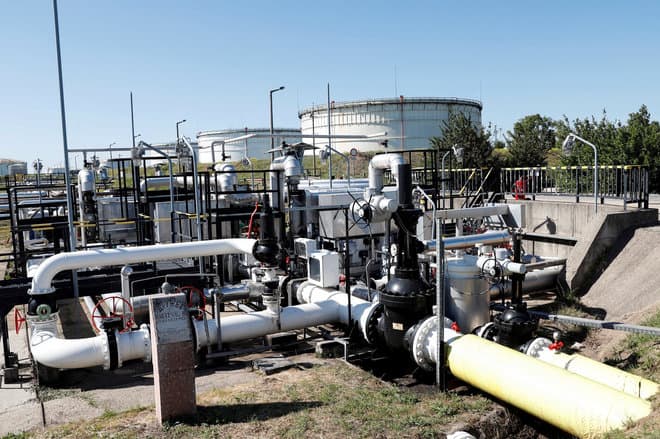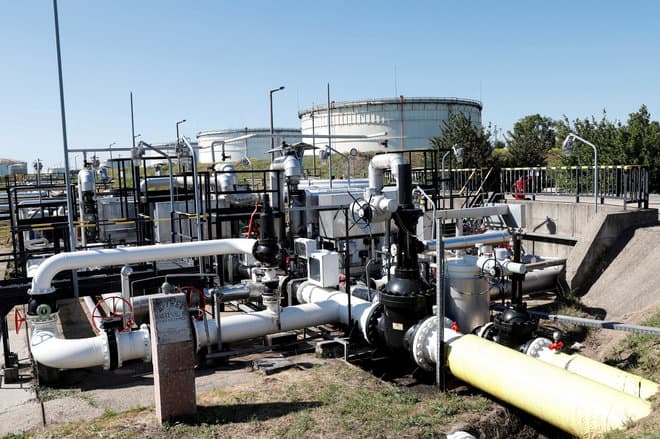
The government's announcement that it wants to expand oil and gas exploration in the North Sea from 2042 until the absolute end date of 2050 is being received with mixed emotions at Christiansborg.
Among the parties that helped set an end date for Danish oil and gas production with the North Sea Agreement in 2020, there is disagreement about whether the government's new initiative is a good idea. The Danish Social Democrats are deeply critical of the development.
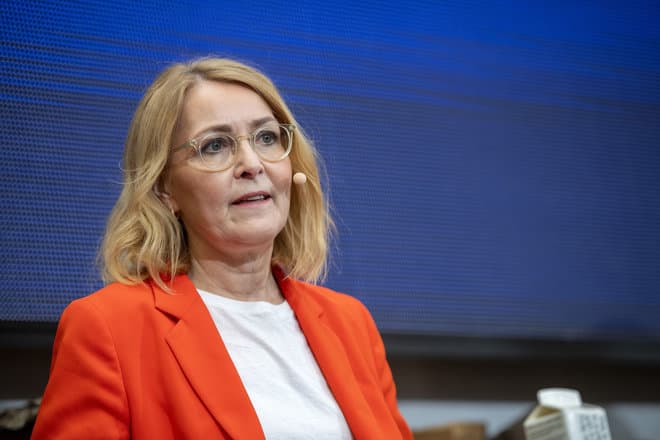
- We can in no way compromise with our climate goals, says climate spokesperson Samira Nawa.
In the North Sea Agreement, the Folketing set an end date of 2050 for Danish production of oil and gas, and the so-called eighth tender round, where companies could bid for new fossil production, was cancelled. In the opinion of the Radicals, it is therefore a poor development that the government will extend oil and gas companies' licenses from 2042 to 2050.
- It is completely unacceptable, but I don't expect anything more from this government anytime soon, she says.
The same tone comes from the Unity List, which, however, was not involved in concluding the agreement in 2020.
The Conservatives are differently positive. Here, climate spokesman Frederik Bloch Münster says that they support the government's proposal.
- The Conservative People's Party supports investigating the possibilities of extending the license agreements in the North Sea in light of the current geopolitical situation, it says.
He points out that the party would like the path to making oil and gas redundant in Europe to be shorter than it is.
- But Europe needs gas in the transition, and here it is important that we can supply our European allies, as it will pollute less than importing gas from Qatar and the USA, as we do now.
It has not been possible to get a comment from SF on how they, as a party in the agreement, stand on the proposal.
Aagaard: Climate goals remain despite extended oil hunt
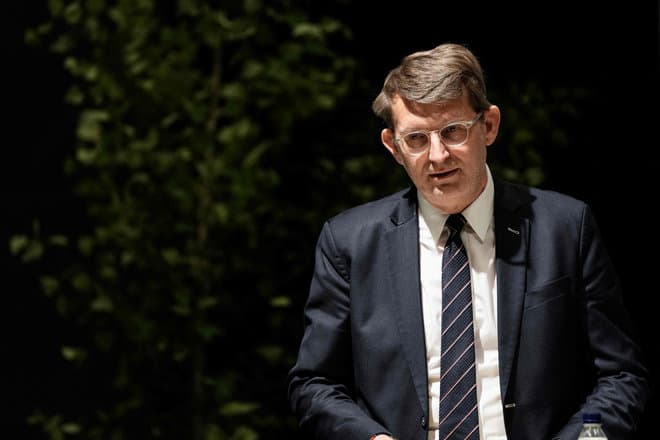
Minister of Climate, Energy and Utilities Lars Aagaard (M) maintains that the Danish climate goals remain, even if they want to look for new oil and gas in the North Sea after the target year for climate neutrality in 2045.
- Unfortunately, we have a Europe that is still deeply dependent on fossil energy. There we can choose whether the energy we depend on should come from something we have control over, or whether we should import it. It is not more difficult, he says.
Question: But you must agree that it will be cheaper to convert Europe to renewable energy if you keep the price of oil and gas high instead of making it cheap by increasing its supply?
- I agree. But now I have no idea that the volume we are talking about in the Danish North Sea will be price-defining in the oil and gas market.
Question: Is the argument about being a pioneer country then over?
- No, we have set the world's highest climate targets. Show me the country that has set a target more ambitious than 70 percent by 2030, 82 percent by 2035, climate neutrality by 2045 and 110 percent reduction by 2050. I can't find that country.
/ritzau/
Text, graphics, images, sound, and other content on this website are protected under copyright law. DK Medier reserves all rights to the content, including the right to exploit the content for the purpose of text and data mining, cf. Section 11b of the Copyright Act and Article 4 of the DSM Directive.
Customers with IP agreements/major customer agreements may only share Danish Offshore Industry articles internally for the purpose of handling specific cases. Sharing in connection with specific cases refers to journaling, archiving, or similar uses.
Customers with a personal subscription/login may not share Danish Offshore Industry articles with individuals who do not themselves have a personal subscription to Danish Offshore Industry.
Any deviation from the above requires written consent from DK Medier.