Although it is less likely that foreign states currently have plans to carry out destructive cyber attacks against Denmark, this could change quickly. This is the assessment of the Center for Cyber Security (CFCS) in a threat assessment. It is titled "Cyber Threat to Denmark 2023" and was published on Monday.
According to CFCS, destructive cyber attacks are intended to cause personal injury, death or significant damage to physical objects. The desire may also be to destroy or change data or software to such an extent that it becomes very difficult to restore. At present, the threat from destructive cyber attacks is low, writes CFCS. But that could change quickly, it says.
- However, it is likely that state-backed hacker groups are preparing to be able to carry out destructive cyberattacks against critical infrastructure in Denmark.
- The threat to Denmark could increase with short or no notice, if, for example, the security situation escalates towards a military confrontation between Russia and NATO, writes CFCS.
More and more states are capable of carrying out this kind of cyberattack, it says. Therefore, the threat depends largely on the intentions of these states.
- Therefore, the threat to Denmark could increase with short or no notice, writes CFCS.
In 2022, an unprecedentedly high number of destructive cyberattacks was seen worldwide compared to previous years. The majority of known attacks have been directed at Ukraine and carried out by Russia, writes the Center for Cybersecurity.
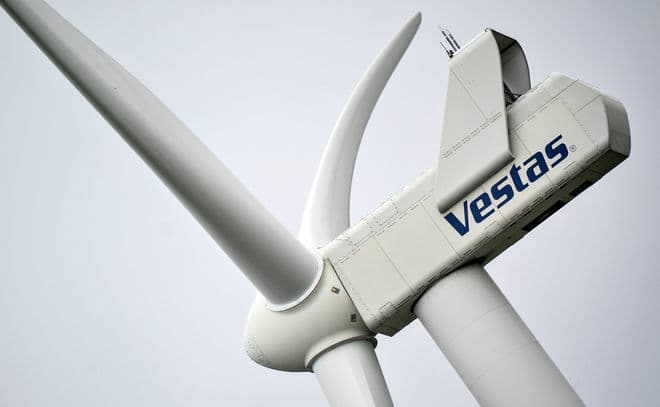
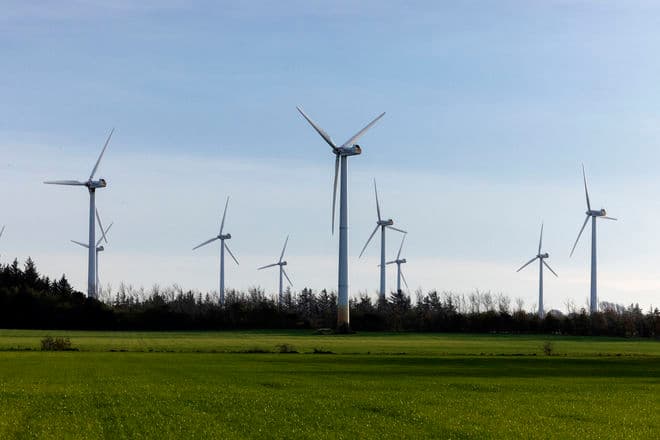
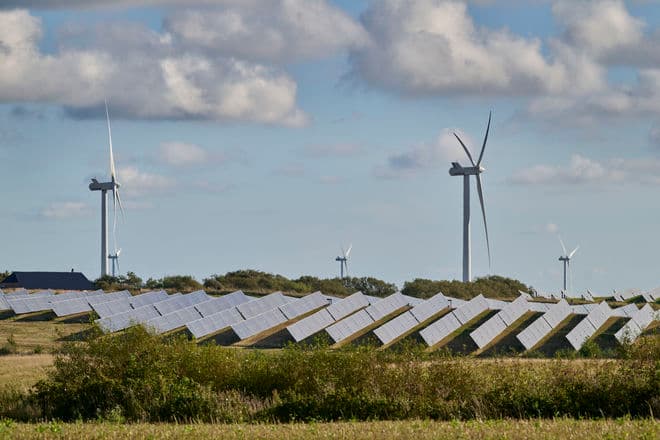
Can hit wind turbines and other energy infrastructure
States can use cyber espionage to prepare destructive attacks, which can then be launched in the event of an escalating crisis or war. This can, for example, be mapping organizations or systems.
That knowledge can be used to develop special malware. It is a type of malicious software designed to damage digital devices or networks. The preferred tool in most cases is so-called wiper malware, writes the Center for Cybersecurity. It deletes or encrypts files on a selected network or system, making it inoperable and difficult to restore.
One example is the wiper attack AcidRain, which was directed at the American satellite communications provider Viasat. It happened on the day of Russia's invasion of Ukraine last year. Thousands of satellite modems, especially in Europe, had their settings deleted.
- The lack of satellite communication led to, among other things, a breakdown in the remote control of several wind turbines in Germany. It is likely that the target of the attack was the satellite communication of Ukrainian military forces.
- The attack shows that companies that are either physically present in or otherwise linked to Ukraine can be hit by destructive cyberattacks, writes CFCS.
The threat assessments are divided into four additional categories: cyber espionage, cyber crime, cyber activism and cyber terrorism. The assessments are the same this year as last year with the exception of cyber activism. Here, the level was raised from "medium" to "high" in January. Otherwise, the levels remain "very high" for cyber espionage and crime and "none" for cyber terrorism.
/ritzau/
Text, graphics, images, sound, and other content on this website are protected under copyright law. DK Medier reserves all rights to the content, including the right to exploit the content for the purpose of text and data mining, cf. Section 11b of the Copyright Act and Article 4 of the DSM Directive.
Customers with IP agreements/major customer agreements may only share Danish Offshore Industry articles internally for the purpose of handling specific cases. Sharing in connection with specific cases refers to journaling, archiving, or similar uses.
Customers with a personal subscription/login may not share Danish Offshore Industry articles with individuals who do not themselves have a personal subscription to Danish Offshore Industry.
Any deviation from the above requires written consent from DK Medier.