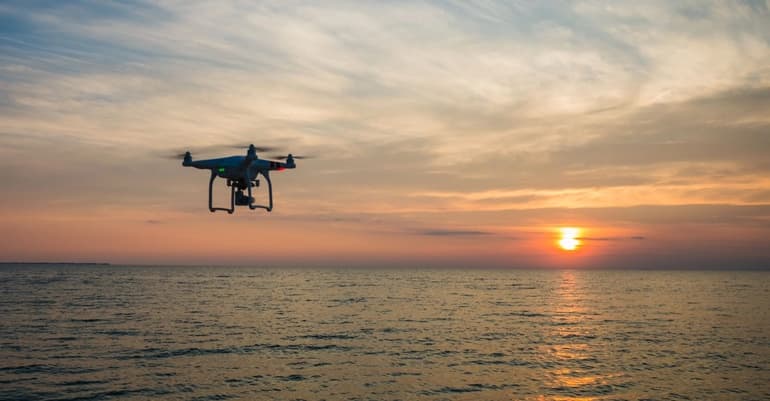
The use of maritime drones is gaining ground at the Port of Esbjerg, where the technology is intended to help optimize both the service of offshore wind turbines and the piloting of ships. Several companies at the port are currently testing the possibilities in close collaboration with the port's Innovation Hub. This is stated by the Port of Esbjerg in a press release.
At the port, which houses more than 200 companies and around 10,000 workplaces spread over 5 million square meters, work is ongoing to develop and use new technology in operations. According to the port, it is not about the drones themselves, but about how they can be integrated into existing workflows and create more efficient solutions.
- We are looking across ports around the world at how the use of drones is developed, tested and implemented to optimize operations. The ongoing dialogue we have with the port's companies - including through our Innovation Hub - gives us as a port a deeper understanding of the companies' individual and cross-cutting needs. Our role is to develop the necessary infrastructure so that drones can contribute to optimizing activities, says Dennis Jul Pedersen, CEO of the Port of Esbjerg.
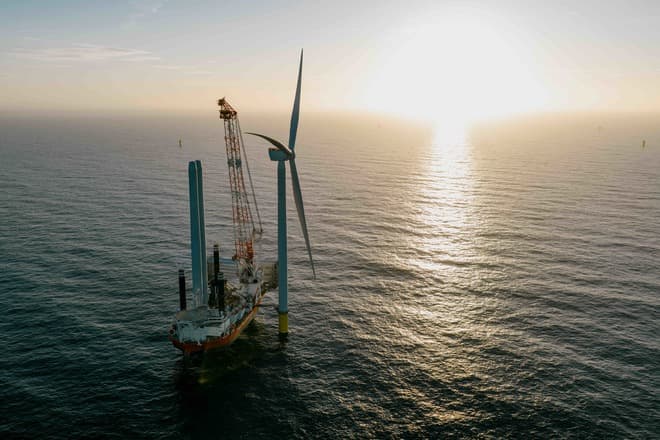
Among the companies working with the technology are Vestas and DanPilot. For Vestas, drones can be used to transport spare parts and tools to offshore wind turbines in the North Sea. Today, transport is carried out by service vessels, and the need for additional equipment can lead to waiting times or extra voyages. With drones, smaller components can be delivered directly to the turbines, which can reduce time and make service work more flexible.
- We expect that drones can greatly streamline the way offshore wind turbines are serviced. Today, cranes are used to load spare parts and tools onto ships to the offshore turbines, and when they are subsequently transported between ships and wind turbines. In some cases, crane operations can account for up to a quarter of the total time for a normally planned service inspection. By using drones, the equipment can be delivered to the turbines even before the scheduled service inspection begins, which can reduce both time consumption and complexity. In offshore wind farms with more than 100 wind turbines, this is of course something we expect to make a difference, says Leon Raydon, Program Director, Vestas.
At DanPilot, the potential of drones is being investigated in connection with pilotage. Traditionally, the pilot is sailed out to ships at the approach, but drones can in future send live images from the air and provide an overview of the ship's position and the conditions in the shipping channel. This can help reduce blind spots and strengthen the decision-making basis during the approach.
According to the port, drones can also be used for internal logistics and for tasks that today may be associated with a risk to crew, such as transferring small packages between ships. At the same time, drone technology is included in the European collaboration DIOL, which will develop innovative offshore and logistics solutions with the North Sea as a central hub.
amp
Text, graphics, images, sound, and other content on this website are protected under copyright law. DK Medier reserves all rights to the content, including the right to exploit the content for the purpose of text and data mining, cf. Section 11b of the Copyright Act and Article 4 of the DSM Directive.
Customers with IP agreements/major customer agreements may only share Danish Offshore Industry articles internally for the purpose of handling specific cases. Sharing in connection with specific cases refers to journaling, archiving, or similar uses.
Customers with a personal subscription/login may not share Danish Offshore Industry articles with individuals who do not themselves have a personal subscription to Danish Offshore Industry.
Any deviation from the above requires written consent from DK Medier.