In April, Inoes, the operator of the Hejre field, received the Danish Energy Agency's approval of a revised plan for the extraction and development of the Hejre field, whose expected production of oil and gas until 2045 will account for seven percent of Denmark's total production from the North Sea.
But the approval, Greenpeace believes it can document, is illegal. The environmental organization has had the law firm Kontra Advokater examine the laws and legal obligations that Denmark is subject to in the area. And the lawyers believe that the law has not been complied with. Therefore, the law firm has submitted a complaint to the Energy Complaints Board on behalf of Greenpeace, specifying which laws have been violated. Greenpeace states this in a press release.
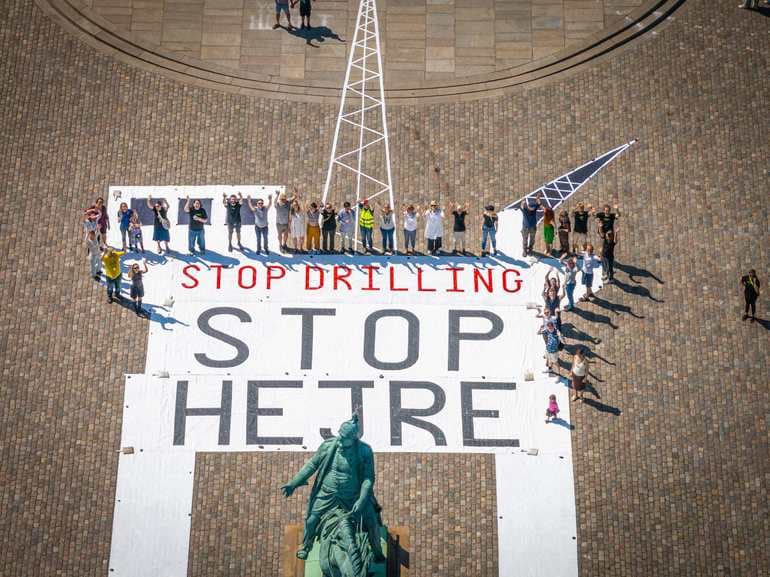
- Many have now tried for many months to stop this completely irresponsible project by appealing to the government's common sense, but we have not been heard. Hearing responses, consultations, ministerial questions, ministerial meetings, actions, debate contributions. Nothing has had any effect. That is why we have now submitted an official complaint about the Hejre permit to the Energy Complaints Board, in which our lawyers explain point by point how the Danish Energy Agency, by approving the oil field, is violating several Danish and European laws,” says Helene Hagel, climate and environmental policy manager at Greenpeace.
In the complaint, Greenpeace recommends that the complaint have suspensive effect, as Ineos' final investment decision for the field is just around the corner.
- We know from a document review that INEOS will make their final investment decision to start new oil production in the Hejre field in the summer of 2024. If the complaint has suspensive effect, we can stop this early in the process. The further INEOS takes with the development of the field, and the more money they invest, the harder it will be to stop. It is therefore crucial that we stop the Hejre plans before they really get started, says Helene Hagel.
Three reasons in particular make approval illegal
According to Kontra Advokater, there are three main reasons why the permit is illegal.
Firstly, the environmental impact report for the field is deficient, secondly, the strategic environmental assessment for the North Sea has not been revised since 2012 and is no longer comprehensive, and thirdly, the approval of a new oil field is in breach of the Climate Act and the Paris Agreement, says Kontra Advokater.
- The most significant indirect environmental and climate-damaging effects of the development and operation of the Hejre field, namely the emission of greenhouse gases that the extraction and burning of fossil fuels from the field will entail, have not been assessed prior to the approval. They should have been. Therefore, the Danish Energy Agency's approval of the Hejre field is clearly illegal, says Nikolaj Nielsen, a lawyer at Kontra Advokater.
amp
Text, graphics, images, sound, and other content on this website are protected under copyright law. DK Medier reserves all rights to the content, including the right to exploit the content for the purpose of text and data mining, cf. Section 11b of the Copyright Act and Article 4 of the DSM Directive.
Customers with IP agreements/major customer agreements may only share Danish Offshore Industry articles internally for the purpose of handling specific cases. Sharing in connection with specific cases refers to journaling, archiving, or similar uses.
Customers with a personal subscription/login may not share Danish Offshore Industry articles with individuals who do not themselves have a personal subscription to Danish Offshore Industry.
Any deviation from the above requires written consent from DK Medier.