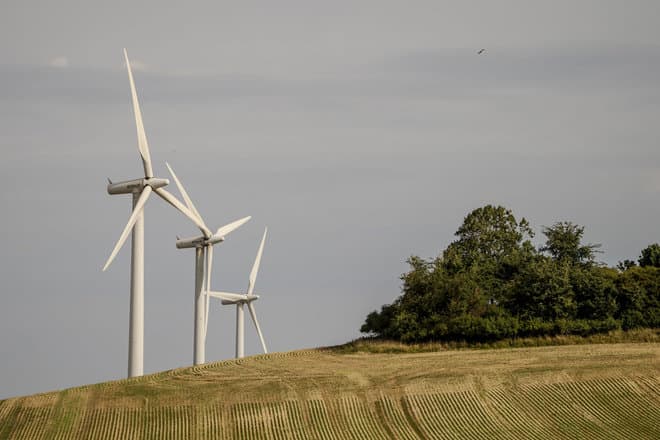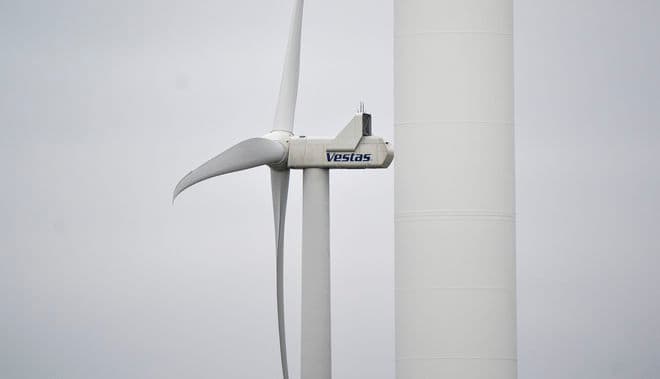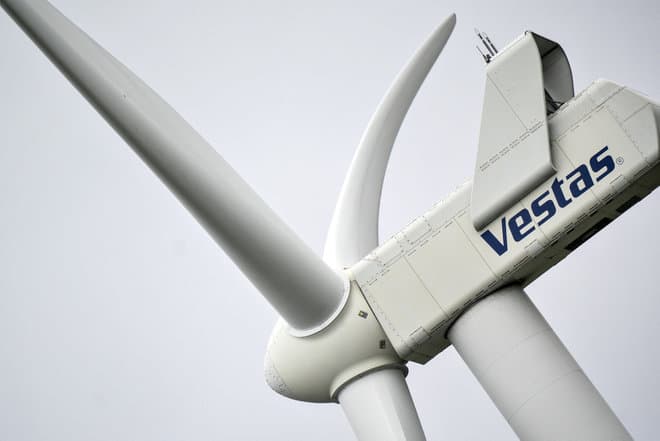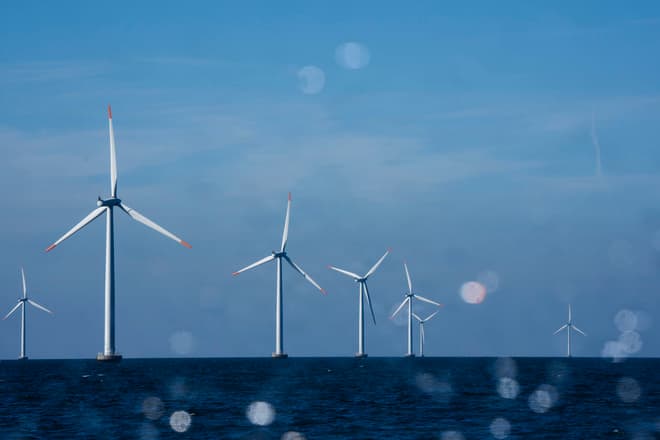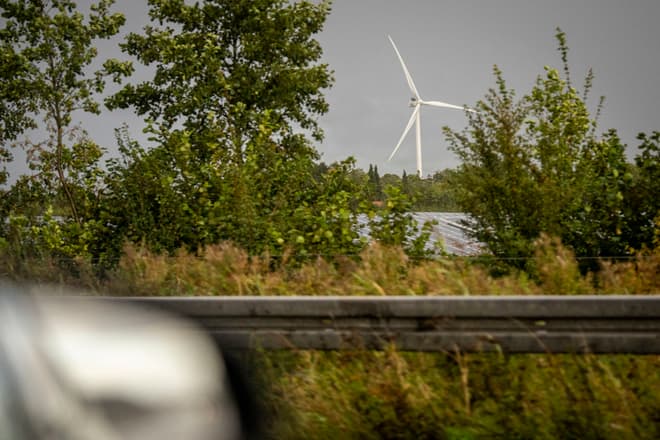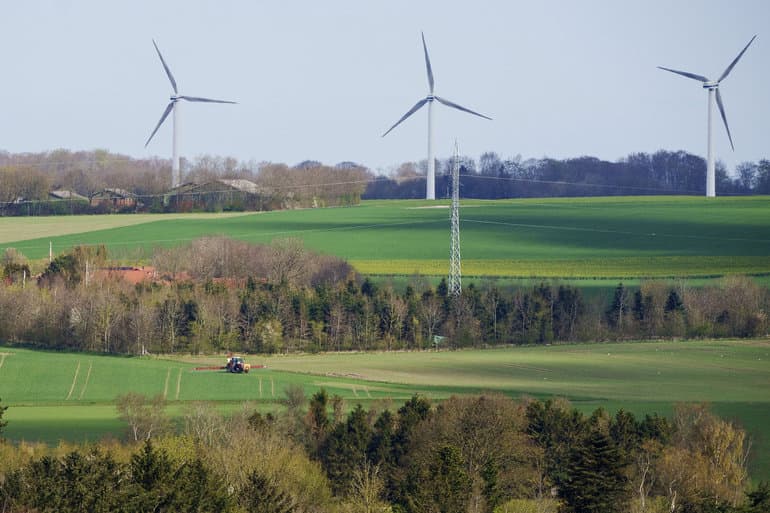
The government will remove a politically decided wind turbine ceiling from 2018. The ceiling means that in 2040 there may be a maximum of 1,850 onshore wind turbines in Denmark. This is one of several initiatives to realize the government's proposal that Denmark should produce four times as much electricity with solar cells and wind turbines on land in 2030 as today. This is what the Ministry of the Interior informs Ritzau.
The ambition to quadruple the amount of electricity from solar cells and wind turbines stems from the government's reform package "Denmark can do more II".
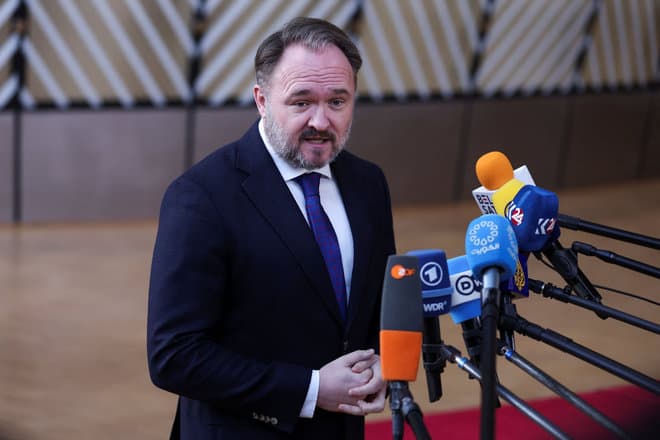
- We must do this both for the sake of our fight against climate change and to free ourselves from Putin's gas, says Minister of the Interior Christian Rabjerg Madsen (S).
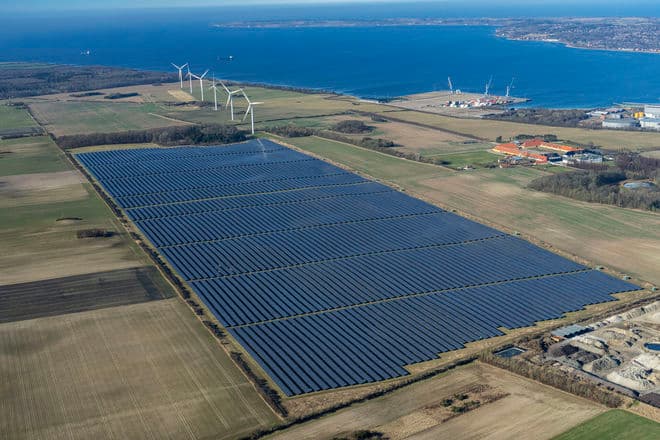
In 2022, there will be around 4,200 onshore wind turbines in Denmark. This number will therefore have to be significantly reduced by 2040 if the current cap is not either lifted or completely removed. To achieve the government's goal of quadrupling electricity from solar cells and wind turbines by 2030, 13,700 hectares must be available for wind turbines, the ministry estimates. For solar cells, this is 22,900 hectares.
More energy parks
Another initiative in the government's catalogue, which has been prepared in collaboration with the municipalities and the energy industry, states that "the state must play a significantly more active role in the development of larger energy parks towards 2030".
- That is why we are now planning to create 10-15 large energy parks, where we collect the production of green electricity from solar cells and wind turbines, respectively, says Christian Rabjerg Madsen.
To start with, a screening must be initiated to identify areas where the energy parks can be located. According to the minister, the state playing a greater role will ensure geographical distribution and consideration for "our most vulnerable nature and valuable coastal areas" when more wind turbines and solar cells are installed in Denmark.
Furthermore, there is "no doubt that it is going too slowly" in terms of getting more wind turbines and solar cells, says Rabjerg Madsen.
According to a calculation made by the Danish Energy Agency for DR, neither solar cells nor wind turbines have been installed in the past five years in about half of the country's municipalities.
Will amend the Planning Act
The government also proposes to amend the Planning Act so that, as a rule, wind turbines or solar cell systems can be installed in manor landscapes. However, this should not include landscapes that are protected.
On the other hand, it does not appear that residents close to wind turbines or solar cells can get a greater financial gain than today. Among other things, the Liberal Party has proposed looking into whether the renewable energy bonus scheme from 2020 can be expanded to ensure greater local support for wind turbines and solar cells on land.
The scheme gives residents who live at a distance of up to eight times the height of the wind turbine or 200 meters from the nearest solar cell plant the opportunity for an annual tax-free payment.
The government proposes that the complaint handling process be strengthened "for the benefit of citizens". Complaints about renewable energy projects must be processed within six months until 2026, according to an initiative in the government's catalogue.
However, Christian Rabjerg Madsen says that there must be "discussions" among the parties in the Folketing about "how we can do more for the local areas that will in future carry out a very significant and important task for the collective when they have to allocate local areas to these energy parks".
See reaction from KL and from Landdistrikternes Fællesråd.
Ritzau
Text, graphics, images, sound, and other content on this website are protected under copyright law. DK Medier reserves all rights to the content, including the right to exploit the content for the purpose of text and data mining, cf. Section 11b of the Copyright Act and Article 4 of the DSM Directive.
Customers with IP agreements/major customer agreements may only share Danish Offshore Industry articles internally for the purpose of handling specific cases. Sharing in connection with specific cases refers to journaling, archiving, or similar uses.
Customers with a personal subscription/login may not share Danish Offshore Industry articles with individuals who do not themselves have a personal subscription to Danish Offshore Industry.
Any deviation from the above requires written consent from DK Medier.