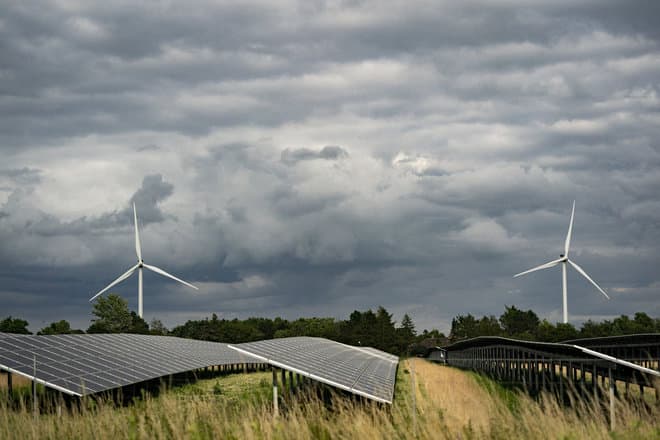
There is no shortage of political climate ambitions for Denmark's future. More green electricity from wind turbines, more solar cells, more forests, more protected nature, the extraction of low-lying soils, the protection of groundwater, and areas to be set aside for climate adaptation.
Depending on how the need is calculated, the political ambitions and agreements will cover up to 44 percent of Denmark's land area. This is shown by a new report from the green think tank Concito.
In the political agreements alone that have already been adopted for a quadrupling of green energy production on land, the extraction of low-lying soils and the increase in forest area, it is required that 10 percent of Denmark's land area be used in new ways.
- We lack an informed basis for what is at stake and how we should handle the dilemmas. It is difficult to see how we are going to achieve goals of net-zero emissions, more protected nature, climate adaptation and much more, without having a discussion about how we are going to utilize our land, says Jarl Krausing, deputy director of Concito.
Back in 2017, a report from the Danish Technology Council showed that politicians' ambitions exceeded Denmark's total land area - and the ambitions have only increased since then. Therefore, a tough fight awaits for Denmark's land area, he concludes.
- The government's basis contains lots of political ambitions and declarations of intent that require even more hectares of land. When we add all of that together, one can be concerned that we are only doing one thing without considering the other considerations.
- It is about creating a Denmark that we can all see ourselves in, without it all ending in chaos, where only the strongest interests and actors gain ground, says Jarl Krausing.
Risk to coherence and climate goals
Without a clear vision, Jarl Krausing and Concito fear that 'weaker' actors without large business organizations behind them will lose the battle for space. This applies in particular to the dilemma-filled challenges of, for example, afforestation, which can be based on energy, climate considerations and biodiversity - but it is difficult to meet all considerations at the same time.
- Who typically loses when you don't have people speaking up? Until now, it has often been nature and biodiversity, and we are very far from living up to the EU regulations and political goals we have for biodiversity, says Jarl Krausing.
However, Jarl Krausing is cautiously optimistic that synergies can be found between the different considerations, and emphasizes that in Denmark we have good experiences with, among other things, national plans that create the framework for development.
He also calls for doing away with silo thinking when it comes to the debate about Denmark's land area, and trying to think across areas and municipal borders.
When the regions therefore start to close bus routes in sparsely populated areas, it should be a starting point for a debate about not just public transport, but about how we as a country should best organize ourselves.
It should also be an opportunity for a debate about whether we can continue to settle, as we have done so far in the countryside – or whether we should prioritize areas for, for example, renewable energy or nature.
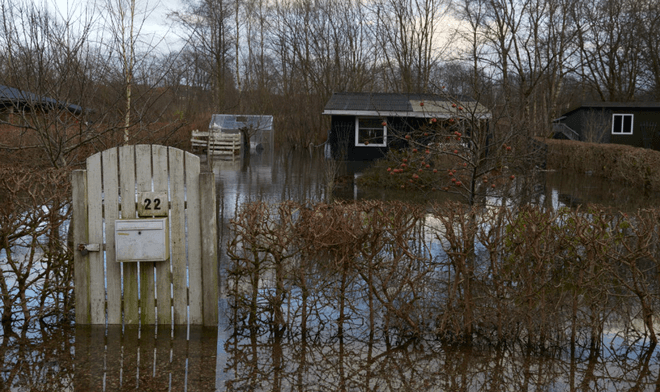
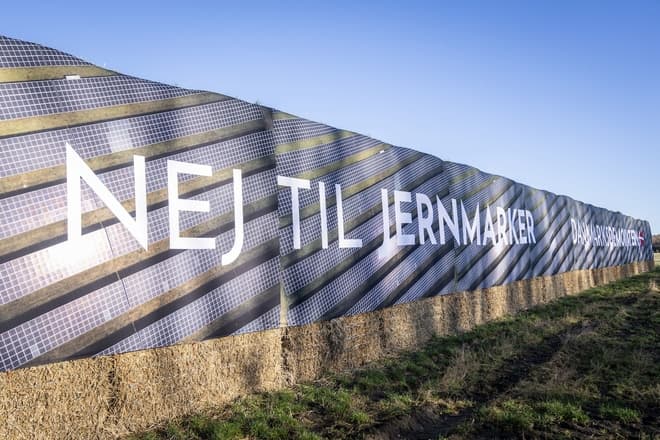
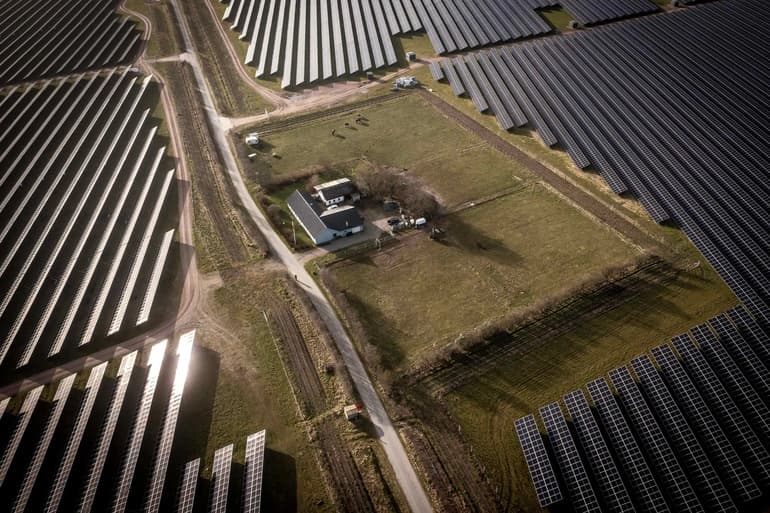
Jarl Krausing warns that an ill-conceived ad hoc approach to energy and nature planning risks making the transition both more expensive and more difficult for citizens, and that we could end up in situations like the village of Hjolderup, which has been surrounded by solar cells.
- We need to be better at planning our energy systems. It is no use surrounding a village with solar cells, it makes no sense, says Jarl Krausing and adds:
- If we do not make the best use of our land, there is a risk that we will not achieve our climate goals, neither in terms of reduction goals nor in terms of biodiversity.
Citizens must feel heard
One of the very specific challenges that the government is facing right now is the planned quadrupling of renewable energy production in the municipalities. Last year, the state asked the municipalities to submit possible areas to the Planning Agency in order to designate 10-15 energy islands on land, so that energy production can be concentrated in smaller area-demanding clusters.
This work was started last summer, and the municipalities were originally supposed to have received the results from the screening last autumn, but a general election and the formation of a government have delayed the process.
Minister of Church Affairs, Minister for Rural Areas and Minister for Nordic Cooperation Louise Schack Elholm (V) explains that many considerations must be taken into account, but emphasizes that they are working “at full speed” to be able to provide the municipalities with a clarification.
- It is extremely important for us that we quadruple our renewable energy production, but it is also important for us that we take into account the people who live there. We have a densely populated country, and we have nature close to our homes. There are no places where you can just quadruple the renewable energy without it bothering either citizens or nature, says Louise Schack Elholm.
Therefore, the government is focusing on finding the right compensation for affected citizens, and citizens must feel heard in the process:
- You must not feel that you are being run over just because you live where renewable energy can be installed, says the minister.
Putting no consideration above others
In its report, Concito sets out a number of dilemmas that politicians must address, the organization believes. These include what function forests should play, how cities should develop, and how citizens should live side by side with, for example, nature and renewable energy.
Louise Schack Elholm emphasizes that it is important to her that we can continue to ensure development, growth and cohesion throughout the country, while also taking into account the citizens.
In addition, she points out that the government wants to inaugurate new national nature parks, create more wild nature, clear more forests, and increase renewable energy production, but Louise Schack Elholm does not want to prioritize in advance:
- You cannot say that some considerations should weigh more heavily than others. There are areas where, for example, renewable energy can clash with other considerations such as nature, Natura2000 areas or population. It is difficult to make a firm rule for the whole thing. Denmark is too finely-tuned a country for that, she says.
That is why the government will not initially present a comprehensive plan for Denmark's areas, despite Concito's call.
That said, the government still has clear ambitions, the minister emphasizes.
- I am not saying that you can avoid making the difficult decisions, I am just saying that we must do it in a way that takes into account the local people and ensures that you are compensated. It is not a question of whether we should do it, but a question of how, she says.
- We will have to look at the individual areas and challenges.
Here the municipalities will play an important role because they know their areas best, points out Louise Schack Elholm, who hopes for close cooperation.
The battleground awaits
As a politician, it can be easy enough to say what should be more of, while it is immediately more difficult to point out what should be less of. If there is to be room for all the political objectives, it is necessary to take a critical look at what the map of Denmark looks like today and what it should look like in the future, believes Jarl Krausing from Concito.
- There is a big risk that we will end up without a clear plan. The parties each have their own values, and it is extremely difficult for politicians to rise to the top.
- You can easily talk about reforming the healthcare sector or that Denmark should be green, but no politician wants to have that discussion about how we should use our land, says Jarl Krausing.
The risk is therefore that opposing interests between everything from settlement to renewable energy production, biodiversity, business and forests will continue to clash, while space becomes increasingly scarce.
- It will be a battleground, says Jarl Krausing.
This article was originally published on DOI.dk's sister media Kommunen.dk.
Land is a scarce resource
Denmark is one of the most cultivated countries in the world. The intensive use of land is largely used for biological production, primarily food, but also wood products for materials and energy.
Of Denmark's total 4,300,000 ha, the following accounts for:
- Agriculture: 59 percent.
- Buildings and roads: approx. 14 percent.
- Production forest: 11 percent.
- Heathlands and other nature: 9 percent.
- Lakes and watercourses: 3 percent.
- Non-production forest: 2 percent.
In addition, politicians have a number of ambitions that require land. Already in 2017, a report from the Danish Technology Council showed that in 2050 there will be ambitions for more land than Denmark has available. Since then, future land needs have only intensified, concludes Concito.
Agreed needs (percentage of Denmark's area):
- Renewable energy on land including quadrupling renewable energy on land: 1.7 percent.
- The removal of low-lying soils: 2.3 percent.
- Increase in forest area: 5.8 percent.
Politically indicated needs:
- Groundwater protection: 4.7 percent*
- Additional area for nature protection: 22-28 percent**
- Climate adaptation areas: >2 percent***
* Based on Danva's assessment, which is mentioned in the government's basis.
** Based on the fact that DK allocates a proportional share of area for protection in accordance with the EU's biodiversity strategy.
*** Based on Concito's own assessment.
Source: Concito, Statistics Denmark, government basis
Text, graphics, images, sound, and other content on this website are protected under copyright law. DK Medier reserves all rights to the content, including the right to exploit the content for the purpose of text and data mining, cf. Section 11b of the Copyright Act and Article 4 of the DSM Directive.
Customers with IP agreements/major customer agreements may only share Danish Offshore Industry articles internally for the purpose of handling specific cases. Sharing in connection with specific cases refers to journaling, archiving, or similar uses.
Customers with a personal subscription/login may not share Danish Offshore Industry articles with individuals who do not themselves have a personal subscription to Danish Offshore Industry.
Any deviation from the above requires written consent from DK Medier.