

Exclusive interview & reportage I :
Going up: With CEO Mikkel Gleerup
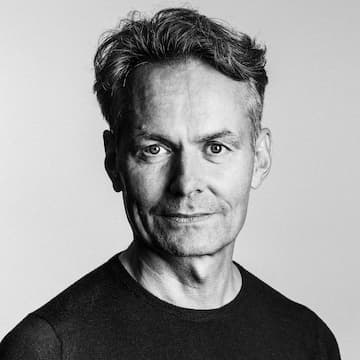
A fast-paced working life in the fast lane is not for everyone, and readers of the Financial Times may be familiar with the column “The Fast Lane”, where Canadian fashion editor Tyler Brûlé travels and reports about the world at a heady pace. If Brûlé has a Danish counterpart in offshore wind, then Cadeler CEO Mikkel Gleerup is a good bet. Anyone who meets Mikkel Gleerup at work will get an insight into the pace of work involved in installing offshore wind. That much is certain, we are in the fast lane.
The first meeting
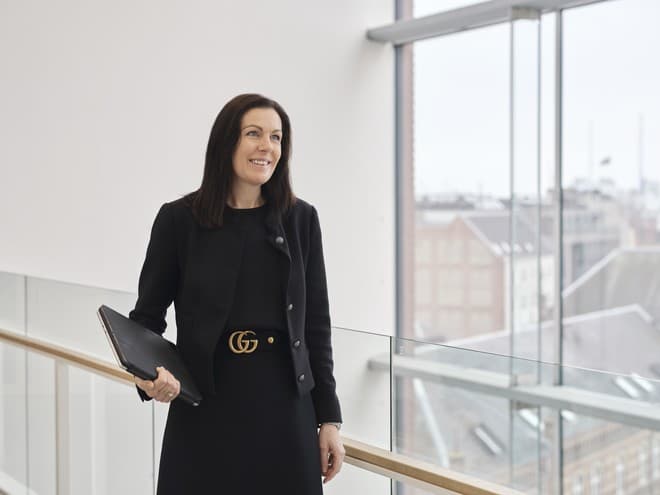
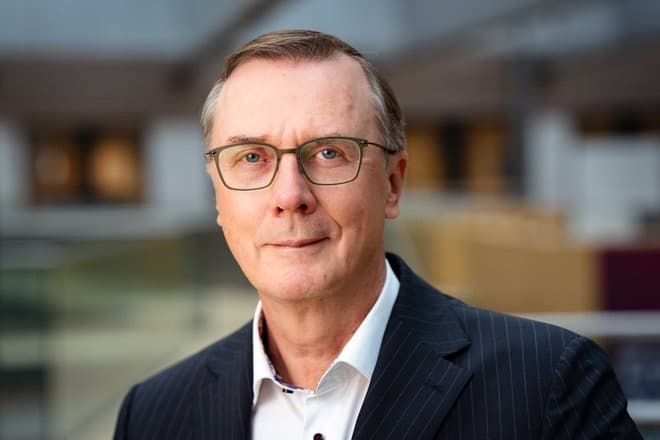
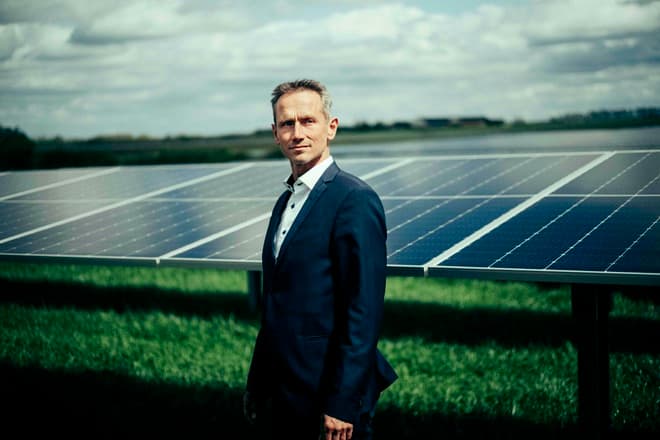
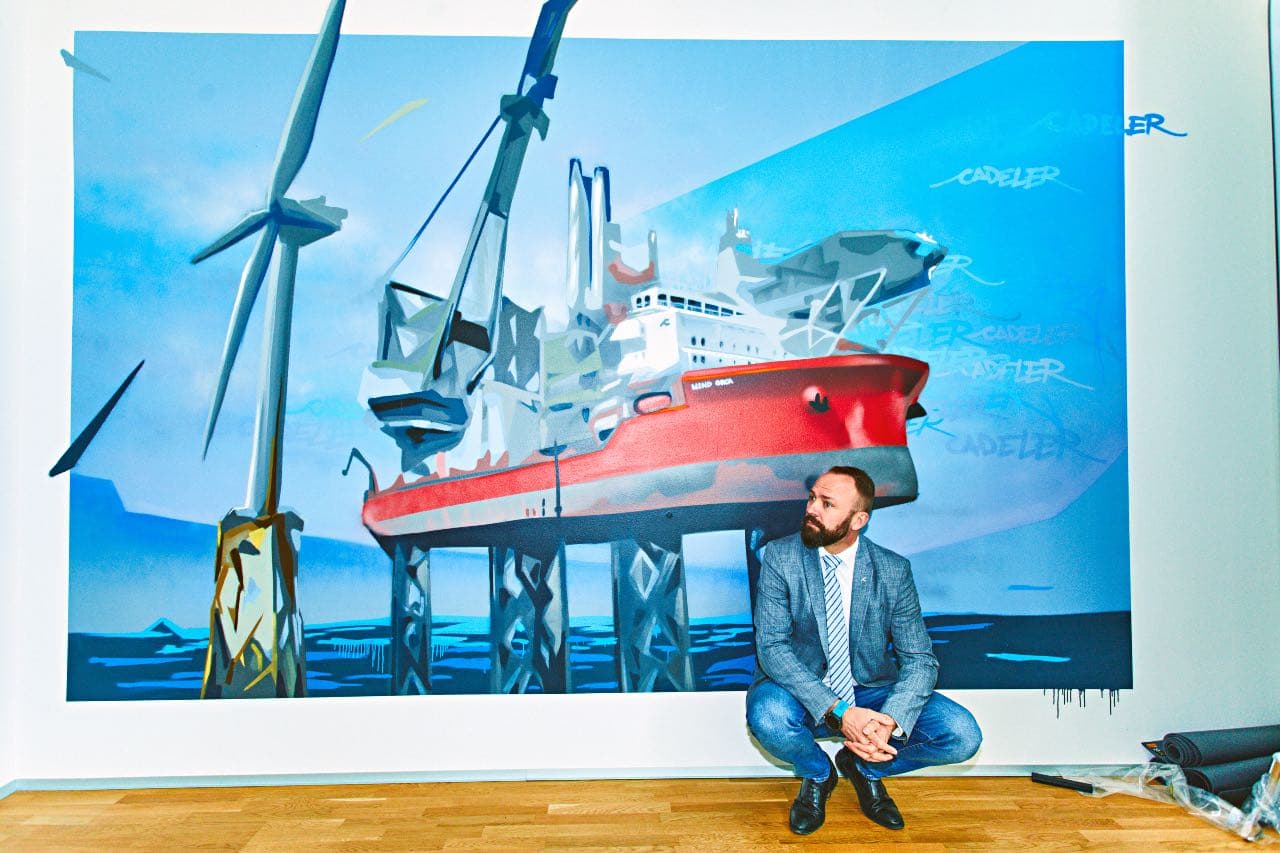
- If you want to go up, come with me, Mikkel Gleerup calls and smiles as he holds the elevator door and waits. 43-year-old CEO Mikkel Gleerup of Cadeler has just entered the reception of the shipping company's headquarters in Fairway House in Ørestaden in Copenhagen. He has just landed at Kastrup Airport from Norway, and his chic Rimowa suitcase bears witness to a life on the move around the world.
The moment after, he finds out that we will be spending the next hour together.
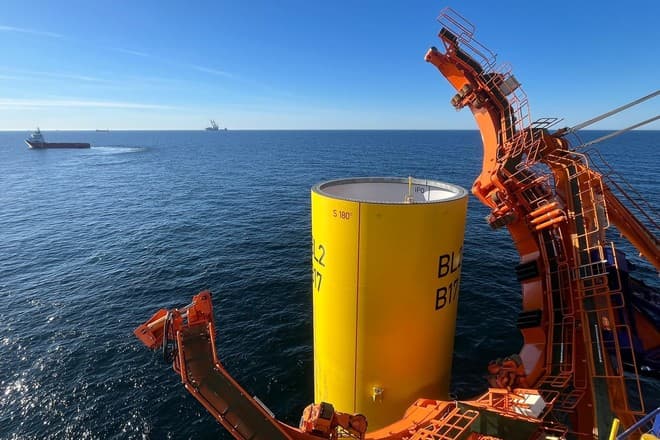
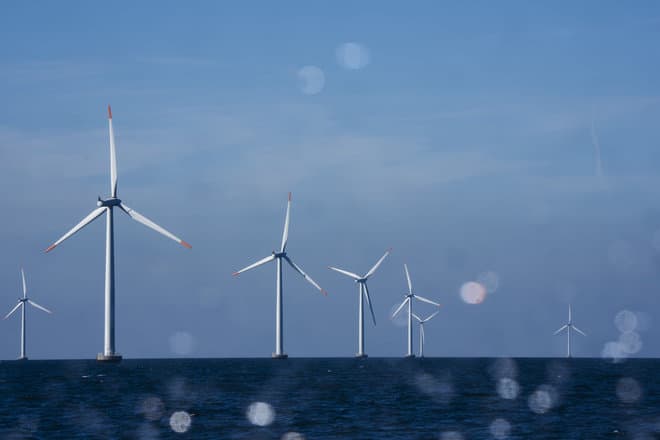
Cadeler works to install offshore wind turbines on a global scale with the vessels Wind Orca and Vind Osprey. It is a market that is developing rapidly, and the vessels can also perform maintenance and repair tasks. Later, when the wind turbines are retired, there will also be work to remove or replace them. The shipping company has already ordered two new X-class vessels with cranes that can lift up to 2000 tons to keep up with demand, and in the spring of 2022, an F-class vessel was also ordered. This will bring Cadeler to five vessels by the end of 2025, making the company's fleet the largest in the offshore wind industry.
Cadeler's 217 employees have performed exceptionally well under Gleerup's leadership. In 2021, the company tripled its revenues and ended with a profit of almost DKK 458 million - an increase of a whopping 217 percent compared to the DKK 146 million in 2020.
Cadeler sees Europe as the main market for its upcoming activities, but there is still a global outlook and an office in Taiwan that supports the will to undertake global tasks.
- We will be where it makes sense for us, but at the same time we will not be everywhere. It must provide increased value for us all the way around, and that will be our main focus. In the Far East it could be Taiwan, Korea, the Philippines and Australia, and we are following the Asian market closely. Overall, we have a stronger belief in the market as a whole, says Mikkel Gleerup.
There are also other places outside Europe that are interested.
- The potential and opportunities in California are enormous. We are talking about the world's sixth largest economy. At the same time, our ships cannot pass through the Panama Canal, and we have to consider this carefully every time we move our ships around the world. We ask ourselves every time, is this the right thing for the environment, says Mikkel Gleerup.
Making the world greener every single day
You would think that Cadeler is already contributing a lot to the green transition by installing offshore wind farms, but the shipping company sets far tougher demands on itself.
- We want to leave the world greener every single day than we found it, says Mikkel Gleerup.
It's something that he himself lives by, because the company car is an electric car, and he is in the process of building a zero-energy house.
- I'm not fanatical, I also have a Suzuki Jimny Jeep, because cars are my hobby. At Cadeler we use marine gas oil, and we will continue to do so for now, explains Mikkel Gleerup about a necessity.
No bottlenecks and the possibilities with floating wind turbines
The task for the world's specialized shipping companies within offshore installations of wind turbines is overwhelming. However, there are also persistent rumors in the industry about bottlenecks that could delay future wind farms.
- We are confident that we can avoid bottlenecks effectively together with our partners. We see all our suppliers as partners, and this helps us maintain a strong customer focus. This is the key to efficiency, and part of what we want to offer our customers, explains Gleerup.
When asked if a shorter mobilization or demobilization time before and after the installation tasks are areas where efficiency can be improved, he points elsewhere.
- It is of course nice to have a short mobilization and demobilization time depending on what it involves, but in the transit time of the vessels between the different tasks, there is much more to save. We are back to what I mentioned before. It has to make sense every time we move the ships around, says Mikkel Gleerup.
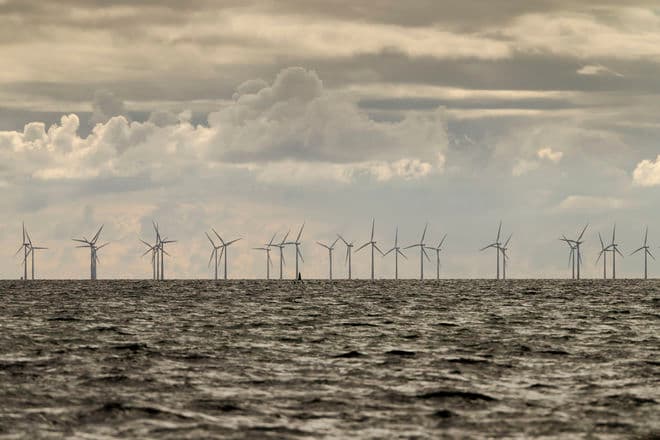
Offshore wind is perhaps a fraction of what it will be, and at the same time, floating offshore wind is on the way.
- We expect to see floating wind on an industrial scale in seven to eight years. We look forward to floating wind, because it is another opportunity and chance for us. Scotland, Norway and Japan are obvious locations for floating offshore wind, along with California. The challenge for floating will be to scale it up. FX is the Stiesdal Tetra Spar Demonstrator, a 3.6 MW turbine; when the floating turbines become 15 MW, larger port facilities will be required. The foundations will be enormous structures, explains Mikkel Gleerup about one of the future challenges of floating wind on a large scale.
At this point we are deep into the interview and Cadeler's world, the hour-long appointment has been exceeded by five minutes when Mikkel Gleerup is reminded of another pending appointment, although he has difficulty detaching himself from the subject, which is clearly close to his heart.
- Have you visited one of our ships, I would like to give you a guided tour of Esbjerg. Make an appointment, and I will take you on board, says Mikkel Gleerup, before rushing to the next appointment. It seems pretty certain that a few moments later he will have his full attention elsewhere.
It is the pace and demands of the green transition that Mikkel Gleerup and Cadeler clearly thrive on.
This report was made in connection with an interview in February 2022.
Text, graphics, images, sound, and other content on this website are protected under copyright law. DK Medier reserves all rights to the content, including the right to exploit the content for the purpose of text and data mining, cf. Section 11b of the Copyright Act and Article 4 of the DSM Directive.
Customers with IP agreements/major customer agreements may only share Danish Offshore Industry articles internally for the purpose of handling specific cases. Sharing in connection with specific cases refers to journaling, archiving, or similar uses.
Customers with a personal subscription/login may not share Danish Offshore Industry articles with individuals who do not themselves have a personal subscription to Danish Offshore Industry.
Any deviation from the above requires written consent from DK Medier.