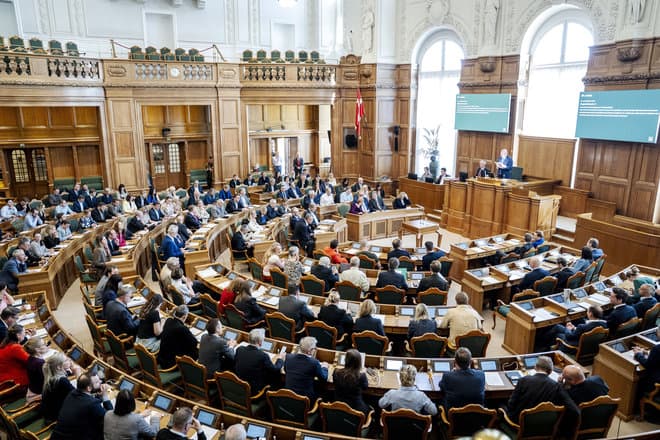
When Ursula von der Leyen became President of the European Commission with a narrow majority in 2019, it was with an ambitious plan for a green transition. When a new President is to take office on the other side of the elections in June, however, it is unlikely that the green agenda will be the decisive trump card.
- There is no doubt that the theme has been moved down the agenda, says Lykke Friis, director of the think tank Europa.
This is related to the new geopolitical situation. Now, the war against Russia and competition from the USA and China are particularly important, she believes.
- Therefore, the climate discussion is increasingly seen through the prism of competitiveness - or glasses, to use that expression, she assesses.
The most recent election to the European Parliament in 2019 came on the back of a global green wave. Swedish climate activist Greta Thunberg's school strike spread around the world, with young people taking to the streets in Copenhagen, Paris and elsewhere.
Cut to today, and the world has been through a pandemic, the economy has taken a hard hit, and war has returned to Europe.
EU defense and security interest Danes more
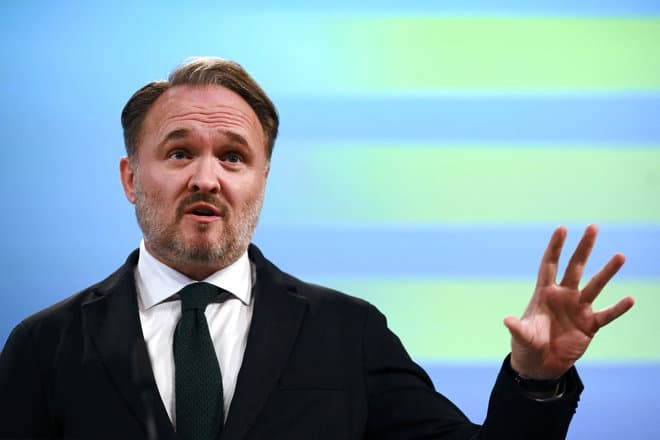
Recently, "EU defense and security" was the theme that most Danes in a survey indicated should be discussed in the run-up to the EU elections. Climate followed closely behind, but according to Professor Derek Beach, Aarhus University, it is no longer the top scorer as in previous surveys.
Many voters still care about it, he emphasizes. But topics such as defense, security and economic competition from China are now taking up more space.
- Climate is also being discussed, but it is a different discussion now, namely how much it will cost, he assesses.
A classic question that divides the political right and left, but which, according to the professor, was not so prominent recently.
It received a lot of attention when Pia Kjærsgaard had to explain the Danish People's Party's major decline after the last EU elections in 2019. The party had gone from four to one mandate, and one of the reasons, according to the former chairman, was all the "climate nutters" who only cared about the climate.
Can benefit the right wing
According to Derek Beach, the shift in voters' focus can potentially benefit the right wing.
- In this way, an agenda about gunpowder and bullets is perhaps something that can enable them to have a little more say. It is also easier today to say that the green transition should not stifle agriculture and industry. It was a little more difficult in 2019, says the professor.
Agriculture in particular has been in focus leading up to the election, where farmers in several countries have protested against climate and environmental legislation, which they believe is too strict. And it has paid off. When the European Commission proposed a new climate target in February, a specific reduction target for agriculture was eliminated.
Measurements leading up to the EU elections have indicated a rightward shift, and if Ursula von der Leyen is to be re-elected as president, she will have to lean further to the right.
- She has to make sure that her trousers hold up and that she doesn't lean so far that the greens jump off, says Lykke Friis from the think tank Europa.
She points out that a "crowding out" effect has been seen in the climate area, where forces have been set in motion that affect the original effect.
- When you go from the big goals and time perspectives to something very specific that has to be adopted here and now, it just hurts more.
- It's more complicated, and that's also what you get hit by, she says.
She points out that climate - even though the most recent parliamentary term has been tumultuous with pandemic and war - has nevertheless been one of the major themes.
Professor: Very ambitious politicians must have "beat themselves to death a little".
Among other things, with the European Green Deal and the Fit for 55 climate package, which is to ensure 55 percent lower greenhouse gas emissions in 2030 than in 1990. After corona, a large recovery fund of a staggering 750 billion euros was also adopted - a large part of which is targeted at the climate.
According to Derek Beach, Aarhus University, there is no appetite for that kind of thing right now. He believes that the green transition - with the very ambitious policies that have now been adopted - may have "defeated itself a little".
- Now the bill has to be paid, and there are some who say, "ah, that's maybe just legal enough", says the professor.
/ritzau/
Text, graphics, images, sound, and other content on this website are protected under copyright law. DK Medier reserves all rights to the content, including the right to exploit the content for the purpose of text and data mining, cf. Section 11b of the Copyright Act and Article 4 of the DSM Directive.
Customers with IP agreements/major customer agreements may only share Danish Offshore Industry articles internally for the purpose of handling specific cases. Sharing in connection with specific cases refers to journaling, archiving, or similar uses.
Customers with a personal subscription/login may not share Danish Offshore Industry articles with individuals who do not themselves have a personal subscription to Danish Offshore Industry.
Any deviation from the above requires written consent from DK Medier.