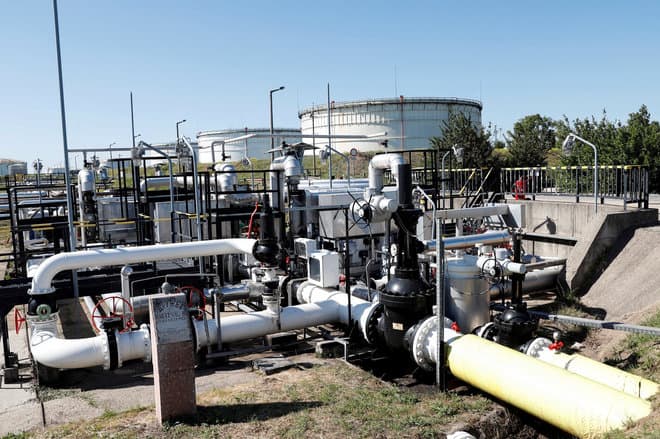
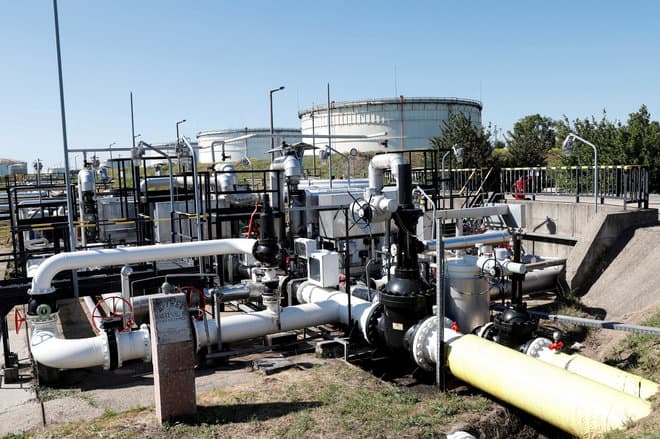
The Ministry of Climate, Energy and Utilities already knew in mid-January – while crucial political negotiations about the hydrogen pipeline were underway – that the billion-dollar prestige project with 90 percent. probability would be delayed.
But that information never reached the Climate, Energy and Utilities Committee.
The ministry confirms this in an email to the business media Energy Supply.
- The ministry has not been able to validate Energinet's estimate, and it has not been forwarded to the Climate, Energy and Utilities Committee, the ministry writes.
Already in mid-January, the state-owned company Energinet, which is responsible for the project, submitted a risk assessment of the schedule to the ministry. Energinet also confirms this.
The risk assessment included knowledge that the hydrogen pipeline with 90 percent. likely not be ready by December 2030 at the latest.
But on February 6 - weeks after the ministry received the risk figures - a broad political majority came out with billions in state support and a new political agreement to complete the Danish hydrogen connection between Esbjerg and Germany by December 2030.
According to the ministry, "the risk of delays was clearly flagged to the rapporteurs throughout the entire negotiation process".
A light-hearted formulation
Although the Ministry of Climate, Energy and Utilities "has not been able to validate Energinet's estimate" back in January, the minister approved a final investment plan for the project in early September, which contained an identical estimate. Both the ministry and Energinet confirm to Energy Supply that they have not changed the risk figures since January.
Professor at Aalborg University and expert in administrative law, Sten Bønsing, calls the ministry's formulation vague.
- I am not sure that it meets the requirements to translate the information into a more vague concept, when you actually have a fairly precise bid, he says.
- The ministry must ensure that it provides as good a basis for information as possible, and as one can reasonably assume or expect. I would think that the members of parliament would not think that it is reasonable to translate a risk of 90 percent. to a significant risk, he elaborates.
He also believes that the case is of a nature that could trigger a backlash from the minister.
- This would typically be something that is frowned upon, based on practice in the cases that have occurred over the past 10-15 years, says Sten Bønsing.
However, it was described in the political agreement from February that the timetable for the hydrogen pipeline was risky.
"The parties to the agreement note that this is a very tight timetable with a significant risk of delay," the agreement text said.
Text, graphics, images, sound, and other content on this website are protected under copyright law. DK Medier reserves all rights to the content, including the right to exploit the content for the purpose of text and data mining, cf. Section 11b of the Copyright Act and Article 4 of the DSM Directive.
Customers with IP agreements/major customer agreements may only share Danish Offshore Industry articles internally for the purpose of handling specific cases. Sharing in connection with specific cases refers to journaling, archiving, or similar uses.
Customers with a personal subscription/login may not share Danish Offshore Industry articles with individuals who do not themselves have a personal subscription to Danish Offshore Industry.
Any deviation from the above requires written consent from DK Medier.