In a small German chemical company, the director is literally wrestling with frustration. Another crisis has hit European industry, and this time there is a risk that it will break several companies.
In a spartan office among plastic cans and cleaning packaging, the owner of the chemical company Gechem Martina Nighswonger feels that the possibilities are running out.
- There is no break. Every year the profit gets a little smaller, and eventually it's gone, she tells Reuters at the company's facility in Kleinkarlbach in southwestern Germany.
Here she holds daily crisis meetings and takes her mind off things on a punching bag.
- It's exhausting, and you don't know what to do anymore, she says.
After several years of the aftermath of the pandemic, rising energy prices after Russia's invasion of Ukraine and US tariffs, the war in the Middle East has once again sent commodity prices soaring. Gechem, which mixes chemicals for household products and bottles brake fluid for the automotive industry, is among the companies hit by the latest crisis.
The consequences are being felt globally, but are hitting Europe particularly hard, where energy prices are already high, according to leaders from several countries.
Blockade of the Strait of Hormuz sends energy prices soaring
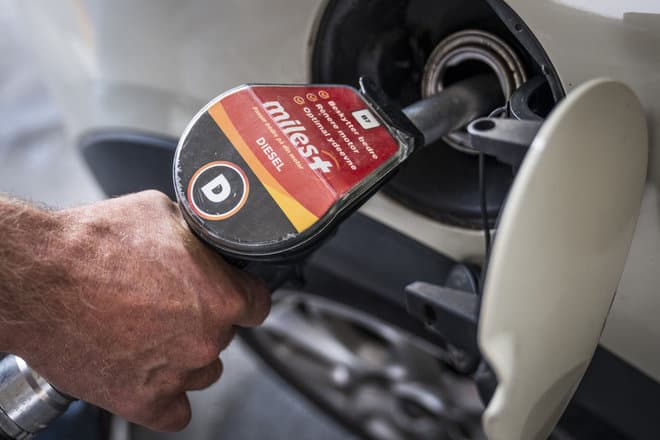
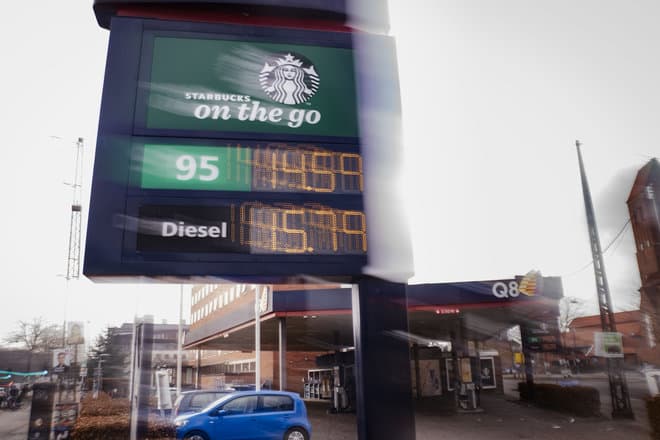
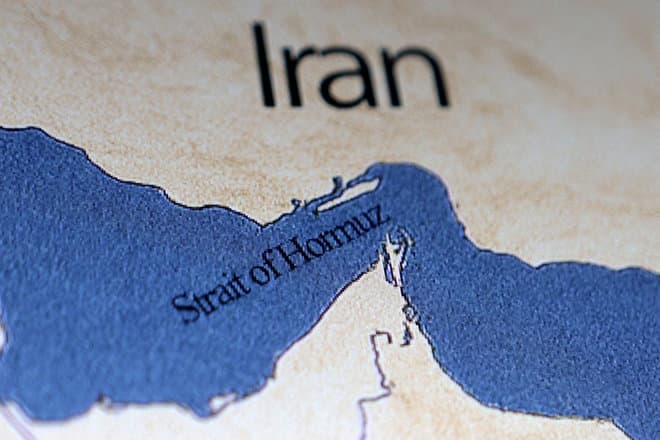
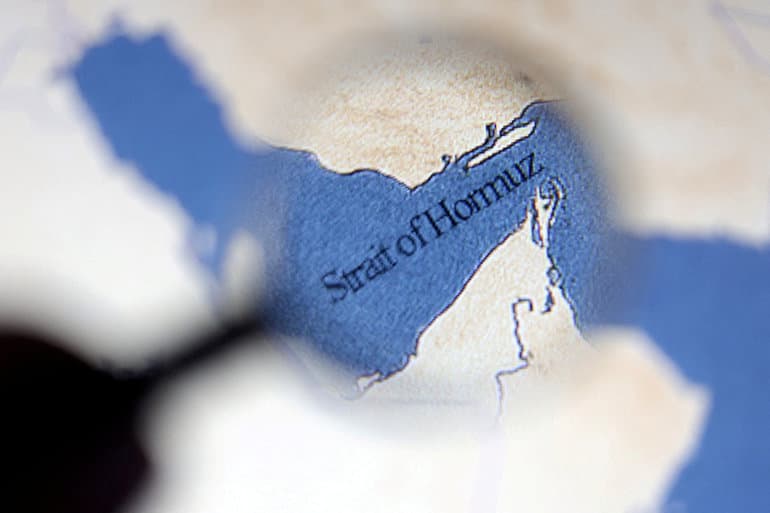
Iran's blockade of the Strait of Hormuz had already hit oil exports before attacks on gas facilities in Iran and Qatar last week caused the price of oil to rise to up to $120 per barrel. That is equivalent to about 770 kroner and is a doubling since the beginning of the year.
According to the Institut der deutschen Wirtschaft, a private economic research institute, the German economy could suffer a loss of 40 billion euros over two years if the price of oil remains at $100. That's almost 300 billion kroner.
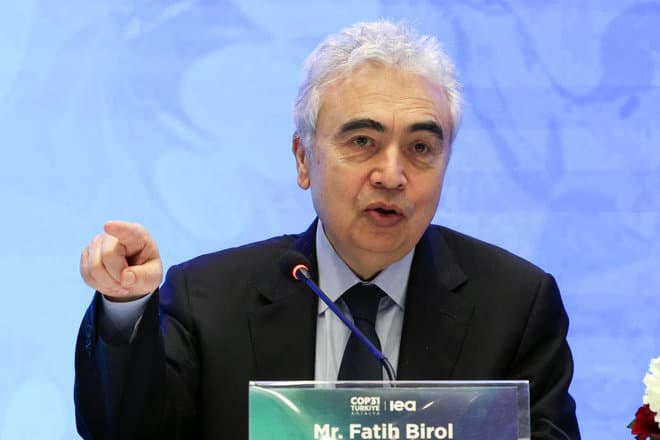
According to the institute, this shows how vulnerable Europe's industry has become after several years of high energy prices and tough competition from China. In Germany, wholesale electricity prices of $132 per megawatt-hour (MWh) are among the highest in the world.
That is significantly higher than the $48 per MWh in the United States and the EU average of $120 per MWh, according to the International Energy Agency.
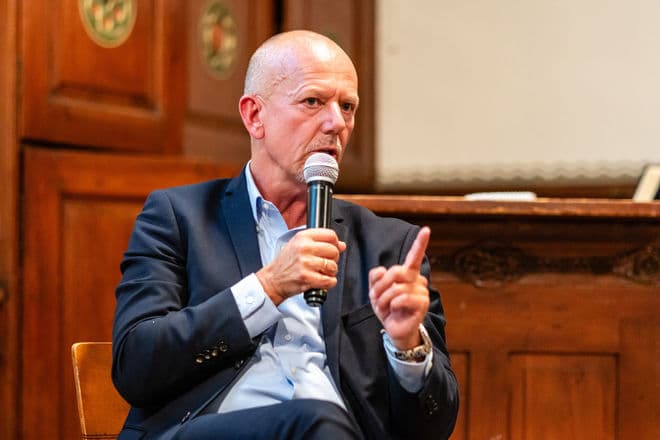
Senior analyst at Swiss bank Swissquote Ipek Ozkardeskaya believes that Europe is in a vulnerable position and cannot afford another energy shock in such a short time.
- Germany and Britain appear to be the most vulnerable to the energy shock, she tells Reuters.
A prolonged war in the Middle East could hit the world economy hard
The chemical company Gechem was founded in 1861 and is an example of the German Mittelstand. It is a term for 3.4 million medium-sized companies that employ more than 33 million people. These companies account for more than half of economic activity in the world's third-largest economy.
Gechem had a turnover of 46 million euros last year and employs 165 people. But the company has imposed a hiring freeze and is not ruling out layoffs for the first time in two decades, says owner Martina Nighswonger.
In addition to disruptions in oil and gas markets, supplies of fertilizer, sulfur, helium, aluminum, polyethylene and other critical raw materials have been affected by Iran's control of the Strait of Hormuz. At the same time, transport costs have risen due to higher fuel prices.
These problems are spreading to Europe's industrial heartland. According to Peter Voser, chairman of the board of directors of Swiss engineering giant ABB, a prolonged war in the Middle East would hit the world economy hard.
- In the short term, companies that use gas as a primary energy source may have to close production lines, which could lead to price increases in certain sectors, he says.
But the real global effect will come later, he adds.
/ritzau/Reuters
Text, graphics, images, sound, and other content on this website are protected under copyright law. DK Medier reserves all rights to the content, including the right to exploit the content for the purpose of text and data mining, cf. Section 11b of the Copyright Act and Article 4 of the DSM Directive.
Customers with IP agreements/major customer agreements may only share Danish Offshore Industry articles internally for the purpose of handling specific cases. Sharing in connection with specific cases refers to journaling, archiving, or similar uses.
Customers with a personal subscription/login may not share Danish Offshore Industry articles with individuals who do not themselves have a personal subscription to Danish Offshore Industry.
Any deviation from the above requires written consent from DK Medier.