The Earth's climate is more out of balance than ever before, the World Meteorological Organization (WMO) warns in its annual climate report. For the first time, the report, released on Monday, includes the Earth's energy balance as one of its key climate indicators.
Under a stable climate, the amount of solar energy hitting Earth is roughly equal to the energy that is sent back into space. But due to increasing amounts of greenhouse gases, the balance in 2025 was more unbalanced than ever before.
The gases trap extra heat like a thick blanket around the Earth, and this means, among other things, that the oceans are getting warmer, while the weather is getting wilder.
- We will live with the consequences for hundreds and thousands of years, says Secretary-General Celeste Saulo.
Over 91 percent of the excess heat is stored in the world's oceans, which thus act as a large buffer against higher temperatures on land.
The challenge is that the oceans are getting warmer and warmer much faster than before. The heat content of the oceans reached a record level last year. For the past 20 years, the oceans have absorbed an amount of energy every year that corresponds to approximately 18 times all the energy that humans use in an entire year.
Only 1 percent of the excess energy is stored close to the Earth's surface - that is, the temperatures that humans feel.
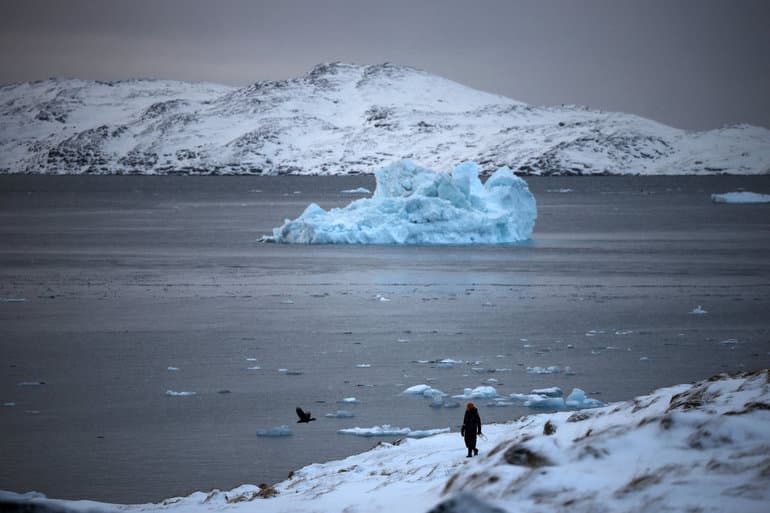
Five percent is stored in the landmass of the continents, while three percent goes to warming and melting ice. The ice caps of Antarctica and Greenland are losing so much mass that the average Arctic sea ice extent is the lowest or second lowest ever recorded. Extraordinary glacier loss was recorded in Iceland and along the North American Pacific coast.
Climate change is also affecting where and when diseases occur - especially those that respond to temperature and precipitation. Diseases spread by insects are of particular concern, with dengue fever standing out as the fastest growing virus spread by mosquitoes.
Higher temperatures play a crucial role, as mosquitoes become more efficient at spreading the disease. The heat makes mosquitoes develop faster, they bite more often, and the time it takes for the virus to become contagious is shortened.
- Today's report should come with a warning label: Climate chaos is accelerating, and delayed action is deadly, says UN Secretary-General António Guterres.
The years 2015-2025 have been the warmest 11 years ever recorded. 2025 was the second or third warmest year.
/ritzau/
Text, graphics, images, sound, and other content on this website are protected under copyright law. DK Medier reserves all rights to the content, including the right to exploit the content for the purpose of text and data mining, cf. Section 11b of the Copyright Act and Article 4 of the DSM Directive.
Customers with IP agreements/major customer agreements may only share Danish Offshore Industry articles internally for the purpose of handling specific cases. Sharing in connection with specific cases refers to journaling, archiving, or similar uses.
Customers with a personal subscription/login may not share Danish Offshore Industry articles with individuals who do not themselves have a personal subscription to Danish Offshore Industry.
Any deviation from the above requires written consent from DK Medier.