At the end of May, the Danish Environmental Protection Agency revoked the environmental permit for the Baltic Pipe project, and Energinet therefore had to start shutting down construction work in several places. However, the Danish Environmental Protection Agency has now given permission for work to resume in several places.
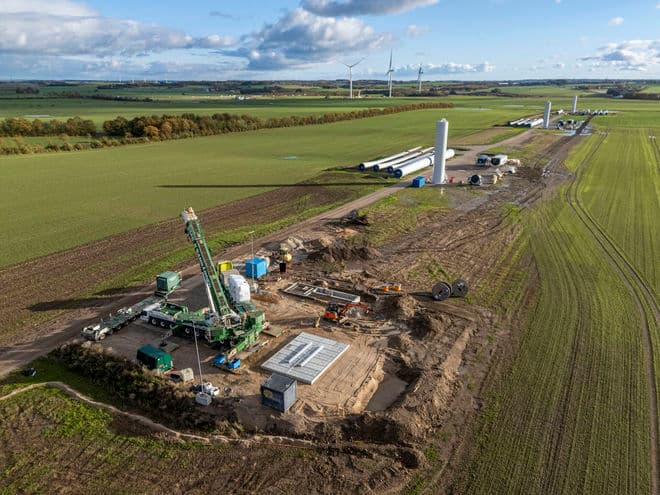
Work is allowed on the pipeline in Jutland from the landfall point at Houstrup Strand/Blåbjerg in West Jutland to the Nybro receiving terminal, on the Nybro receiving terminal, on the Funen pipeline from Brylle to Nyborg, on the Zealand pipeline from Kongsmark to the junction point with a pipeline across the Baltic Sea to Poland, on a new compressor station at Everdrup in Næstved Municipality and on a new transformer station at the Everdrup compressor station, Energinet informs.
Conversely, work on the Southeast Jutland pipeline between Egtved station and Lillebælt and from Lillebælt to Brylle west of Bellinge line station, as well as the electricity supply through Næstved Storskov from Haslev to Everdrup compressor station, cannot resume until a new environmental permit is issued.
Overall, work on the largest part of the 210 km long route across Denmark can continue. However, the appeals board's decision means that work on West Funen and Southeast Jutland must be postponed from 2021 to spring 2022.
Expect overall delays
In 2018, Energinet and the Polish partner GAZ-System agreed that Baltic Pipe should be fully completed in October 2022 and be able to transport up to 10 billion cubic meters of gas annually. After the revocation of the environmental permit and the work of obtaining a new permit, Energinet estimates that the project will be delayed by approx. three months.
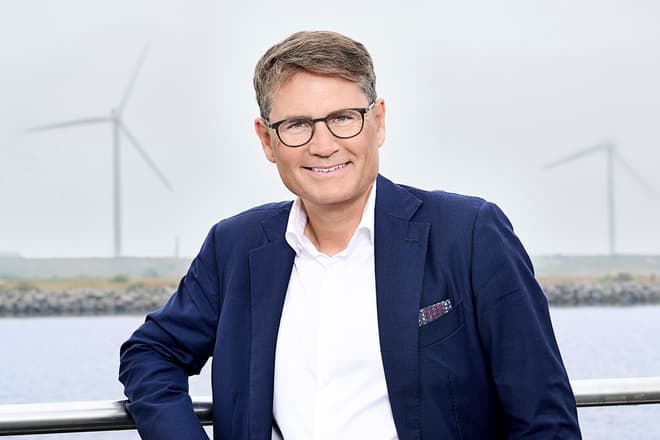
- We are now working very hard to complete as much as possible, so that a large part of the agreed capacity is available by the original deadline, says Marian Kaagh, Deputy Director of Energinet.
Marian Kaagh explains that new Baltic Pipe pipes in parts of the country, combined with the existing Danish gas infrastructure, can for a period of time ensure that gas can flow to Poland as agreed from October 2022. She also explains that Energinet is working to ensure that the full capacity is ready before the end of 2022.
Energinet is satisfied that a large part of the work can thus be completed as planned, and that further inconvenience for many landowners who have to lay land for the work can thus be avoided.
- Baltic Pipe is an important project for Denmark and the energy supply in Central and Eastern Europe, but we are fully aware that many landowners would have preferred not to have it. That is why it means a lot to me that we can complete the work as planned in most places in the country. But on the other hand, I am very sorry that some landowners are facing a delay. We are now contacting all landowners to explain how they will be affected, says Marian Kaagh.
Energinet will as soon as possible obtain an overview of the financial consequences of the temporary shutdown and postponement of parts of the construction work for the project.
esl
Text, graphics, images, sound, and other content on this website are protected under copyright law. DK Medier reserves all rights to the content, including the right to exploit the content for the purpose of text and data mining, cf. Section 11b of the Copyright Act and Article 4 of the DSM Directive.
Customers with IP agreements/major customer agreements may only share Danish Offshore Industry articles internally for the purpose of handling specific cases. Sharing in connection with specific cases refers to journaling, archiving, or similar uses.
Customers with a personal subscription/login may not share Danish Offshore Industry articles with individuals who do not themselves have a personal subscription to Danish Offshore Industry.
Any deviation from the above requires written consent from DK Medier.