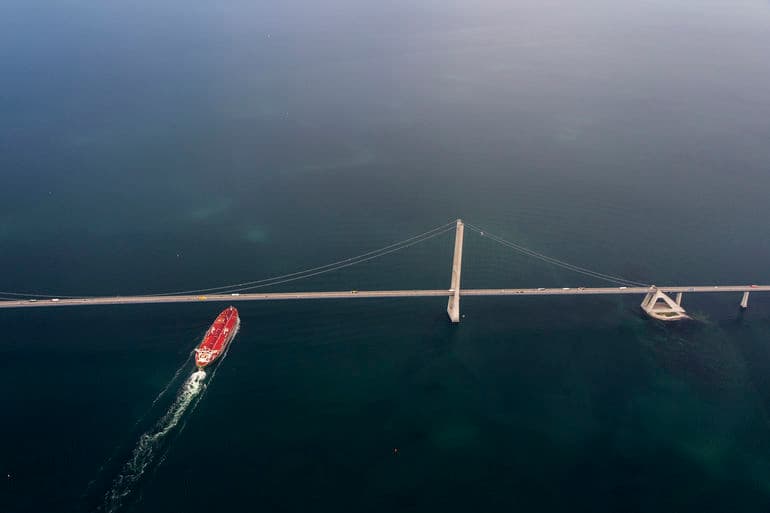
From January 1 to December 1, 2025, Russia has shipped crude oil and oil products through Danish waters for around 420 billion kroner. This corresponds to approximately one third of Russia's estimated military budget for 2025. Danwatch can reveal this. The analysis was made for Danwatch by the independent think tank Centre for Research on Energy and Clean Air (CREA).
During the period from January 1 to December 1, approximately 65 million tons of crude oil and almost 60 million tons of oil products were transported from Russian ports through the Great Belt. The total value is estimated at around 55 billion euros, equivalent to approximately 420 billion kroner.
Therefore, the transit through Denmark constitutes a significant cornerstone of Russia's war economy, says naval captain and independent defense analyst Jens Wenzel Kristoffersen.
- It is a direct source of financing for the Ukraine war, and it is happening in Denmark. Russia must be left with the perception that the EU and Denmark are not someone to be taken particularly seriously when it can happen on this scale right under our noses, he says.
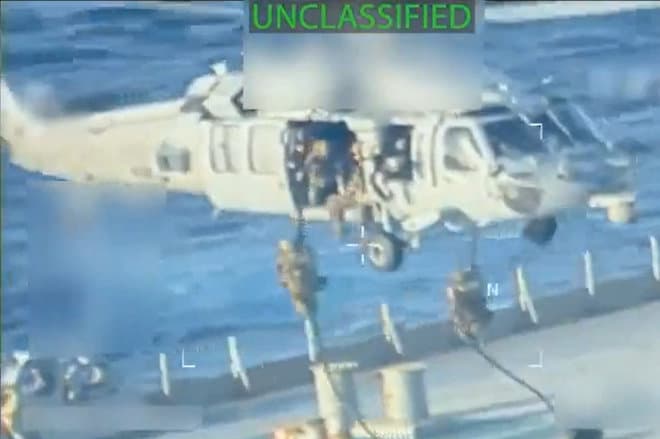
The analysis also shows that the EU's efforts against the so-called shadow fleet have not had the desired effect. On the contrary, more Russian oil is now being transported through Danish waters on sanctioned tankers than on non-sanctioned ones.
Spread over a year, the volume corresponds to between 125 and 150 tankers with Russian crude oil and other oil products sailing through Denmark per month. That is about five full tankers a day.
Foreign Minister: Denmark is focusing on the problem
The new analysis has Foreign Minister Lars Løkke Rasmussen (M) reacting. He tells Danwatch:
- I don't have any ideas that the shadow fleet has been defeated. But we are doing a lot, and the effects are visible. Russia's earnings from oil exports have fallen in recent months to the lowest level since the invasion of Ukraine began, he says, adding:
- It has been a clear priority for the Danish EU presidency to step up the pressure, and as recently as Monday we put 40 new ships on the sanctions list. It is a core task for the EU to combat the shadow fleet, and at the same time it is important that new measures are in accordance with international law and can be implemented in practice.
Russia's war economy is deeply dependent on the country's continued oil exports. Without oil, "the Russian economy will grind to a halt" and send the country into a "deep, deep crisis", says Jakob Tolstrup, associate professor of political science at Aarhus University.
- Oil is the main source of income for Russia's economy. It is the most important export product they have, he explains.
Tolstrup assesses that a Danish or European decision to stop sanctioned ships from sailing through Denmark will have major consequences for Russia - but also entail the risk of Russian counter-reactions.
- It is indeed an important problem, but it is also a difficult dilemma for the Danish government, he says, adding:
- Denmark is a potential conflict zone. You can choose to let it pass, knowing that you will not enforce the sanctions effectively. It is a political balancing act with advantages and disadvantages, but it is not an easy choice, he says.
Text, graphics, images, sound, and other content on this website are protected under copyright law. DK Medier reserves all rights to the content, including the right to exploit the content for the purpose of text and data mining, cf. Section 11b of the Copyright Act and Article 4 of the DSM Directive.
Customers with IP agreements/major customer agreements may only share Danish Offshore Industry articles internally for the purpose of handling specific cases. Sharing in connection with specific cases refers to journaling, archiving, or similar uses.
Customers with a personal subscription/login may not share Danish Offshore Industry articles with individuals who do not themselves have a personal subscription to Danish Offshore Industry.
Any deviation from the above requires written consent from DK Medier.