Denmark is facing the most serious threat scenario since the Second World War. That is the clear conclusion of the national risk report from 2025.
With heightened hybrid threats and war on the European continent, the time has come to make Danish society more robust, it says. And here a so-called total preparedness is "the way forward".
This is the call from a panel of experts who last week submitted a number of recommendations on rescue preparedness commissioned by the government.
A total preparedness is the idea that all actors in society, both state and private, are involved in a comprehensive preparedness. This is explained by Rasmus Dahlberg, an associate professor of societal security at Roskilde University and co-author of the report.
- It is our modern version of the total defense from the Cold War. It is a way of thinking about preparedness, where it is not only the state and the authorities that are responsible for the preparedness. All actors must be involved.
Rasmus Dahlberg mentions private companies and civil organizations, for example.
- We have privatized so much of our critical infrastructure and critical functions, so we have to have private companies involved.
DI: Private companies ready to help
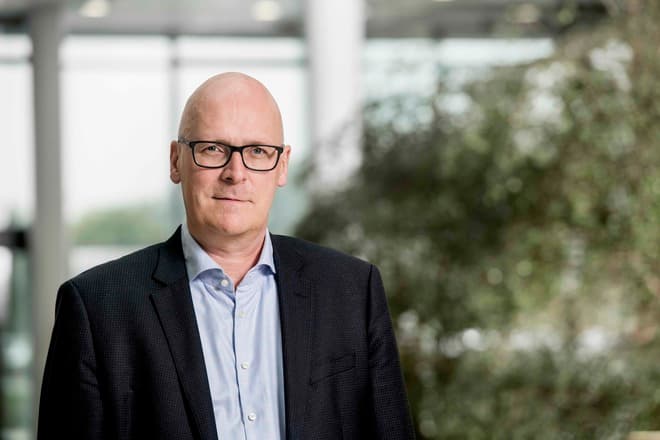
And private companies also want to be more involved. That is at least the message from Rasmus Anderskouv, director of societal safety and preparedness at the Confederation of Danish Industries.
- There is currently no systematic involvement of the business community in preparedness. Many companies would like to contribute more, but they do not know who to call.
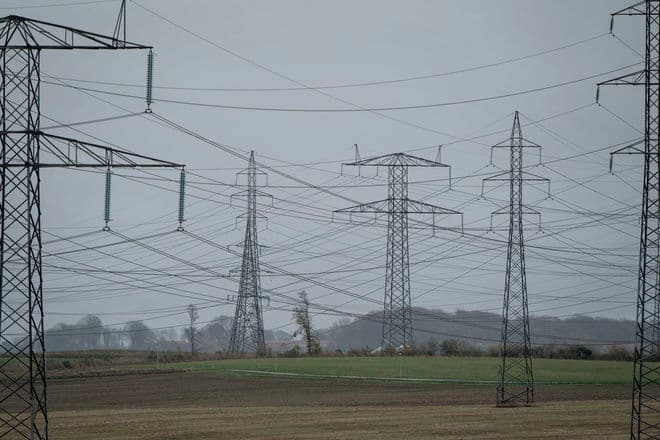
The director points out that many companies that, for example, work with supplies, have skills that may be relevant to involve in preparedness. This applies, for example, to the supply of electricity, energy and the like.
It would be beneficial for both society and the companies themselves to be better at involving the companies, points out Rasmus Anderskouv.
- The companies also have an interest in ensuring that society can continue if a crisis occurs.
Rasmus Dahlberg emphasizes that progress has been made since the establishment of the Ministry of Social Security and Emergency Preparedness in 2024. However, Denmark has come out of the starting holes too slowly, he says.
- We have been sleeping soundly for far too long.
Denmark far behind neighbouring countries
In terms of total preparedness, Denmark's Nordic neighbours are far better off, he says.
- The rule of thumb is that we are five years behind Sweden, ten years behind Norway and 30 years behind Finland.
When Denmark lags behind, it may be because we have not felt as exposed as our neighbours for a long time, Rasmus Dahlberg assesses.
- We may have a bit of a butter-hole view. We do not have large forests that can burn like in Sweden and Norway. We are part of NATO and are not neighbors of Russia.
Rasmus Dahlberg acknowledges that a total preparedness will require significant investments.
- Preparedness is expensive, but it is cheaper than a crisis, he says.
Ritzau has tried to get a comment from Minister of Preparedness Torsten Schack Pedersen (V), but it has not been possible.
/ritzau/
Text, graphics, images, sound, and other content on this website are protected under copyright law. DK Medier reserves all rights to the content, including the right to exploit the content for the purpose of text and data mining, cf. Section 11b of the Copyright Act and Article 4 of the DSM Directive.
Customers with IP agreements/major customer agreements may only share Danish Offshore Industry articles internally for the purpose of handling specific cases. Sharing in connection with specific cases refers to journaling, archiving, or similar uses.
Customers with a personal subscription/login may not share Danish Offshore Industry articles with individuals who do not themselves have a personal subscription to Danish Offshore Industry.
Any deviation from the above requires written consent from DK Medier.