


It has been expensive to use electricity in the first month of 2026. The electricity price has been around 0.80 øre per kilowatt-hour on average nationwide, and this is the highest average price since February last year. Here, the electricity price hit an average of around 0.86 kroner per kilowatt-hour. This is what the electricity companies Norlys, Andel Energi and OK write in press releases.
Andel Energi has calculated the average price for January at 82.1 øre per kilowatt-hour. The slightly higher amount is due to the fact that they have calculated the average price for Eastern Denmark. Mads Brøgger, director of Norlys' energy business, explains that all of Europe has had a cold start to 2026.
- This means that we have used more electricity to heat our homes and businesses than usual. At the same time, we have – atypical for the season – had very little wind, and the small amounts of precipitation in Scandinavia have also meant that the water reservoirs in Sweden and Norway are low, and this has created a "perfect storm" that results in high electricity prices, it is said.
Lower electricity tax helps
However, it would have become even more expensive to use electricity in January if the electricity tax had not been lowered as part of the Finance Act from the New Year, the electricity companies write. From 1 January 2026, the electricity tax was reduced from 72.7 øre per kilowatt-hour to the EU's minimum tax of 0.8 øre for private households.
According to the knowledge center Bolius, which is part of the Realdania association, a typical consumer has an average electricity consumption of 1600 kilowatt-hours per year in Denmark.
An average family of two adults and two children in a 150 square meter house uses 4500 kilowatt-hours per year. This corresponds to an average Dane using 4.1 kilowatt-hours per day, while a typical family uses 11 kilowatt-hours per day.
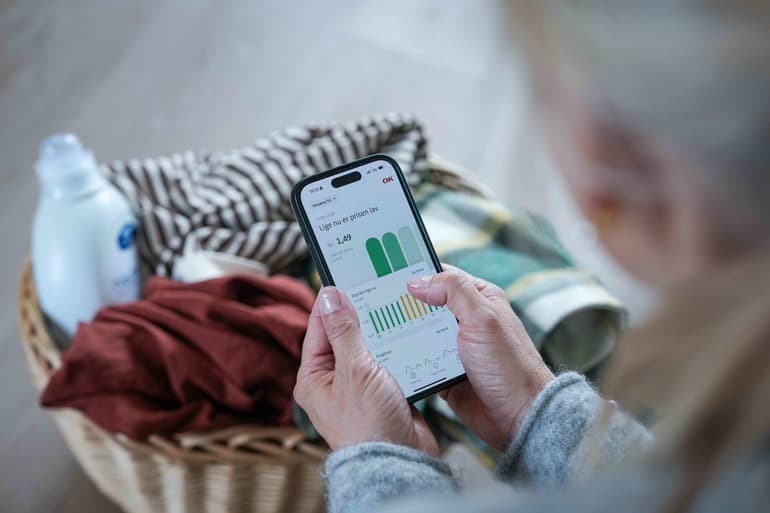
The electricity companies are urging you to keep an eye on prices and use electricity when the price is lowest. That is at night and during the day. Conversely, it is typically in the evening between 5:00 p.m. and 9:00 p.m. that consumption and raw electricity prices are highest.
Josefine Walter, commercial director at Andel Energi, believes that this "underlines the potential of flexible energy solutions".
- You can advantageously adjust your consumption so that the primary consumption is during the cheap night hours, the press release says.
/ritzau/
Text, graphics, images, sound, and other content on this website are protected under copyright law. DK Medier reserves all rights to the content, including the right to exploit the content for the purpose of text and data mining, cf. Section 11b of the Copyright Act and Article 4 of the DSM Directive.
Customers with IP agreements/major customer agreements may only share Danish Offshore Industry articles internally for the purpose of handling specific cases. Sharing in connection with specific cases refers to journaling, archiving, or similar uses.
Customers with a personal subscription/login may not share Danish Offshore Industry articles with individuals who do not themselves have a personal subscription to Danish Offshore Industry.
Any deviation from the above requires written consent from DK Medier.