Denmark and the other Baltic Sea countries are committing to sevenfold the amount of electricity from offshore wind in the Baltic Sea by 2030. This is reported by Politiken. The newspaper has seen a late draft of the declaration for the agreement, which will be presented at an energy summit on Tuesday at Marienborg.
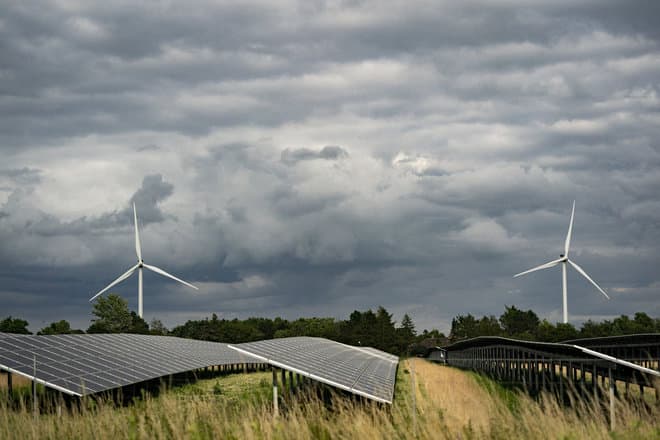
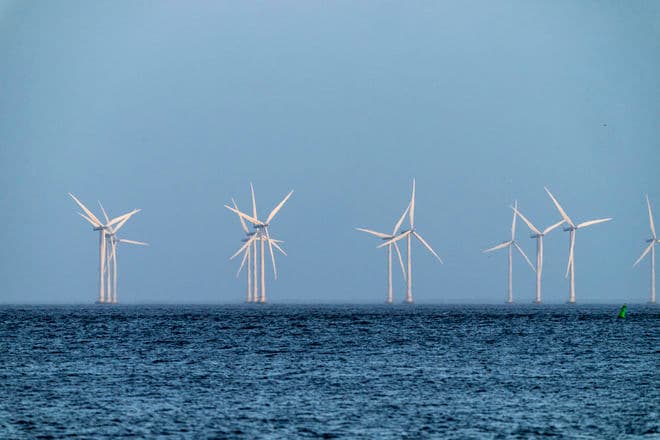
The countries have agreed to increase the capacity of offshore wind from just under 3 gigawatts in the Baltic Sea currently to almost 20 GW in 2030. This will mean that 1,100-1,700 offshore wind turbines will be built, depending on the size. This will ensure electricity for between 22 and 30 million households, writes Politiken. According to Prime Minister Mette Frederiksen (S), it is important to accelerate the green transition.
- The war in Ukraine and climate change are now coming together. We have two crises on the table at the same time. We need to speed up the green transition, and we need to get rid of Russian fossil fuels, she tells Politiken.
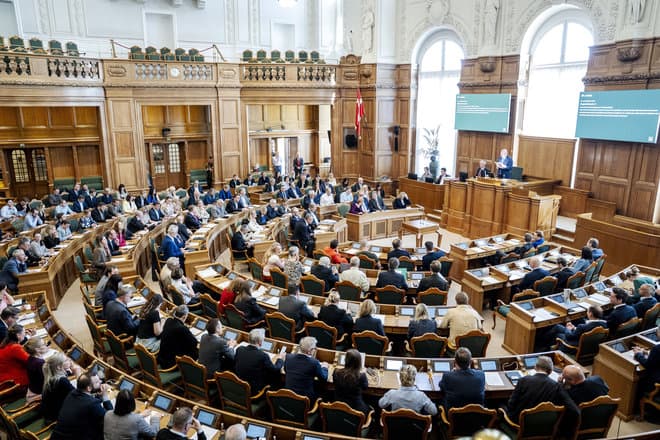
Mette Frederiksen is participating in the energy summit on behalf of Denmark. In addition, top officials from Poland, Sweden, Finland, Germany, Estonia, Latvia and Lithuania are participating. EU Commission President Ursula von der Leyen is also participating.
Great potential
Currently, 2.8 GW of offshore wind is spinning in the Baltic Sea region, of which approximately half is Danish. However, the EU Commission has previously assessed that there is a potential of up to 93 gigawatts by 2050.
Tuesday's summit comes a few months after a similar one in Esbjerg with participation from Denmark, Germany, the Netherlands and Belgium. Here, the countries agreed on a goal of tenfolding the capacity for offshore wind in the North Sea to 150 gigawatts by 2050.
Mette Frederiksen also opened the way for faster permits to be granted for the construction of green energy.
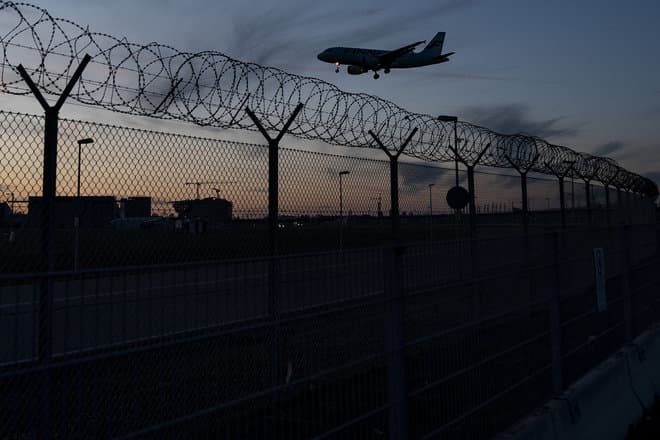
The summit on Tuesday was originally supposed to take place on Bornholm, but a work stoppage among employees at Bornholm Airport caused the location to change on Monday. Now it will instead be at Marienborg, the prime minister's official residence, located north of Copenhagen.
On Monday, a majority in the Danish Parliament agreed to expand the upcoming energy island on Bornholm from two to three GW. At the same time, the facility will be connected to Germany.
Unlike a similar project off Esbjerg, this is not an actual island. An offshore wind farm is being established in the waters southwest of Bornholm, which will be connected to a facility on the rocky island.
In the long term, the intention is that the energy island will be connected to electrolysis plants that can convert the electricity into, for example, green fuels.
/ritzau/
Text, graphics, images, sound, and other content on this website are protected under copyright law. DK Medier reserves all rights to the content, including the right to exploit the content for the purpose of text and data mining, cf. Section 11b of the Copyright Act and Article 4 of the DSM Directive.
Customers with IP agreements/major customer agreements may only share Danish Offshore Industry articles internally for the purpose of handling specific cases. Sharing in connection with specific cases refers to journaling, archiving, or similar uses.
Customers with a personal subscription/login may not share Danish Offshore Industry articles with individuals who do not themselves have a personal subscription to Danish Offshore Industry.
Any deviation from the above requires written consent from DK Medier.