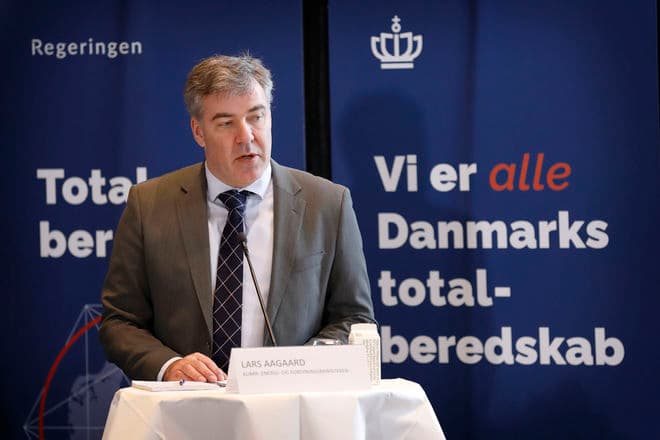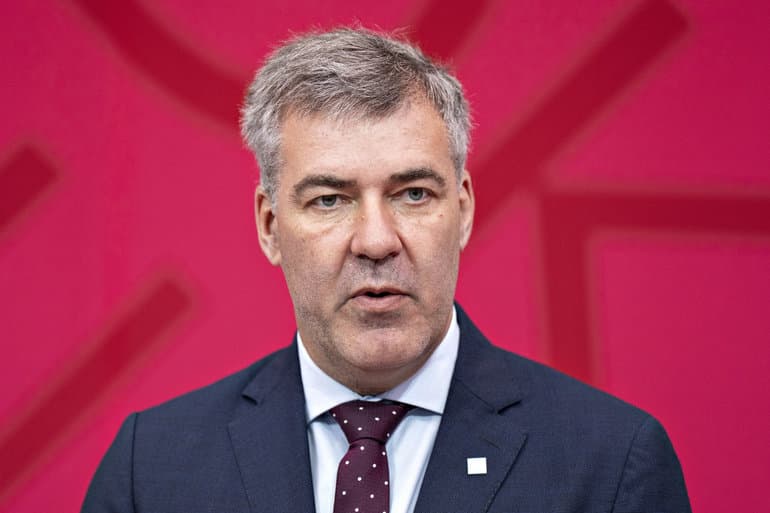
The Danish EU presidency is still aiming to reach an agreement on the EU's climate targets for 2040 at a ministerial meeting on September 18 in Brussels. This is stated by Minister for Climate, Energy and Utilities Lars Aagaard (M) on his way to an informal ministerial meeting in Copenhagen on Friday.
- We are still working towards that, and there is intense dialogue with all the countries about what specific wishes they may have, says Lars Aagaard.
The announcement comes even though France, according to the online media Politico, wants to raise the issue at an EU summit in October. This means that it will be the leaders of the EU countries, rather than the climate ministers, who make the decision on the direction of CO2 reductions.
- We are working tirelessly to reach an agreement on September 18. We will see when the day comes where we stand, says Lars Aagaard.
Unanimity or majority decision
The French wish sounds innocent, but it risks actually putting the EU's ability to agree on a 2040 climate target at risk.
Because if Lars Aagaard is allowed to push the decision through at a ministerial meeting, the Danish EU presidency can be content with having to gather a qualified majority among the EU countries. This way, the decision can be made without climate-sceptical EU countries. If, on the other hand, the issue is raised at an EU summit, the decision must be made unanimously.
It could be difficult. For countries like Poland, with a large coal sector and industry, are working against the EU Commission's proposal for a 2040 climate target with a 90 percent reduction in greenhouse gas emissions compared to 1990 levels.
Other EU countries like Hungary and the Czech Republic, which have a large car industry, are also opposed. In theory, they could also block the 2040 target if it came up at a summit.
2035 target must also be in place
However, it is not only the 2040 target that could be affected by a postponement to the EU summit in October. The 2035 target, which the EU is to report to the UN this month, could also be put at risk. That target is crucial for the EU's climate credibility at the upcoming COP30 climate summit in Brazil:
- We want to make sure that the EU is ready to meet the rest of the world. It has been our and the Commission's ambition that we should set the 2040 target and derive the target that we will report to the UN from there. So for us it is about agreeing on the right 2040 target and the right conditions for that target, says Lars Aagaard.
However, several countries are pressing for flexibility in achieving the target and, among other things, access to using climate credits. Climate credits are investments in projects in third countries that reduce CO2 emissions. The use of climate credits has previously been criticized by environmental organizations.
Lars Aagaard does not want to go into details about the negotiations, but maintains that Europeans can be confident that there will be a real 2040 climate target that also takes industry into account.
- Europe is under pressure on competitiveness and security. And we account for around six percent of global greenhouse gas emissions. The EU cannot solve the climate problems alone, but we must do our part, as we promised in the Paris Agreement. The core of the discussions is that we must live up to what we promised and at the same time ensure the EU's competitiveness, says Lars Aagaard.
/ritzau/
Text, graphics, images, sound, and other content on this website are protected under copyright law. DK Medier reserves all rights to the content, including the right to exploit the content for the purpose of text and data mining, cf. Section 11b of the Copyright Act and Article 4 of the DSM Directive.
Customers with IP agreements/major customer agreements may only share Danish Offshore Industry articles internally for the purpose of handling specific cases. Sharing in connection with specific cases refers to journaling, archiving, or similar uses.
Customers with a personal subscription/login may not share Danish Offshore Industry articles with individuals who do not themselves have a personal subscription to Danish Offshore Industry.
Any deviation from the above requires written consent from DK Medier.