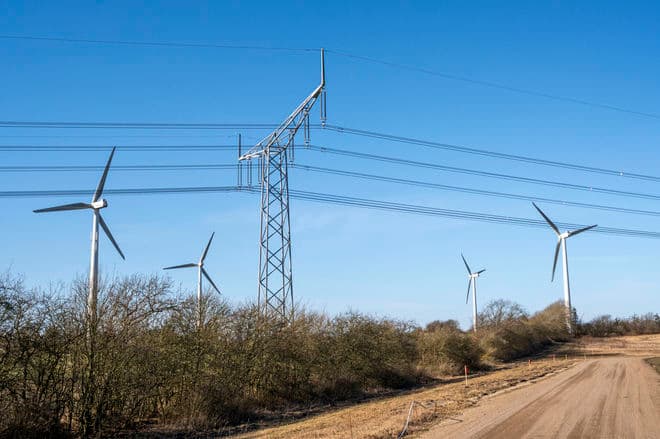

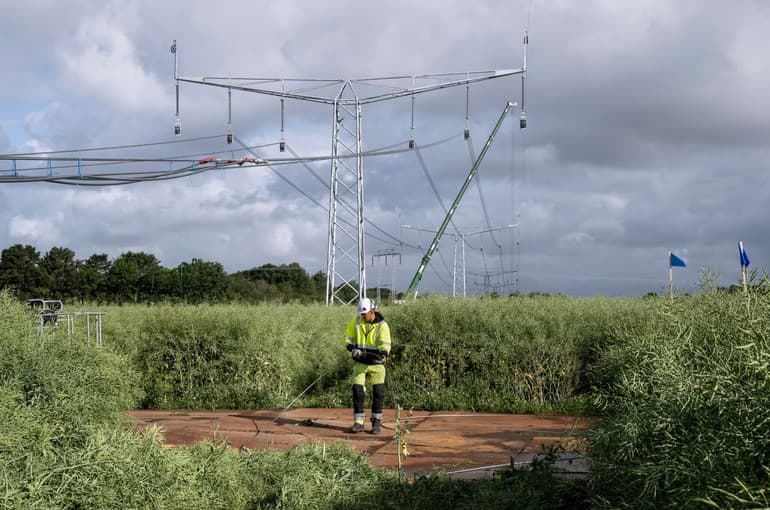
After more than a decade of planning and approvals, the West Coast Link is now close to being fully operational. The 172 km long 400 kV high-voltage connection between Idomlund near Holstebro and the Danish-German border will be put into operation in stages in March and April. Energinet announced this in a press release.
The actual construction work of erecting masts, laying overhead lines and establishing cables in the ground was completed in about two and a half years, while the previous eight years have been spent on permits, approvals and expropriations, among other things.
- We have spent a long time getting the necessary permits, but for the past two and a half years the work has been visible to all the neighbours. Now we need the final assembly work, after which we can put the voltage on, says chief project manager Christian Jensen, who has been involved in the project throughout the years.
The middle part of the connection between Esbjerg and Tarm/Skjern was put into operation in October 2025. On March 10, 2026, the connection between Endrup and Klixbüll south of the border will be put into operation, while the section between Stovstrup and Idomlund will follow on April 15. When the entire connection is operational, the maximum trading capacity across the Danish-German border will increase from 2500 to 3500 MW, and the capacity of the Viking Link to England can be raised to 1400 MW.
An example of Energinet's strength and challenge
The West Coast Link is intended to strengthen the electricity grid and make it possible to transport more electricity from wind turbines and solar cells around the country and across the border.
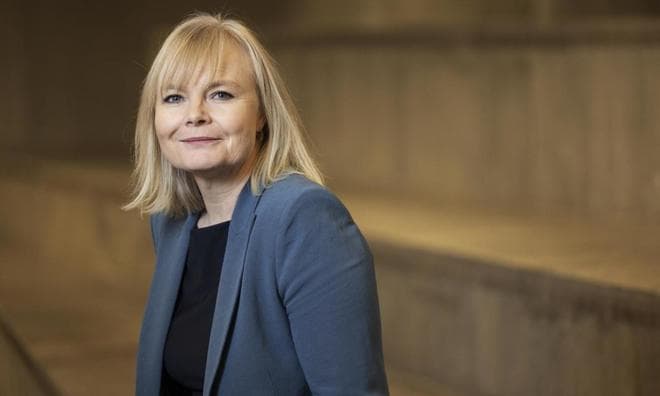
- The West Coast Link is a clear example of both our strength and our challenge at Energinet. The facility itself was built in a relatively short time. However, the road to it has been very long. It took eight years before we could put the spade in the ground. This says something about the framework conditions and barriers that have slowed the pace of the green transition. If we are to electrify society faster and get more green electricity to consumers, it requires that we can make decisions and realize large electricity grid projects much faster than today, says Nina Høegh Jensen, Director of Energinet's Electricity Transmission.
The West Coast Link has been planned since 2015 and has been delayed several times along the way. Protests against overhead lines, longer case processing times, expropriations, environmental requirements, complaints and archaeological finds have been among the reasons.
The vast majority of the link – 146 km – has been established as overhead lines on a total of 438 masts, while 26 km have been laid as cables in the ground. When the project is fully completed, Energinet will also remove an older 150 kV overhead line of 81 km in the area.
amp
Text, graphics, images, sound, and other content on this website are protected under copyright law. DK Medier reserves all rights to the content, including the right to exploit the content for the purpose of text and data mining, cf. Section 11b of the Copyright Act and Article 4 of the DSM Directive.
Customers with IP agreements/major customer agreements may only share Danish Offshore Industry articles internally for the purpose of handling specific cases. Sharing in connection with specific cases refers to journaling, archiving, or similar uses.
Customers with a personal subscription/login may not share Danish Offshore Industry articles with individuals who do not themselves have a personal subscription to Danish Offshore Industry.
Any deviation from the above requires written consent from DK Medier.