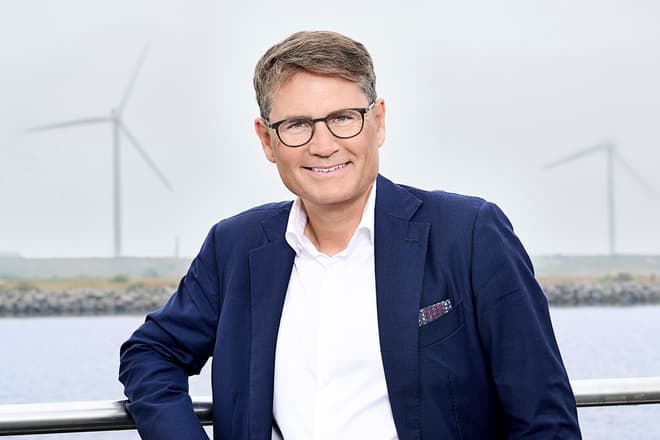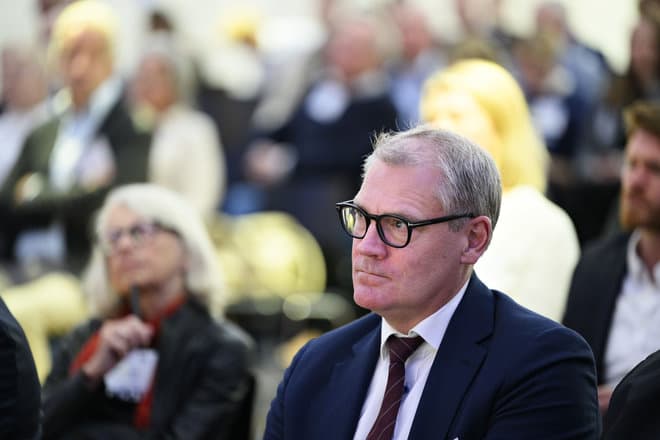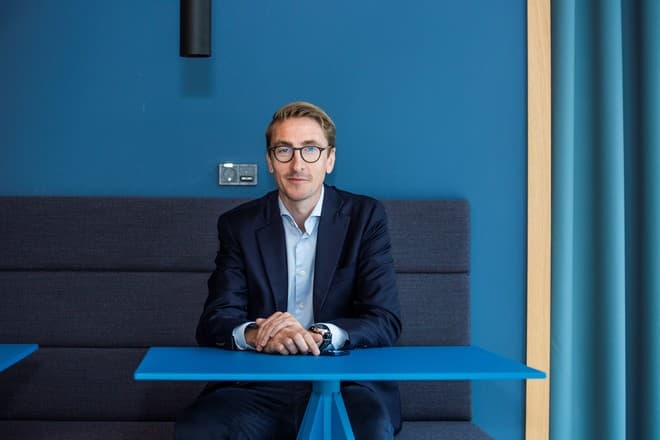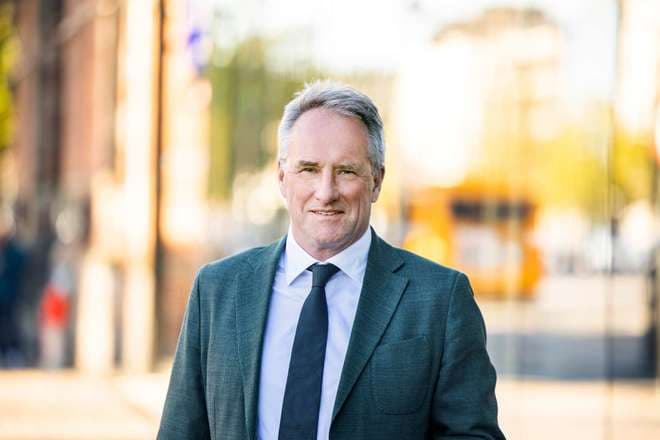
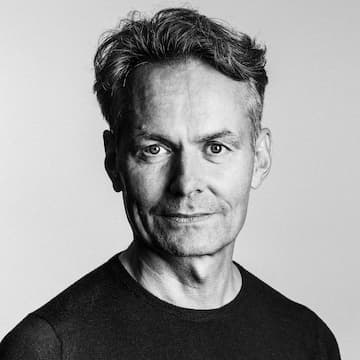
Even on a foggy, grey day, light shines in from the Øresund into Torben Möger Pedersen's office. The CEO of PensionDanmark leads the pension company, which was created by a number of trade unions back in 1987. The goal is still to this day to ensure the best return for pension customers. But in a time of green transition and increased focus on sustainability, it is no longer just about what ensures the best return. It is also about the investment being financially sustainable for the environment.
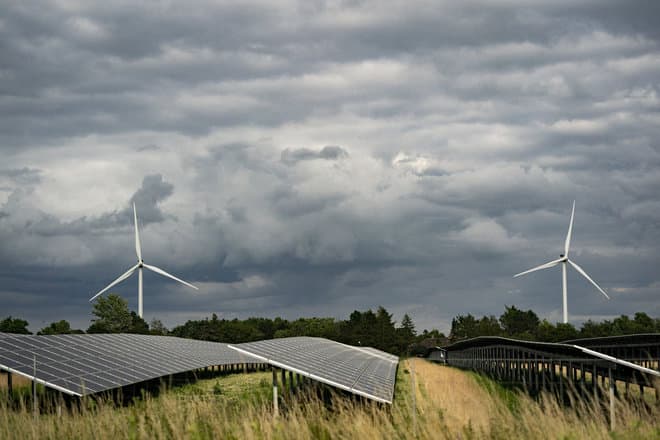
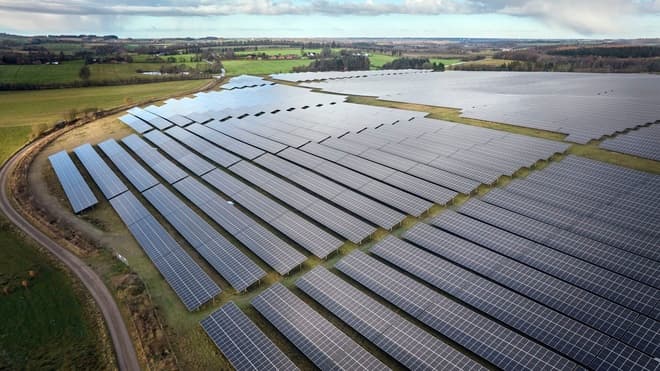
The pension company has already focused on green investments such as wind farms, both onshore and offshore, in addition to solar power plants, for many years. However, PensionDanmark is always on the lookout for new investment opportunities. The upcoming energy island in the North Sea is an investment opportunity that meets the requirements for future green investment.
Therefore, PensionDanmark is part of a consortium that has proposed to finance and operate the energy island in the North Sea together with the pension company PFA, the energy company Andel and Copenhagen Infrastructure Partners. Shell and Nykredit have recently joined the group.
Green future strengthened by war
PensionDanmark's reason for investing in the energy island is visionary, because it is to be the green energy hub of the future for wind turbines in the North Sea. The entire construction project will cost around DKK 300 billion, while the energy island itself will cost around DKK 10 billion. In the first phase, three GW of green energy will be channeled through the island with the possibility of scaling up to ten GW.
This is what the plan looked like before Russia's invasion of Ukraine. The war opened a new unknown chapter in European history, and there is simply a before and after February 24, 2022.
The war has also been a wake-up call to Europe, which has made its energy supply dependent on Russian gas. A way to break with dependence on Russia came to the table when the heads of state from Germany, the Netherlands, Belgium and Denmark signed the Esbjerg Declaration. With the signatures, wind ambitions were raised to a whole new level. It also means that it is not enough to have one more energy island.
- The entire green agenda has gained a new pace, and we can be very optimistic, even if the tragic war is the reason. Now the North Sea will become a green power plant with 35 GW in the Danish part alone, says Torben Möger Pedersen.
A total of 150 GW of wind turbines are planned in the North Sea, and this provides completely new opportunities for the consortium, which has been named VindØ.
- It is an extremely high ambition. We will need up to eight energy islands, says Torben Möger Pedersen.
The development has also meant that the requirement for the return on investment has increased. Torben Möger Pedersen has previously said that the annual return on investment in the energy island is slightly lower than renting office properties in Copenhagen. It is otherwise one of the best things to invest in, with a return of around seven to eight percent.
But the war in Ukraine has also already had an impact on the return requirement for the energy island. It has become higher since the invasion, because it has become a better business to invest in green energy.
- The return requirement has increased since the war broke out. We are now close to the required return for office buildings here in Copenhagen, says Torben Möger Pedersen and adds:
- We are committed to getting the highest return, but of course we do not put all our eggs in one basket. We must make long-term sustainable investments for the next generation and their pensions.
Green investments have become mainstream
Today, investments in offshore wind do not seem like a strange investment, but it was not like that just a decade ago.
- We built our first offshore wind farm Nysted together with Dong Energy (now Ørsted) in 2010. Investing in offshore wind has gone from being a new country to being mainstream, says Torben Möger Pedersen.
Some of the people who helped plan the construction of Nysted in 2010 are now involved in the upcoming energy island for Copenhagen Infrastructure Partners (CIP), which is part of the consortium.
Torben Möger Pedersen leaves no doubt that the energy island is a huge opportunity for Denmark, but it is an opportunity that requires action now. Therefore, a rapid legislative process is needed.
- We have great opportunities for offshore wind farms in Denmark, if we act quickly, there is a lot to gain. Esbjerg can become the new Stavanger, Torben Möger Pedersen asserts.
Although Denmark is planning its first energy island, Belgium will overtake Denmark, because the country has already implemented the legislation for an energy island, which will start construction in 2023.
- We must remember that it is a nation without offshore experience, notes Torben Möger Pedersen.
A good green offer
While the energy island that is currently being planned requires public investment in Denmark, the VindØ Consortium has an offer that could perhaps be tempting for the Danish state.
- We have proposed another energy island. It would be completely risk-free for the Danish state with a model that does not require public money, and there is profit sharing for the Danish state, explains Torben Möger Pedersen.
He specifically imagines a hydrogen island on Dogger Banke that can produce green fuel for all of Europe. The commitment to PtX does not stop there for PensionDenmark, because the PtX adventure is already global.
- We have an ambition to create PtX plants all over the world together with partners. PtX projects with electricity from wind and solar energy are already planned in Spain, Morocco, Chile, Oman, Australia in addition to Denmark, says Torben Möger Pedersen.
The projects aim to supply international shipping with green fuel and ammonia for green fertilizer.
- We will move quickly with these projects when PtX becomes large-scale, says Torben Möger Pedersen.
The climate fight requires industrial transformation
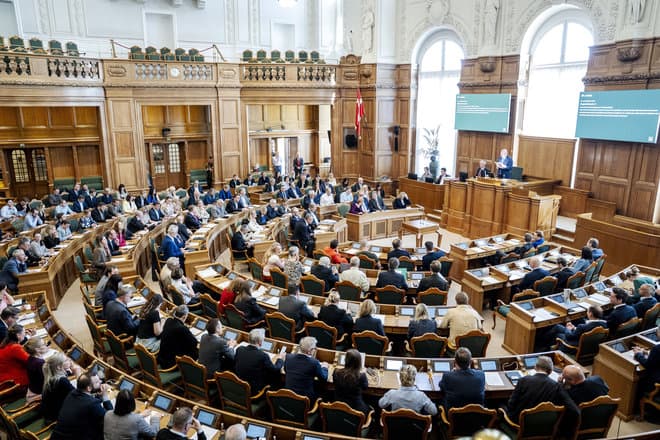
Political ambitions and speeches are no longer enough. It is time for the government to invest massively, for example, in the Danish electricity grid. The grid must be ready to take on the large amounts of green electricity from the North Sea.
- The government knows very well what is needed for both grid tariffs and the expansion of the electricity infrastructure. I am convinced that they will act, says Torben Möger Pedersen.
Although upgrading the electricity grid is a huge task that will have to be done in a short period of time, the pension director is nevertheless sure that the task can be solved, and he draws a historical comparison.
- In 1900, all traffic was carried out on horseback, but in just 30 years, cars had completely taken over, explains Möger Pedersen.
The city of Esbjerg has also gone through a development, although it has not been as dramatic. Now the city is developing into the center of the green transition. Here too, there is a historical comparison.
- Esbjerg is fantastic. The city took over the role of port city for the entire region after Denmark lost Altona in 1864. First the fishing industry flourished, and later the oil industry came along in the 1980s. Now the green transition will mean a new industry is coming to the city, and Esbjerg is ready again, he says.
While Russia's war in Ukraine has united Europe around more green investments, Torben Möger hopes for a similar response to the climate crisis.
- The climate crisis is a global war, and we will have to respond as the United States did after the attack on Pearl Harbor. The entire American nation converted its industry to produce military equipment in just six months. We will have to respond to the climate crisis in the same way, explains Torben Möger Pedersen
Text, graphics, images, sound, and other content on this website are protected under copyright law. DK Medier reserves all rights to the content, including the right to exploit the content for the purpose of text and data mining, cf. Section 11b of the Copyright Act and Article 4 of the DSM Directive.
Customers with IP agreements/major customer agreements may only share Danish Offshore Industry articles internally for the purpose of handling specific cases. Sharing in connection with specific cases refers to journaling, archiving, or similar uses.
Customers with a personal subscription/login may not share Danish Offshore Industry articles with individuals who do not themselves have a personal subscription to Danish Offshore Industry.
Any deviation from the above requires written consent from DK Medier.