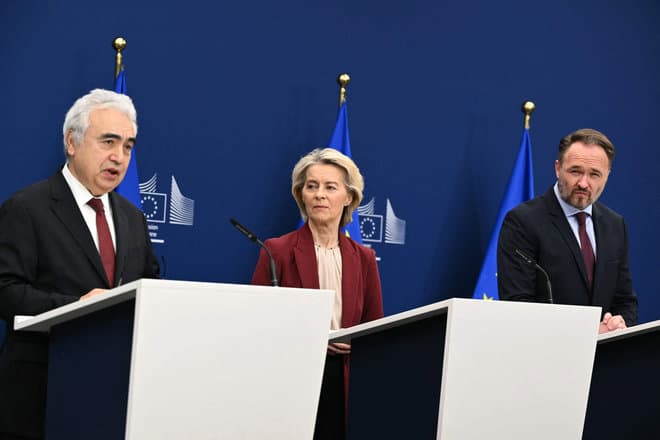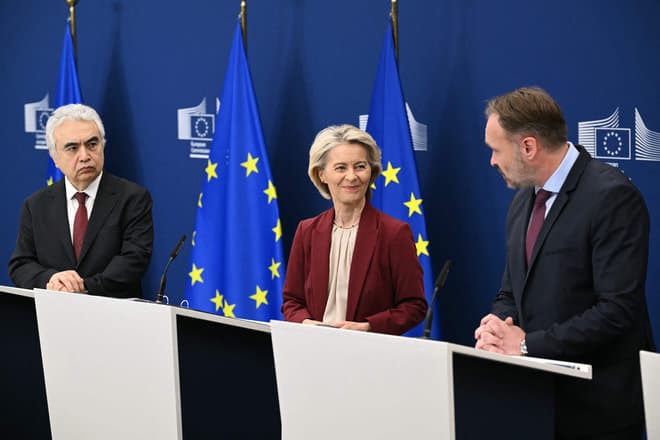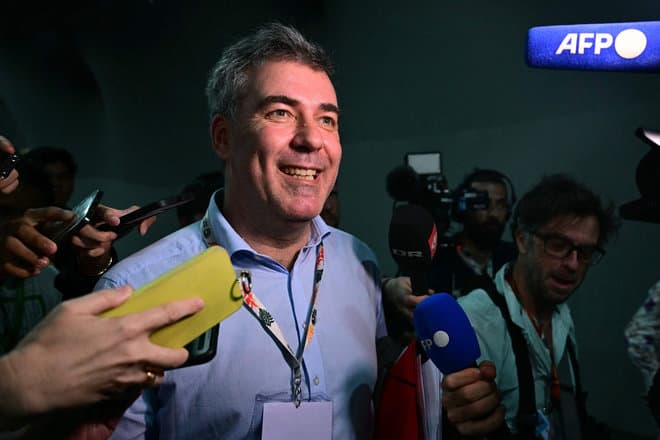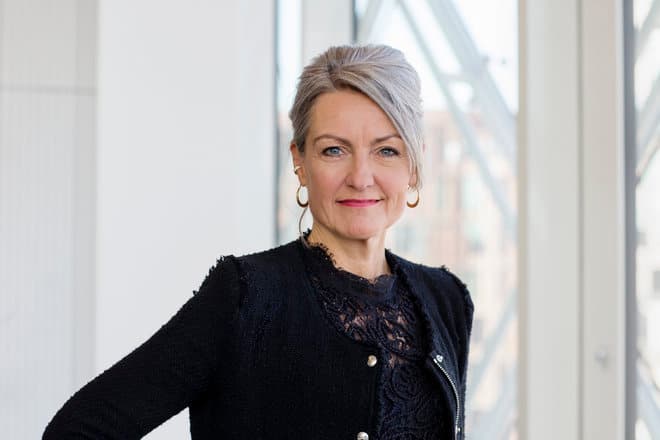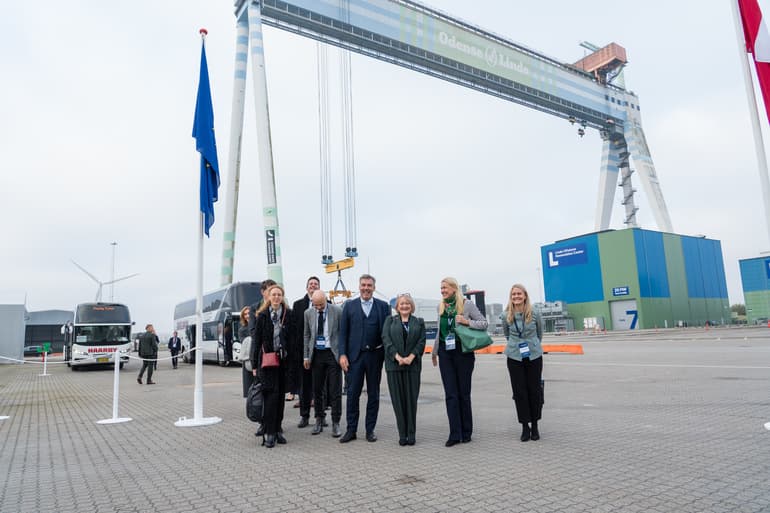
On Thursday, the members of the North Sea Cooperation had gathered at the Port of Odense. And with Minister for Climate, Energy and Utilities Lars Aagaard (M) at the helm, they have agreed on a number of recommendations to the incoming European Commission and the other European countries on what needs to be done in the offshore wind sector in the coming years to ensure that Europe avoids falling behind in the global race.
Because Europe's competitiveness is challenged. Supply chains are under pressure, costs have increased, and global competition has intensified. That is why there is a need to take action. Offshore wind is hard hit by the challenges, but is also an important part of the solution, the Ministry of Climate, Energy and Utilities states in a press release.
In their recommendations, the ministers point to, among other things, on new approaches to financing cross-border energy projects and the interaction between offshore wind development and green hydrogen production.
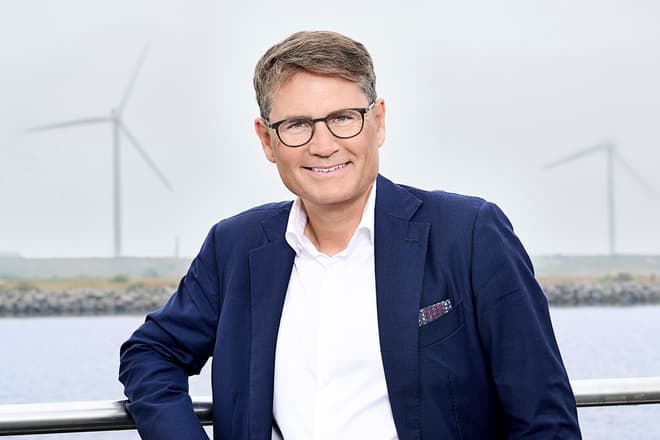
- We need a strong, green Europe that can keep up with global competition. The jobs of the future depend on it. One of the solutions is offshore wind, and fortunately we live right next to the North Sea, which has optimal conditions for a lot of offshore wind. In order to exploit this potential, we in the North Sea Cooperation propose a number of concrete measures, which we are now putting in the hands of the incoming European Commission. The ball is in the air, Lars Aagaard.
The North Sea Cooperation consists of Denmark, Belgium, the Netherlands, France, Germany, Norway, Ireland, Luxembourg and the European Commission. The United Kingdom is also a permanent observer. Every country is invited to the North Sea Meeting. The EU Commission is a permanent co-chair, and Energy Commissioner Kadri Simson therefore also participated.
Costs for cross-border projects must be shared more equally
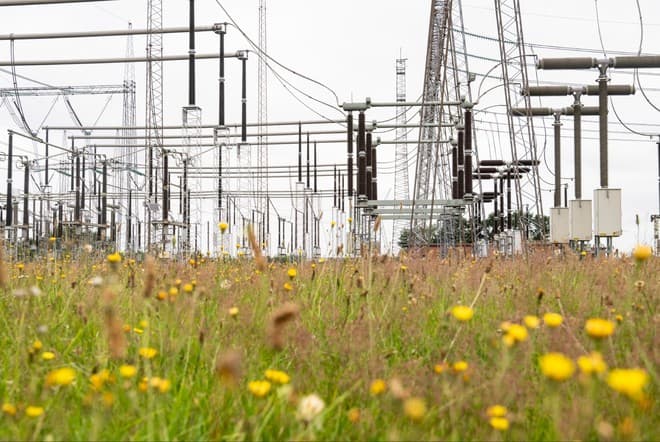
One of the areas that the North Sea Cooperation has had a particular focus on during the Danish presidency is the cross-border offshore energy projects, where several countries are involved. They are absolutely necessary if the rest of Europe is to benefit from the green energy potential of the North Sea – but today there are a number of obstacles to the projects.
- These are some very concrete measures that we propose to initiate – and we know that this is something that the industry is missing. It is absolutely crucial for future cross-border projects that we can distribute both the meal and the bill in a good way, says Lars Aagaard.
Today, the framework for how both the costs and benefits of cross-border projects are distributed is missing. This means that the burden today is borne by the countries that build – and not necessarily by the countries that need the green energy.
The North Sea Cooperation therefore recommends that the Commission continue to work on an approach so that the cost burden is distributed more equally.
The recommendations have been named the Odense Recommendations. The name is a reference to the Port of Odense, which has not only formed the framework for the meeting, but which itself is a good example of a workplace that has undergone a successful transition from a former shipyard to having created lots of green jobs within the production of wind turbines.
amp
Here are the Odense recommendations:
In the recommendations, the ministers call on the incoming European Commission to focus on:
Better financing:
- Benefits and costs of hybrid projects and major infrastructure projects must be distributed better so that the bill does not end up with individual countries only.
- Better and clearer rules for financing cross-border infrastructure.
- Need to develop a European electrification strategy that can create greater security for the entire green value chain.
- Investigate the possibility of a regional financing facility for green projects through voluntary cooperation between the European Commission, Member States and private investors.
Increased transparency:
- Greater clarity on the supply and time horizons of projects, energy and hydrogen demand and port facilities across Europe – this could be done with a so-called “transparency platform”.
- Closer cooperation on planning and the expansion of energy infrastructure to make it more demand-driven.
More simplification:
- Approval processes for renewable energy projects must be streamlined so that they do not delay the process unnecessarily.
- The same application processes for financing green projects should be simplified, so that it is easier for companies to access the funds. Tender criteria across countries must be standardized for the benefit of offshore wind developers and producers.
The recommendations can be read in full here.
Source: Ministry of Climate, Energy and Utilities.
Text, graphics, images, sound, and other content on this website are protected under copyright law. DK Medier reserves all rights to the content, including the right to exploit the content for the purpose of text and data mining, cf. Section 11b of the Copyright Act and Article 4 of the DSM Directive.
Customers with IP agreements/major customer agreements may only share Danish Offshore Industry articles internally for the purpose of handling specific cases. Sharing in connection with specific cases refers to journaling, archiving, or similar uses.
Customers with a personal subscription/login may not share Danish Offshore Industry articles with individuals who do not themselves have a personal subscription to Danish Offshore Industry.
Any deviation from the above requires written consent from DK Medier.