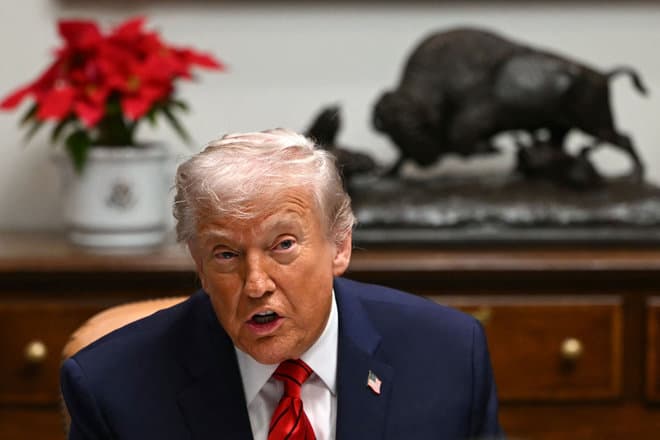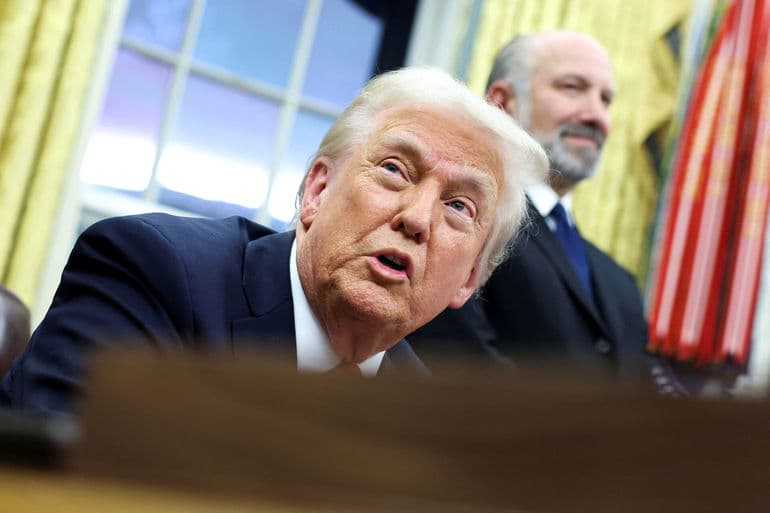
US President Donald Trump is imposing a 25 percent tariff on steel and aluminum imports into the United States. He said so on Monday evening.
- Today I am simplifying the tariffs on steel and aluminum, Trump said in the Oval Office, where he signed the decrees on the tariffs.
He emphasizes that the tariff applies to imports of steel and aluminum from all countries.
- It is 25 percent. without exceptions or waivers, he says.
The new tariffs will take effect on March 12. This is stated in Trump's presidential decree. Trump announced on Sunday that he would announce the new tariff on Monday. The largest share of the steel imported into the United States comes from Canada, Mexico and Brazil. This is shown by data from the US government and the association of American steel producers, AISI.
In a post on X, Canada's Minister of Industry, François-Philippe Champagne, calls the tariffs "completely unjustified".
- Canadian steel and aluminum support key industries in the US from defense, shipbuilding, the energy sector to the automotive industry, he writes.
He also warns of a Canadian response to the tariffs. Trump says he is considering exempting Australia from tariffs on steel imports.
- We have a trade surplus with Australia - one of the few (countries, ed.). The reason is that they buy quite a lot of aircraft. They are quite far away and need a lot of planes, Trump says.
Australian Prime Minister Anthony Albanese said shortly before Trump signed the decrees that he had spoken to Trump about the exemption.
- The US president agreed that an exemption was worth considering and in the interests of both countries, he told reporters after the conversation with Trump.
During his first term as president, Donald Trump also imposed a 25 percent tariff on steel imports and a 10 percent tariff on aluminum imports. He later introduced duty-free quotas on imports of these raw materials from countries such as Canada, Mexico and Brazil.
Former President Joe Biden expanded the duty-free quotas to include iron and aluminum from Britain, Japan and the EU.
jel /ritzau/AFP
Text, graphics, images, sound, and other content on this website are protected under copyright law. DK Medier reserves all rights to the content, including the right to exploit the content for the purpose of text and data mining, cf. Section 11b of the Copyright Act and Article 4 of the DSM Directive.
Customers with IP agreements/major customer agreements may only share Danish Offshore Industry articles internally for the purpose of handling specific cases. Sharing in connection with specific cases refers to journaling, archiving, or similar uses.
Customers with a personal subscription/login may not share Danish Offshore Industry articles with individuals who do not themselves have a personal subscription to Danish Offshore Industry.
Any deviation from the above requires written consent from DK Medier.