In recent years, there have been a number of examples of how publicly owned companies have run into serious difficulties. Currently, a number of district heating companies have suffered major financial losses after speculation in continued low electricity prices, and Thisted Municipality has had to take over Hanstholm Port and a debt of over DKK 600 million after an economically unsustainable port expansion.
The cases show that there are important tasks and major risks associated with having critical infrastructure and financial exposure in publicly owned companies. For municipalities, this should give reason to consider whether the boards of directors are equipped for the task, including cooperation with the daily management and handling the new challenges and opportunities that come with today's major crises and societal changes.
For many public boards of directors, their role has developed significantly. Previously, their main focus has often been on budget management and compliance, i.e. whether the company and the daily management comply with applicable laws and regulations. That part remains important. But in recent years, the requirements for risk management and good corporate governance – in modern Danish: corporate governance – have become increasingly important.
Great pressure on boards
This is due to a new reality with many different forms of pressure, which arise from, among other things, geopolitical changes, market turbulence, demands for green transition, focus on social and ethical sustainability, new technologies, the need for financial risk management, demands for strengthening cybersecurity, recruitment challenges and desires for more openness and dialogue.
The increasing pressure is forcing many boards to reassess their traditional responsibilities, tasks and roles if they are to demonstrate their future raison d'être.
The board can increase its value creation by focusing hard on determining the strategic direction of the company within the political goals that the owners have set for the company. This may mean that the board of directors must at times move closer to the daily management and both challenge and support it when difficult and far-reaching decisions have to be made.
Greater diversity and new competencies
In addition, value creation can be strengthened by building a culture of discussion of the board of directors' overall competencies and an increased awareness of roles and responsibilities. This can be achieved through ongoing (self-) evaluations of the board's work, competency development courses for individual board members and by working with the overall board's competencies.
At the same time, it is obvious that the owner municipalities push for a movement towards greater diversity in the boards. Here, more female board members and young talents can bring completely new and necessary perspectives into the board's work.
In order to give a board of directors the best opportunities to succeed, it is required that the municipal owners formulate an ownership strategy for the company with clear goals and political values that the board of directors can take stock of. At the same time, there is a need for the owners to take the initiative to ensure an ongoing dialogue with the board of directors, so that both parties are aware of and respect each other's working conditions and success goals.
There are still democratic elections
Municipalities also need to deal with the dilemma that may arise from having to take into account both the need for democratically elected board members and the need for greater diversity and more professional skills on the boards.
The new reality makes it more necessary than ever before for boards of directors and owners to have a keen eye for how they can both contribute to the strategy and value creation in the municipal companies.
A good place to start is by offering all board members a basic board course, where, among other things, they can work on the company's core task, strategy, challenges and opportunities, as well as the interaction between the board of directors, management and owner.
It may require thorough preparation by both the board and the owner if a reassessment and renewal of the board's competencies and composition is to be carried out. Such processes can, for example, be carried out through board evaluation and reporting on good corporate governance, as described in the latest recommendations on good corporate governance in municipally owned utilities.
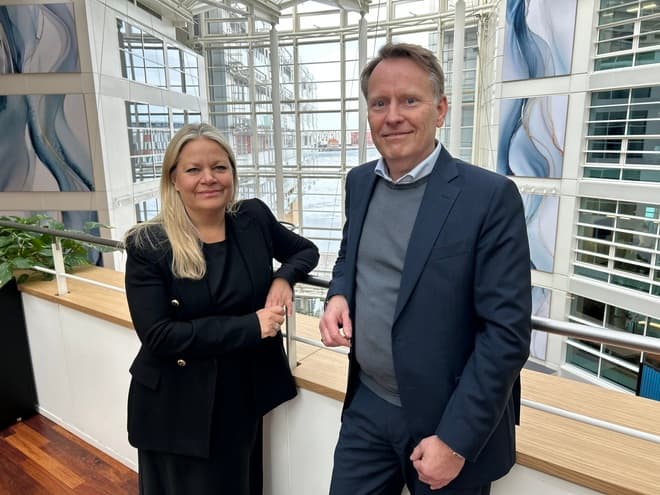
The post was written by Kalle Syberg Kjær, Center Manager, Komponent, and Kenneth Koed Nielsen, former director, Norddjurs Municipality.
Text, graphics, images, sound, and other content on this website are protected under copyright law. DK Medier reserves all rights to the content, including the right to exploit the content for the purpose of text and data mining, cf. Section 11b of the Copyright Act and Article 4 of the DSM Directive.
Customers with IP agreements/major customer agreements may only share Danish Offshore Industry articles internally for the purpose of handling specific cases. Sharing in connection with specific cases refers to journaling, archiving, or similar uses.
Customers with a personal subscription/login may not share Danish Offshore Industry articles with individuals who do not themselves have a personal subscription to Danish Offshore Industry.
Any deviation from the above requires written consent from DK Medier.