It is an honest matter that it can generally be difficult for the average Dane to keep up with how climate efforts are actually going. The green transition encompasses a sea of sectors, extends over a long period of time and does not necessarily leave a big mark on everyday life.
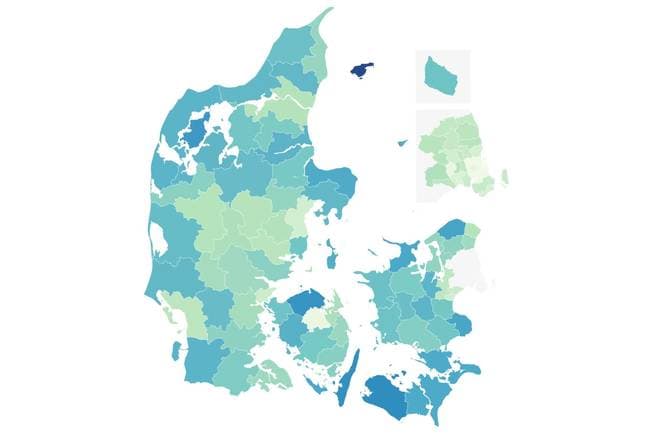
That is the opinion of the Climate Council, which for the same reason has developed an overview of around 20 indicators to illustrate whether the effort is progressing quickly enough. On the Climate Council's website, the indicators are illustrated by graphs. They show, for example, the number of electric cars on Danish roads and the development of shallow soil extraction.
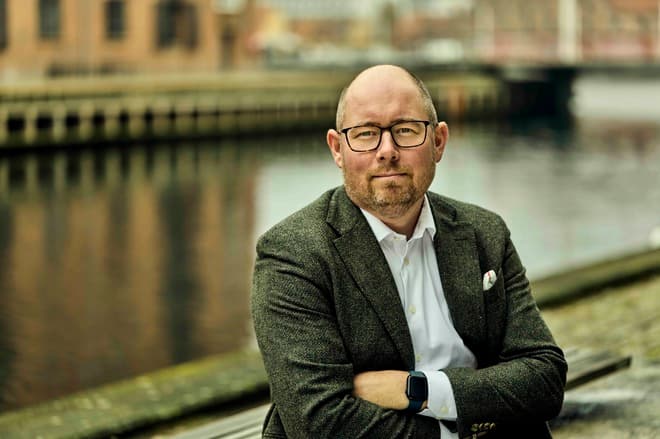
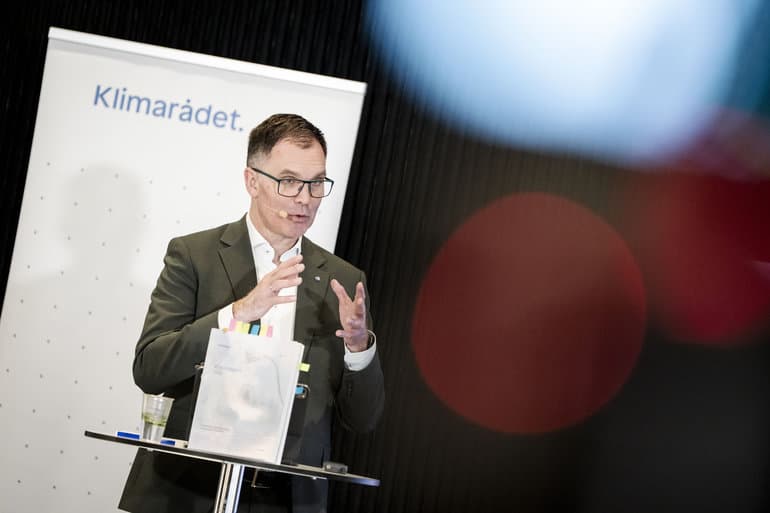
According to the Climate Council's representative, Peter Møllgaard, the indicators do not give the full picture. But they are a "good starting point" for discussing the transition and delving deeper.
- You can think of them a bit like a canary in a coal mine. If they turn out to be wrong, it indicates that something is not as it should be, he says.
You can "perhaps say" that the Climate Council has seen a gap in the market, which means that the council expects the indicators to be followed widely and closely, it continues.
In February, the independent expert body concluded that the adopted policy makes it clear that Denmark will reach its 2030 climate target. But this does not mean that the target of a 70 percent reduction will actually be met. Therefore, according to the Climate Council, it is crucial that the adopted policies are translated into real reductions within a few years.
- Many reductions have been agreed upon that have not yet become a reality. And there is no guarantee that we will reach the goal, says Peter Møllgaard.
A specific example could be the extraction of low-lying soils, which "has not really started".
- Another of our indicators also points to the fact that gas consumption has not fallen at the expected pace in recent years, says the leader.
A supplement to the annual status report
The new indicators should be seen as a supplement to the Climate Council's annual status report, where the council makes its overall assessments. Peter Møllgaard believes that the indicators can contribute to a more ongoing focus on the effort than the report "already ensures".
The Climate Council itself uses the indicators in its work to identify and monitor key areas.
- It could be the setting up of renewable energy, which is relevant to our own climate efforts and for the transition in the EU, says Peter Møllgaard.
The Climate Council expects to continuously expand the overview. The leader encourages interested Danes to come up with suggestions for new indicators.
- You are welcome to make suggestions - even if you cannot do it in great detail.
The Climate Council has already received various suggestions from its Climate Dialogue Forum, which consists of 40 organizations that assist the Climate Council in its work.
- I will let you know when we are ready with more indicators, he says without revealing the expansion.
It is about spreading knowledge to many different groups - for example schoolchildren and business people, he says.
- We would also like the Folketing and the government to be able to use the indicators and initiate measures if the implementation is to be accelerated.
The overview has found its way to Christiansborg.
- We are using it actively, says Torsten Gejl, political spokesman for the Alternative and deputy chairman of the Climate, Energy and The Utilities Committee.
It is Torsten Gejl's advisor in particular who dives into the indicators to prepare the rapporteur for various climate negotiations. He welcomes the Climate Council's overview, because he always wants more "precise" information.
- It is not always that simple (to keep up with climate efforts, ed.). The more precise indications we have, the better we know whether it is working, he says.
/ritzau/
Text, graphics, images, sound, and other content on this website are protected under copyright law. DK Medier reserves all rights to the content, including the right to exploit the content for the purpose of text and data mining, cf. Section 11b of the Copyright Act and Article 4 of the DSM Directive.
Customers with IP agreements/major customer agreements may only share Danish Offshore Industry articles internally for the purpose of handling specific cases. Sharing in connection with specific cases refers to journaling, archiving, or similar uses.
Customers with a personal subscription/login may not share Danish Offshore Industry articles with individuals who do not themselves have a personal subscription to Danish Offshore Industry.
Any deviation from the above requires written consent from DK Medier.