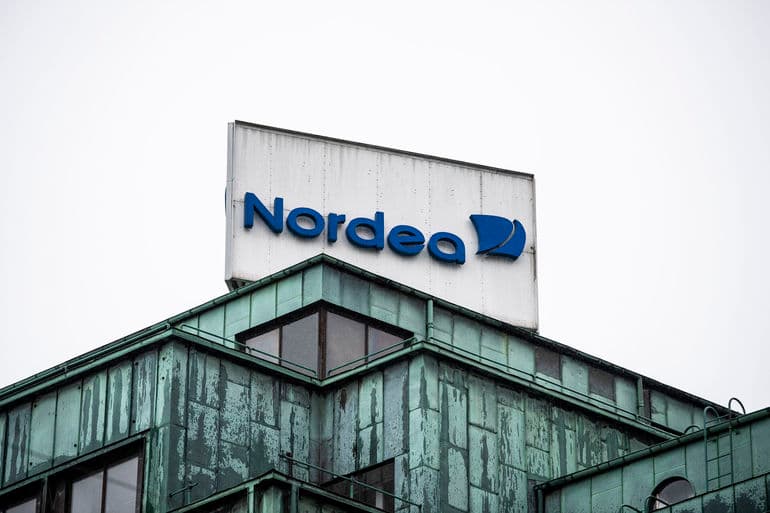
When private and professional investors place their money in the most climate-friendly investment funds at the Nordic region's largest bank, Nordea, their money risks ending up in coal-fired power plants.
A study by the media outlet Danwatch documents that Nordea's so-called Article 9 funds, which are subject to the EU's strictest sustainability regulations, contain shares in fossil fuel companies that emit large amounts of CO2. And it is contrary to EU rules, experts assess to Danwatch:
- I believe that coal-based energy production is completely excluded from the EU's definitions of sustainability and is contrary to the concept of an economically sustainable activity, assesses Amanda Koefoed Simonsen, an expert in sustainable investments and partner in the consultancy firm Copenhagen Changery.
Theodor Christensen, director of Envira, which advises on sustainable investments, assesses that investments in companies with plans to expand their fossil activities undermine EU rules.
He points out that increased burning of coal and fossil expansion are contrary to global climate goals and the EU principle of "Do No Significant Harm" (DNSH), which permeates all EU legislation on sustainable finance.
Rejects criticism
Danwatch's review shows that Nordea, for example, offers its customers to invest in the fund “Nordea 1 - Global Sustainable Listed Real Asset”. The fund is classified as a dark green product according to EU rules – a so-called Article 9 fund.
However, with the fund, Nordea's customers will also receive shares in 32 coal-fired power plants, 67 oil and gas power plants and over 30 new fossil projects under construction at energy companies such as Enel, Xcel Energy, WEC Energy, National Grid and American Electric Power (AEP).
Nordea rejects the criticism.
- The companies mentioned contribute positively through a significant and continuously increasing production of renewable energy. I would generally oppose calling progressive and climate-ambitious electricity companies with a high share of renewable energy fossil investments, says Eric Pedersen, Head of Responsible Investments at Nordea.
Head of Office Henrik Brarup Dam from the Danish Financial Supervisory Authority states that it is Nordea's responsibility to comply with the rules and the DNSH principle.
- This means that the manager must, among other things, ensure that the investments do not cause significant damage to the environment or the climate, says Henrik Brarup Dam.
The study was conducted by Danwatch in collaboration with Norwegian E24 and Finnish Alma Media via the Network for Investigative ESG Journalism. They have reviewed 273 funds that 18 Nordic asset managers market and are responsible for complying with the rules for sustainable investments under the European Green Deal.
Text, graphics, images, sound, and other content on this website are protected under copyright law. DK Medier reserves all rights to the content, including the right to exploit the content for the purpose of text and data mining, cf. Section 11b of the Copyright Act and Article 4 of the DSM Directive.
Customers with IP agreements/major customer agreements may only share Danish Offshore Industry articles internally for the purpose of handling specific cases. Sharing in connection with specific cases refers to journaling, archiving, or similar uses.
Customers with a personal subscription/login may not share Danish Offshore Industry articles with individuals who do not themselves have a personal subscription to Danish Offshore Industry.
Any deviation from the above requires written consent from DK Medier.