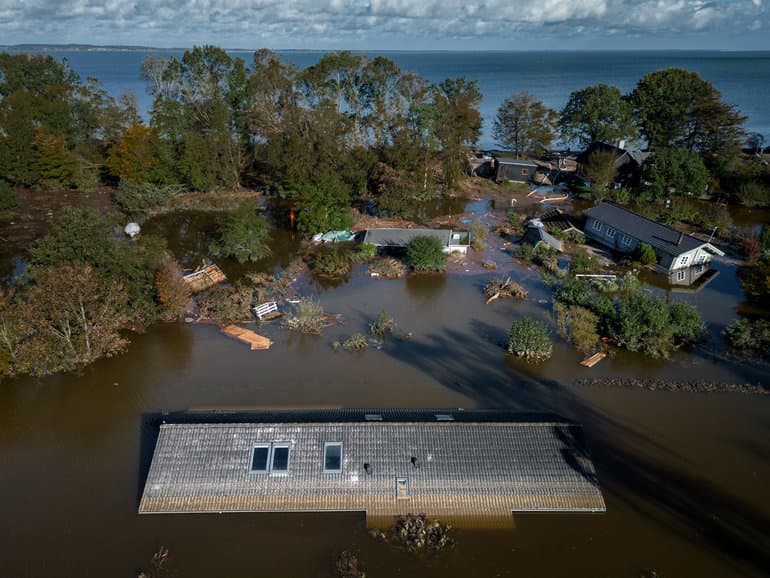
The decade we are currently living through is what climate scientists call "the decisive one".
It is now in these years that greenhouse gas emissions must be curbed in order to keep the number of deadly disasters down and ensure that we do not hit scary tipping points that will change living conditions on the planet so drastically that it may be difficult for humans to adapt.
On Monday, a new report determined that the climate crisis' droughts, heat waves and floods are already costing the EU over 300 billion DKK this year - in a few years the economic losses will increase to 940 billion DKK annually.
It is so dramatic, we are so busy, but yet the green transition is currently being slowed down. Not only abroad, but also at home. Virtually all parts of the Danish transition have been affected by delays.
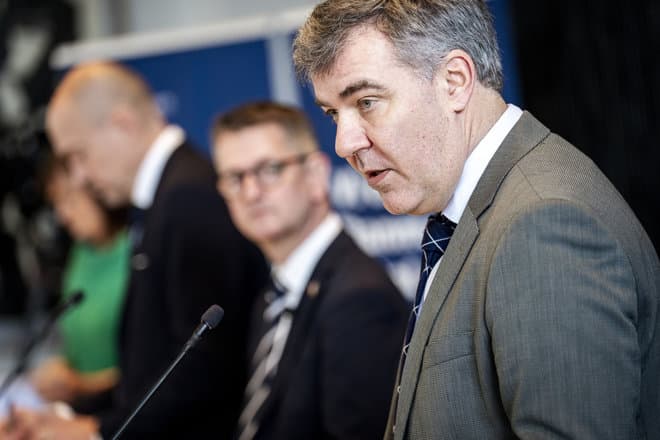
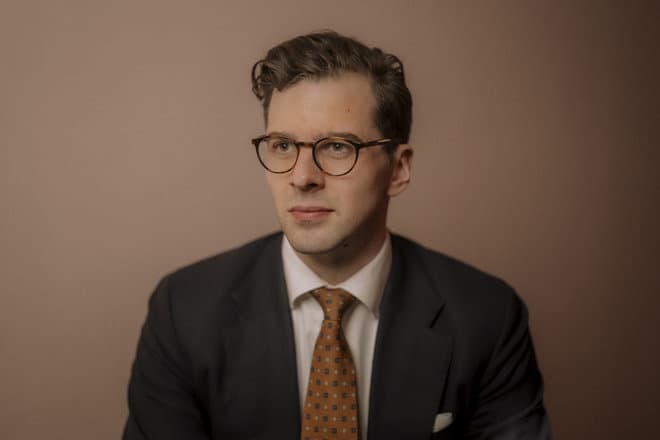
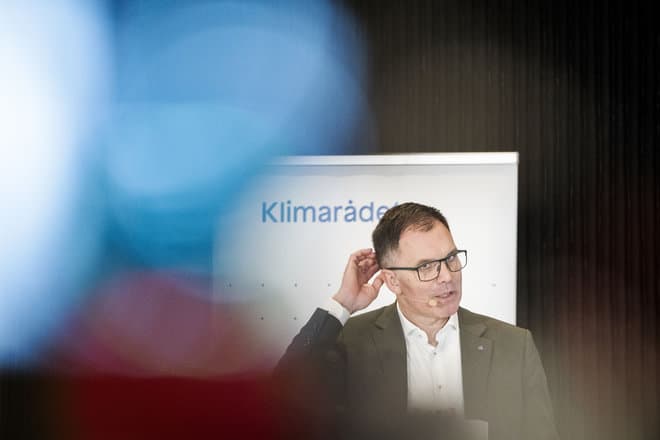
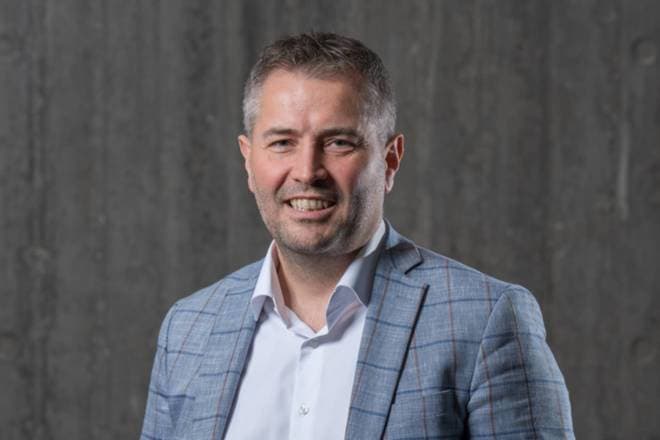
- It is worrying, says the Climate Council's representative, Peter Møllgaard, who wishes that there was the same political awareness of the climate crisis as in the defense.
- We must not just plan, but actually implement. We must get from paper to where we see real reductions in greenhouse gases.
A piece of good news
In February of this year, the Climate Council declared for the first time that the government had now put together a climate plan on paper, which made it possible to reach the climate target in 2030.
However, the good news was accompanied by the admonition to follow developments. The schedules for the various projects are tight, a lot can go wrong and it is far from certain that the plans will materialize in reality on time.
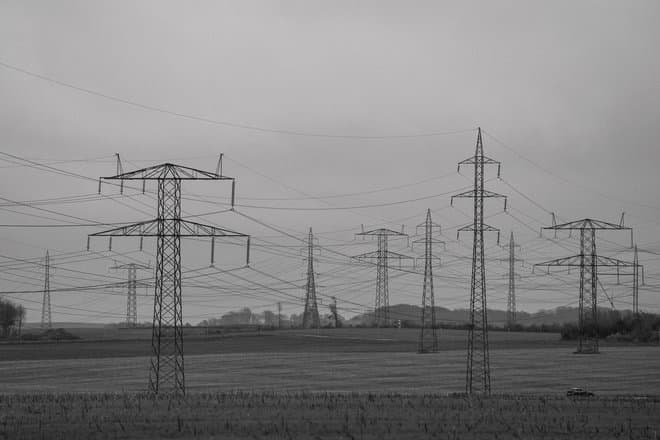
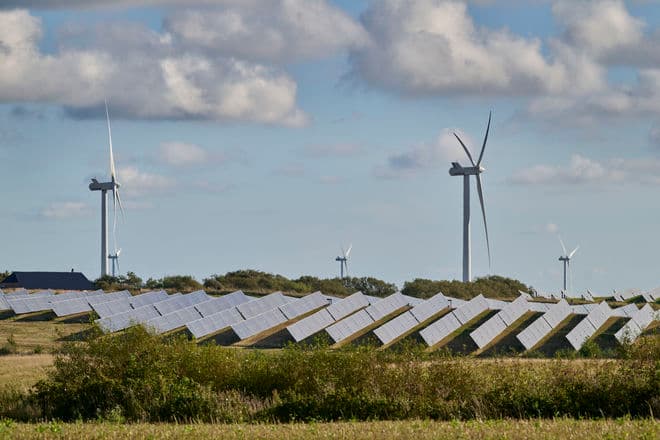
If you look over the past five years, you really understand that warning. The high expectations for technologies such as power-to-X, CO2 capture and biochar have been continuously adjusted downwards significantly over the years. Tenders have been delayed, almost everything has become more expensive and more difficult to implement than initially hoped. There is a lag in installing wind turbines and solar cells. The electrification of industry and households is creeping forward. The expansion of the electricity grid, which will transport the green electricity, has been delayed, and it has taken years to reach an agreement on reductions in agriculture, and it is still not finished.
At the same time, confusing signals are coming from the government.
In the spring, the Liberal Party suddenly announced, contrary to all recommendations, that Danes did not need to change their gas boilers after all. And the parties are now talking loudly again about the right to cheap beef, even though everyone knows that there must be fewer cows to achieve the climate goals and solve the problems with oxygen depletion in the oceans.
Peter Møllgaard has previously used a bicycle race metaphor for the situation, which he knows is a bit overused, but it describes it very well.
It goes like this: The government's climate plan is nothing more than a good interim measure, and "you won't reach the goal if you stop pedaling", as he says.
That's what he is now warning about is happening.
Two things are worrying
The Climate Council's experts are particularly concerned about two things. Firstly, they fear, as they have for a long time, that the government's plans for CO2 capture are too optimistic. Secondly, there is still no political agreement on how the climate-damaging low-lying soils will be converted from fields to nature, if agriculture does not voluntarily succeed in doing so.
The negotiations are scheduled to take place this autumn, where it will be decided how agriculture will be regulated if farmers themselves do not manage to get land taken out of use. In other words, how hard the nitrogen hammer, as it has been dubbed, will hit.
- The nitrogen hammer has not been specified yet. So right now it is mostly a mythological instrument, a bit like Thor's hammer, says Peter Møllgaard.
Peter Møllgaard knows most of the explanations for the delays and postponed decisions. He also acknowledges that the government has been in the middle of turning levers that can push forward in some of the areas where it is needed. For example, by reintroducing state support for offshore wind or setting aside a little more money to phase out gas boilers in the Finance Act.
But fundamentally, it is still the case that the political action does not correspond to the scale of the problem.
- The climate crisis is still not perceived as acutely as Covid or the security crisis. There is not the same crisis awareness about the climate crisis either among politicians or the population, he says.
He highlights a survey that was conducted among the world's business leaders in connection with the World Economic Forum about their greatest concerns for the future. Most mentioned misinformation in the short term and the climate in the long term. That's understandable, but if you ask again in two years, the climate will probably not be at the top of the agenda either.
- So there is always something that seems more urgent than the climate, and that makes us postpone important decisions, he says.
A difficult task
Peter Møllgaard also acknowledges that it is a large and complicated task to transform society. He also agrees that the transformation has been hit by misfortunes – war, inflation, rising interest rates, rising prices, delays in supply chains – which together have made it all "more expensive and more difficult".
- But you could have started earlier. We have been saying this for a long time. For example, you could have started the expansion of offshore wind earlier, when interest rates were low or negative and there were no supply chain uncertainties. We are past that point now, he says.
- But that is why it is so important that we now prioritize it and allocate a large amount of billions to kickstart the green transition.
So a kickstart that is bigger than the initiatives the government has taken so far?
- Yes, you could say that. Because the plans that have been made need to get going. If you think about the security situation, we are good at speeding up processes, and the same may well prove necessary with the green transition, he says.
That also means that more state support may be necessary for parts of the transition, he says. This is in line with new tones from the EU Commission, which in the new plan to secure European industry – in a not necessarily green way – wants to relax state aid rules.
- We in the EU have had a problematic relationship with state aid for good reason, but in recent years the game has changed, so state aid has become the name of the game to a large extent in both China and the USA. Then you have to rethink in the EU, and that is also happening, he says.
- We must of course think carefully when it comes to supporting economic activity. But again, you can draw a parallel to the Defence, where we have seen rules on tenders, which take a long time, being put out of force. We must think in such a way that it should not be so far from the decision until we put the spade in the ground.
Text, graphics, images, sound, and other content on this website are protected under copyright law. DK Medier reserves all rights to the content, including the right to exploit the content for the purpose of text and data mining, cf. Section 11b of the Copyright Act and Article 4 of the DSM Directive.
Customers with IP agreements/major customer agreements may only share Danish Offshore Industry articles internally for the purpose of handling specific cases. Sharing in connection with specific cases refers to journaling, archiving, or similar uses.
Customers with a personal subscription/login may not share Danish Offshore Industry articles with individuals who do not themselves have a personal subscription to Danish Offshore Industry.
Any deviation from the above requires written consent from DK Medier.