

The European Commission is preparing proposals for increased state aid for energy-intensive companies. At the same time, the Commission will strengthen coordination of EU countries' release of gas and oil stocks. This should help bring down energy prices. This is shown by a leak of the European Commission's proposal circulating in Brussels.
The proposal is expected to be presented on Wednesday this week. In the proposal, the European Commission points out that the price of crude oil in the period up to March 20 increased by 51 percent. At the same time, the price of natural gas increased by 85 percent.
- The potential impact of recent events on the EU with regard to energy security and energy prices, supply chains and the safety of citizens gives rise to concerns for the stability of the internal market, the proposal states.
Central to the proposal is a proposal for temporary and targeted state aid for energy-intensive companies - as well as temporary support measures for particularly vulnerable sectors. These include agriculture, fishing, road transport and shipping. They are all dependent on being able to use large amounts of energy.
Specifically, the EU Commission is proposing to use Article 107, paragraph 3 of the Treaty on the Functioning of the European Union. It gives the EU Commission the power to approve certain types of state aid that would normally be prohibited because they distort competition. However, the provision can be used to remedy serious disturbances in the economy.
According to the proposal, the EU Commission will also strengthen coordination between member states when it comes to gas storage and the release of oil reserves. This is to ensure that Europe can fill up its gas storage before winter - and at the same time get the greatest possible effect from releasing oil reserves.
New legislation will also support investments in the electricity grid and make taxation of electricity lower than taxation of fossil fuels. In addition, the EU Commission is planning, among other things, a modernisation of the EU's emissions trading system (ETS).
The EU Commission will, among other things, update the so-called ETS benchmarks, which are used to distribute free CO2 quotas and reward companies with low emissions.
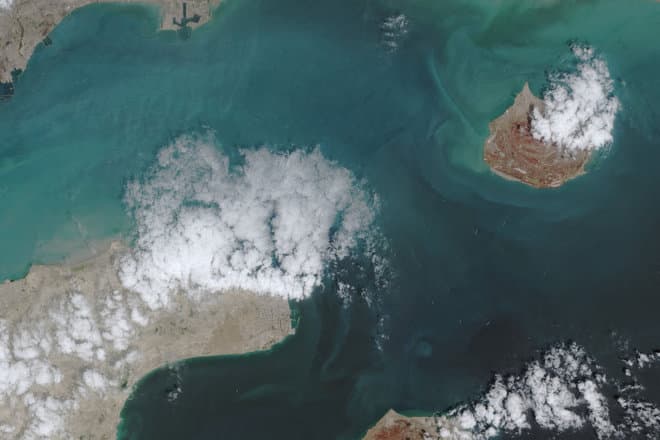
- It seems that the EU Commission is on its way with a well-balanced package of measures to handle the large price increases as a result of the crisis in the Strait of Hormuz, says Troels Ranis, director of DI Energi.
Although the EU Commission's proposal both supports energy-intensive companies and changes the emissions trading system, DI does not see it as a breach of the EU's goal of becoming the world's first climate-neutral continent by 2050. On the contrary, the high energy prices show once again that the EU will have to switch to using renewable energy, just as Denmark has done, says Troels Ranis.
- It is absolutely essential to keep the focus on the long-term goal of making the EU independent of imported fossil energy through energy efficiency, electrification and renewable energy. We look forward to the EU Commission's initiatives to advance that agenda, says Troels Ranis.
In this connection, he emphasizes that the support measures are only targeted at particularly vulnerable sectors, and that they are for a limited period until the end of 2026.
The proposal has not yet been finally adopted by the EU Commission. Therefore, changes may occur before the presentation this week.
/ritzau/
Text, graphics, images, sound, and other content on this website are protected under copyright law. DK Medier reserves all rights to the content, including the right to exploit the content for the purpose of text and data mining, cf. Section 11b of the Copyright Act and Article 4 of the DSM Directive.
Customers with IP agreements/major customer agreements may only share Danish Offshore Industry articles internally for the purpose of handling specific cases. Sharing in connection with specific cases refers to journaling, archiving, or similar uses.
Customers with a personal subscription/login may not share Danish Offshore Industry articles with individuals who do not themselves have a personal subscription to Danish Offshore Industry.
Any deviation from the above requires written consent from DK Medier.