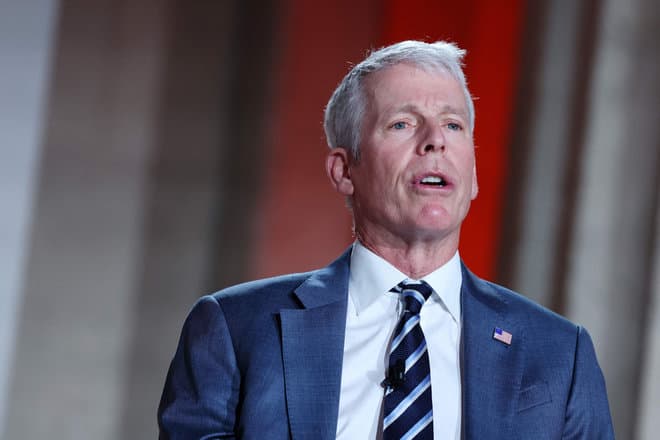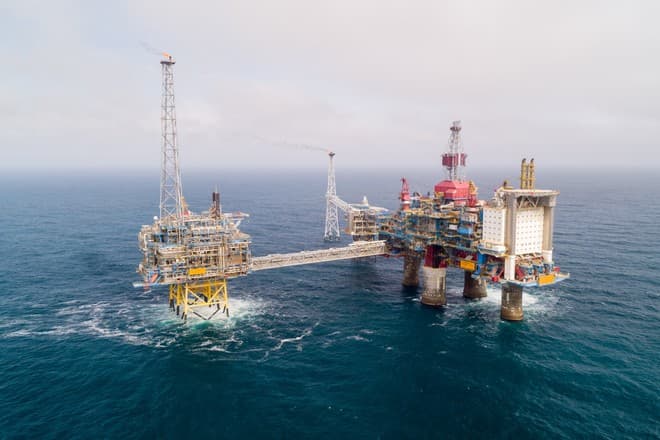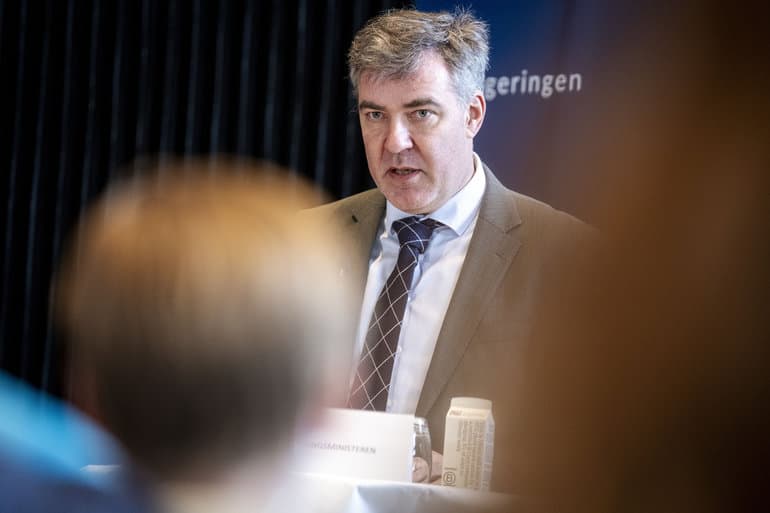
Denmark is releasing 124,600 barrels of oil from emergency stocks at the request of the International Energy Agency (IEA), Minister for Climate, Energy and Supplies Lars Aagaard (M) announced.
Due to the situation in the Middle East, where the Strait of Hormuz is closed, the IEA has asked member states - including Denmark - to join a voluntary collective release of a total of 400 million barrels of oil from the countries' oil emergency stocks. And Denmark has agreed to this.
The Minister for Climate, Energy and Supplies states that the supply situation in Denmark and Europe is stable.
- Denmark and Europe are not facing a physical shortage situation, says Lars Aagaard on Friday morning at a briefing.
The 126,400 barrels of oil constitute 20 percent of the total reserve in Denmark, the ministry announced.
According to the Danish Chamber of Commerce, Denmark's oil consumption is 95,000 barrels of oil per day.
Aagaard expects more countries to follow suit
Several Asian countries are, however, affected by the situation in the Middle East. According to Lars Aagaard, Denmark is among the first European countries to comply with the request from the IEA.
- It is my expectation that other European countries will also join the request, as will the USA, Australia, Canada and other countries that have stocks, he says.
Although the supply situation in Denmark is stable, the situation in the Middle East has meant that prices have increased.
- The expectation is that when you release such a large amount of oil to the world market, it will have a price-reducing effect. No one can promise that this means that prices will fall in the near future, but it will take the top off any price development, says Lars Aagaard.
The almost 125,000 barrels of oil will be released continuously over a period of up to 90 days. Initially, the majority of what is released will be gasoline. Diesel and jet fuel will also be released.
When oil is released from the emergency stocks, it means that the oil is made available for sale on the global oil market.
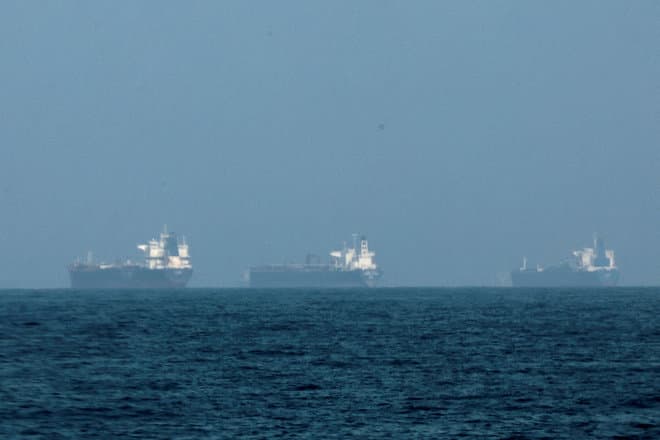
The current turmoil in the oil market is caused by the war in the Middle East, where the Strait of Hormuz, which lies between Iran and the Arabian Peninsula, has been practically closed, as ships cannot sail safely through the strait, and since the Revolutionary Guard in Iran has taken control of the waters.
The fact that tankers cannot pass through the strait has made it difficult to transport oil from the countries around the Persian Gulf. It is estimated that about a fifth of all the world's oil and gas supplies pass through the Strait of Hormuz under normal circumstances.
/ritzau/
Text, graphics, images, sound, and other content on this website are protected under copyright law. DK Medier reserves all rights to the content, including the right to exploit the content for the purpose of text and data mining, cf. Section 11b of the Copyright Act and Article 4 of the DSM Directive.
Customers with IP agreements/major customer agreements may only share Danish Offshore Industry articles internally for the purpose of handling specific cases. Sharing in connection with specific cases refers to journaling, archiving, or similar uses.
Customers with a personal subscription/login may not share Danish Offshore Industry articles with individuals who do not themselves have a personal subscription to Danish Offshore Industry.
Any deviation from the above requires written consent from DK Medier.