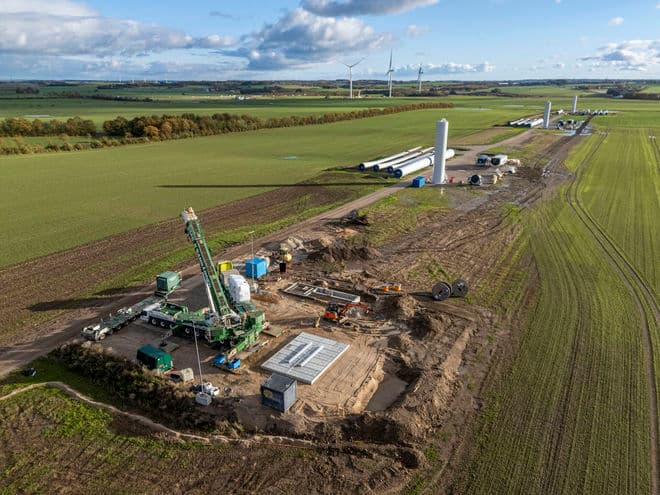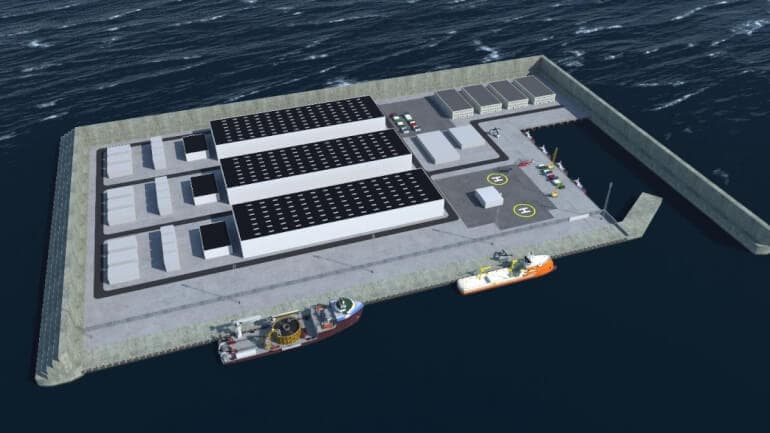
The energy island in the North Sea, which will be the largest construction project in Danish history with a price tag of 210 billion DKK, could end up with a large double-digit billion deficit. This is the assessment of several experts, according to Finans, Jyllands-Posten's business media.
The artificial island will be located 80 kilometers out in the North Sea, and in the long term the capacity will be able to be expanded from 3 to 10 GW. That is enough to supply ten million households with electricity.
The Danish Energy Agency does not have a calculation of the overall economy for the completed energy island, but according to Finans, the agency refers to a note from June 2020. According to it, the income from the green electricity will ensure a surplus of 13 billion DKK over a lifetime of 30 years.
But that figure is unrealistic, says Jan Bentzen to Finans. He is an associate professor at Aarhus University, specializing in socio-economic analysis.
The discount rate is the point of contention
Jan Bentzen has collected figures from the Danish Energy Agency's many reports and made his own calculations. He estimates that the first stage of 3 GW will result in a deficit of 12-21 billion. DKK.
The fully developed plant of 10 GW will result in a deficit of 48-77 billion. DKK, he estimates.
The crucial difference in the calculations is the discount rate, which according to Finans is the return requirement that private investors must have to finance the project. Jan Bentzen is calculating at six and eight percent respectively. The Danish Energy Agency is counting on four percent.
It is not realistic, says Per Nikolaj Bukh, a professor of financial management at Aalborg University, to the media.
- Why should pension funds invest money in this project with a return of four percent, if they can get double that on wind turbines in other countries, he says.
He says that the positive elements are so great with the island that a significant deficit can be justified. However, it requires realistic estimates, it says.
Frede Hvelplund, a professor of energy planning at Aalborg University, is demanding more detailed calculations of revenues and how to dispose of the electricity.
Board: Revenues are overlooked
The Danish Energy Agency rejects the criticism from the Ministry of Finance that the revenue side is not calculated thoroughly.
The Board stands by the calculation in the memo from June 2020. This also applies to the four percent return requirement.
In addition, the Board believes that Jan Bentzen is overlooking some revenues in his calculations.
Ritzau
Text, graphics, images, sound, and other content on this website are protected under copyright law. DK Medier reserves all rights to the content, including the right to exploit the content for the purpose of text and data mining, cf. Section 11b of the Copyright Act and Article 4 of the DSM Directive.
Customers with IP agreements/major customer agreements may only share Danish Offshore Industry articles internally for the purpose of handling specific cases. Sharing in connection with specific cases refers to journaling, archiving, or similar uses.
Customers with a personal subscription/login may not share Danish Offshore Industry articles with individuals who do not themselves have a personal subscription to Danish Offshore Industry.
Any deviation from the above requires written consent from DK Medier.