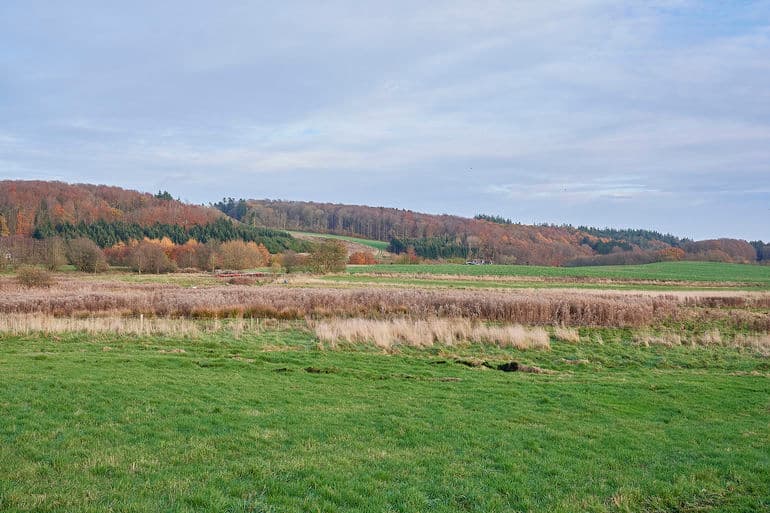
To help the 23 new local green tripartites that will implement the announced conversion of the areas, Denmark's Environmental Portal is now launching a new IT solution, MARS (Multifunctional Area Registration), the portal informs.
The national goals for the green tripartite agreement are the conversion of 140,000 hectares of carbon-rich lowland soil and the establishment of 250,000 hectares of forest.
MARS was developed in less than six months in collaboration with the Danish Agency for Green Area Conversion and Aquatic Environment, and the model is based on existing modules that have been developed in collaboration between municipalities, regions and the state under the auspices of Denmark's Environmental Portal.
- We have worked based on a strategy of reusing and further developing existing systems so that we could more quickly create a proposal for a usable solution that meets the complex requirements of the tripartite agreement, says Nils Høgsted, head of secretariat at Denmark's Environmental Portal.
- MARS is designed to be flexible, so that the platform can be further developed in line with future needs, he adds.
One platform
With the new model, there will be one unified entrance, giving local timber parties, coastal water boards, extraction consultants and landowners the opportunity to plan and coordinate the specific extraction efforts.
The platform consists of three key modules:
- Screening: A tool that provides an overview of where projects such as afforestation or the removal of low-lying soils can be realized, based on local and national data.
- Planning: A module that helps municipalities and partners prioritize and coordinate efforts in relation to national objectives.
- Status: A tool that enables authorities to monitor progress and evaluate the effect of ongoing projects.
- Instead of creating one more complex system that can solve everything, we have divided the platform into three modules so that it is adapted to different workflows and easy to use for the different actors, says solution architect on the project Karsten Pihl.
- Using sketches, we have been able to specify complex requirements and translate them into a solution. This has been central to creating a tool that is intuitive to use from day one, he adds.
The first version of the platform has now been launched, and ongoing updates are planned based on users' experiences and needs.
Find the platform here.
cwa
Text, graphics, images, sound, and other content on this website are protected under copyright law. DK Medier reserves all rights to the content, including the right to exploit the content for the purpose of text and data mining, cf. Section 11b of the Copyright Act and Article 4 of the DSM Directive.
Customers with IP agreements/major customer agreements may only share Danish Offshore Industry articles internally for the purpose of handling specific cases. Sharing in connection with specific cases refers to journaling, archiving, or similar uses.
Customers with a personal subscription/login may not share Danish Offshore Industry articles with individuals who do not themselves have a personal subscription to Danish Offshore Industry.
Any deviation from the above requires written consent from DK Medier.