Last week, the government received a number of recommendations from the Port Partnership, which point out how Danish commercial ports can strengthen their position in international competition for the benefit of Denmark and businesses, growth and the green transition.
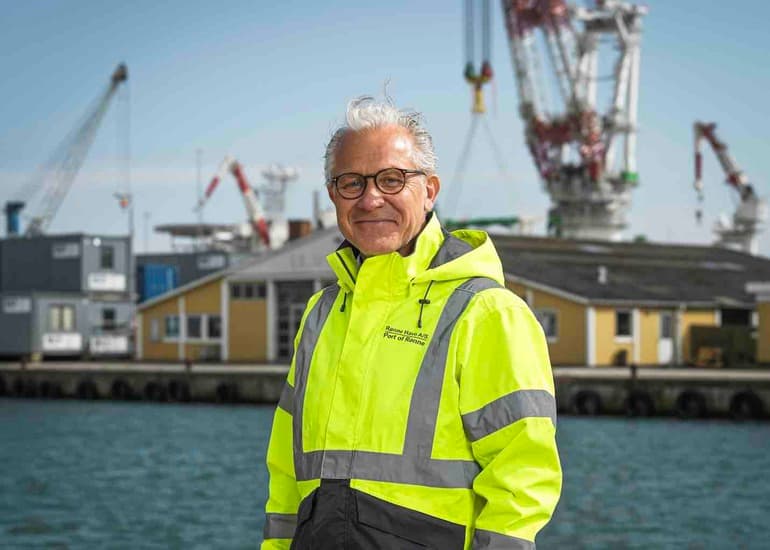
The recommendations from the Port Partnership are some that we, as the Port of Rønne – Denmark's easternmost deep-water port and a central shipping port for offshore wind turbines in the Baltic Sea – see as essential and crucial for the development of the ports.
Several of the recommendations are consistent with our own, specific plans, where we see development as a central foundation for creating growth on Bornholm and ensuring security of supply to the island, as well as being a central player in the green transition.
The Port Partnership believes that the Danish commercial ports are of great importance to both the Danish business community and society as a whole. As the central commercial port on Bornholm, we know the importance of a modern and up-to-date port in ensuring a healthy economy and employment, not only on Bornholm, but also regionally.
The Port of Rønne and the companies that are part of the business cluster around the port have become a particularly significant factor for growth on Bornholm. According to a study conducted by Gemba Seafood Consulting, the activities around the business cluster constitute around 15 percent of the total employment on Bornholm. Local employment at the port and among the companies related to the port's activities has increased by 16 percent since 2008. During the same period, there has been a corresponding decrease in employment on Bornholm of around five percent. This shows that the Port of Rønne is increasingly acting as a center for business development on Bornholm.
The increase in employment and the resulting effects show that the expansion and the focus on attracting activities to the port have been successful.
The increased employment derived from the business cluster related to the Port of Rønne also contributes to increased turnover, and this helps to support the tax base on the island. In 2022, DKK 499 million was created in tax revenue from the direct, indirect and induced activities from the Port of Rønne. Overall, this corresponds to approx. 30 percent of the island's total tax revenue.
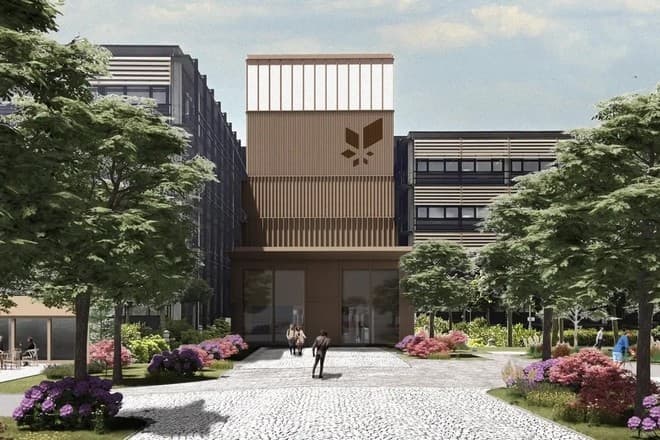
In order to strengthen our position as a port and future-proof the supply to Bornholm, we initiated an extensive port development in 2017, which will be completed by the end of 2025. The final construction works in the port development include, among other things: a deepening of the port and an expansion of the outer pier.
With these expansions, we not only ensure security of supply to the island, but also climate protection of the port against the increased impacts that we, among other things, experience as a west-facing port.
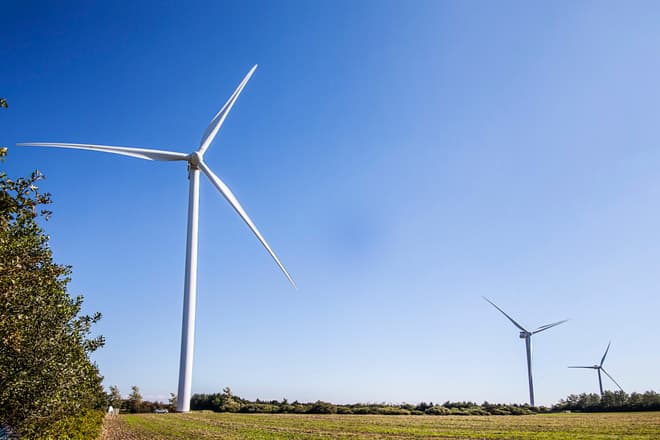
The expansion also strengthens our unique position as the Baltic Sea's central shipping port for offshore projects in both Denmark, Germany and most recently Poland. In addition, the expansion will promote our position as one of Denmark's central cruise ports with the construction of a new multi-functional quay.
Our position and planned development are also in line with the Port Partnership's recommendations on Danish commercial ports, which they believe should be part of "an overall Danish industrial policy that creates predictability in the development of green technologies and provides the opportunity to exploit the strategic importance of commercial ports in the Northern European expansion of offshore wind".
To support the development of ports, the partnership recommends that greater investment security be created at the ports, including through faster processing of approvals. Initiatives should also be taken to strengthen the commercial ports' opportunities to finance investments, both within national frameworks and in the EU.
We agree that faster processing of cases, e.g. in port expansions, is a crucial point for many large projects and a problem that the government can and should solve.
For a port that wants to future-proof its infrastructure, a lack of approval for, for example, folding can have major financial consequences if the regulatory process drags on.
However, we also see it as a challenge that major political objectives for the expansion of offshore wind are not followed up by clarity about where the projects will be built, when they will be built, and which developer will be responsible for this.
The uncertainty about the pace of the expansion of offshore wind means that the necessary, long-term decisions cannot be made about large infrastructure investments in Danish port capacity. There is simply a lack of clear and sustained investment signals from the political side.
When it comes to initiatives to strengthen economic investments in ports, it is important that this happens on fair and equal terms.
jel
Text, graphics, images, sound, and other content on this website are protected under copyright law. DK Medier reserves all rights to the content, including the right to exploit the content for the purpose of text and data mining, cf. Section 11b of the Copyright Act and Article 4 of the DSM Directive.
Customers with IP agreements/major customer agreements may only share Danish Offshore Industry articles internally for the purpose of handling specific cases. Sharing in connection with specific cases refers to journaling, archiving, or similar uses.
Customers with a personal subscription/login may not share Danish Offshore Industry articles with individuals who do not themselves have a personal subscription to Danish Offshore Industry.
Any deviation from the above requires written consent from DK Medier.