
On International Workers' Day, EU Trade Commissioner Maros Sefcovic is promising more "high-quality jobs" in Europe. This is because the EU's trade agreement with the South American countries in the Mercosur trade bloc will provisionally enter into force on 1 May. And this will be of great benefit to European companies, he says:
- With the provisional entry into force, we can finally start to unleash the full potential of this historic trade agreement, says Maros Sefcovic.
It has taken more than 25 years to negotiate the agreement with Brazil, Argentina, Uruguay and Paraguay. A final important push towards getting the agreement in place came when US President Donald Trump began raising tariffs on other countries. This has prompted the EU Commission to "double" its work to close trade agreements.
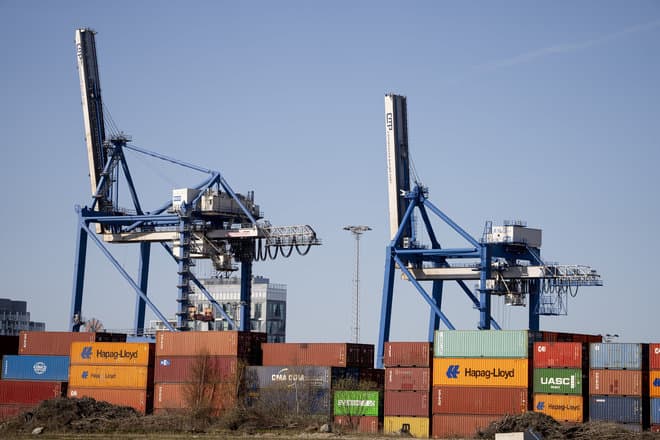
The agreement will eliminate high tariffs, so that EU exporters can save over four billion euros in customs duties per year, according to Sefcovic. This corresponds to almost 30 billion kroner. At the same time, simpler customs procedures will make it easier to export.
- It will deliver tangible benefits for European companies, employees and citizens. From now on, both large and small European companies will find it easier to do business in the Mercosur countries, says Maros Sefcovic.
Will increase earnings for European companies
As a result of the agreement, EU companies will also be able to bid for public contracts on equal terms with companies in the Mercosur countries. Overall, it can not only increase profits for European companies, but also lead to new jobs in Europe, says Sefcovic.
- The agreement will open up new opportunities, reduce barriers to trade and help European companies expand into one of the fastest growing regions. But most importantly, this agreement will help create high-quality jobs in Europe, he says.
However, the agreement with the Mercosur countries has met with resistance in large agricultural countries such as France and Poland. Here, farmers have been particularly concerned about increased competition and further price pressure.
The agreement has also raised concerns in parts of the EU Parliament that the EU's standards for consumer protection, the environment and animal welfare may be compromised.
A narrow majority in the EU Parliament demanded in January a legal review of the agreement by the EU Court of Justice. This means that the agreement can only be applied temporarily until the European Parliament has given its final consent.
/ritzau/
Text, graphics, images, sound, and other content on this website are protected under copyright law. DK Medier reserves all rights to the content, including the right to exploit the content for the purpose of text and data mining, cf. Section 11b of the Copyright Act and Article 4 of the DSM Directive.
Customers with IP agreements/major customer agreements may only share Danish Offshore Industry articles internally for the purpose of handling specific cases. Sharing in connection with specific cases refers to journaling, archiving, or similar uses.
Customers with a personal subscription/login may not share Danish Offshore Industry articles with individuals who do not themselves have a personal subscription to Danish Offshore Industry.
Any deviation from the above requires written consent from DK Medier.